Food Stories · Tex-Mex at the party table
Tex-Mex Party Dips: Layers, Beans, and the Shared Table
A chilled platter and a warm bowl offer different ways to bring avocado, beans, chile, and cheese to the table. Choose among three complete recipes, then follow the records behind a familiar American party food.
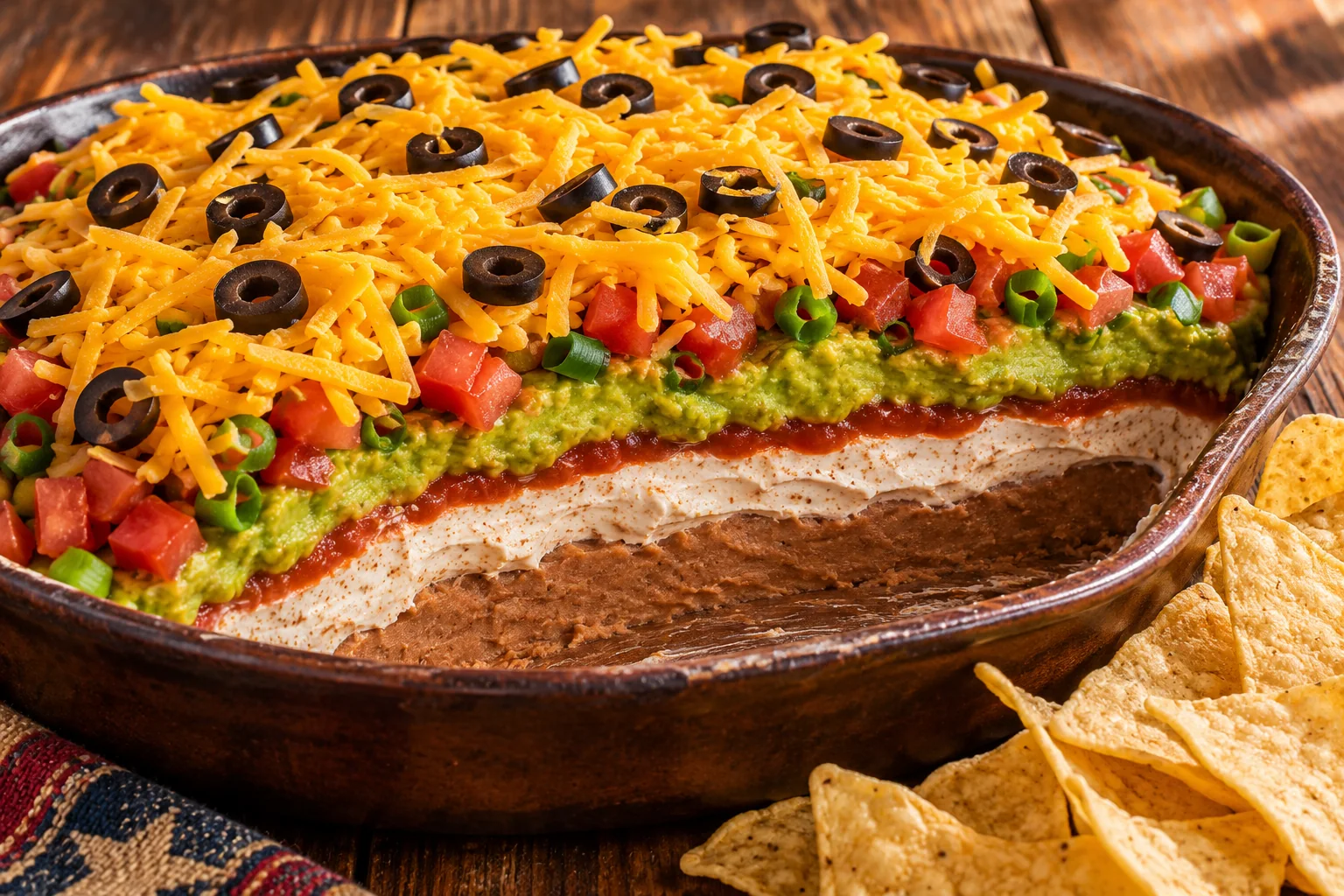
Choose the dip before counting the layers
Start with the way you want to serve it. Layered Avocado Dip is a chilled, avocado-led platter. South Texas Layered Dip starts with refried beans and carries more toppings. Cheddar Bean Dip is a warm, blended preparation made from dry pinto beans. Each preserves a recipe in the founder’s 2021 collection, with its own quantities and method.
Three recipes, three constructions
- Layered Avocado Dip: avocado, sour cream, picante sauce, Cheddar, and green onion form five layers. There is no bean base. Its directions call for at least two hours of refrigeration.
- South Texas Layered Dip: refried beans support taco-seasoned sour cream, picante sauce, and avocado mashed with lemon or lime juice. Tomato, green onion, Cheddar, and ripe olives finish the top. Its recipe calls for chilling without specifying a minimum duration.
- Cheddar Bean Dip: pinto beans cook with onion, garlic, cumin, and bacon drippings before the seasonings, margarine, and sharp Cheddar are incorporated. It is beaten smooth and served warm. The four cups of dry beans make a substantial batch; use the complete recipe when planning it.
The South Texas name records the founder’s association with that recipe. It does not establish the birthplace of layered dip. These are three particular preparations, rather than three names for one interchangeable formula.
The printed record reaches beyond one origin story
Layered dip was in circulation before the early-1980s magazine recipes often credited with popularizing it. In his 2022 archive survey, food writer Doug Mack reproduces a clipping headed “Bean Guacamole Dip,” credited to Patt Gilman, which he identifies as the Contra Costa Times in May 1978. The visible clipping layers seasoned refried beans, guacamole mixed with sour cream, chopped toppings, cheese, and tomatoes, then calls for chilling and tortilla chips. Read Mack’s survey and the reproduced clipping. The newspaper and date here follow his identification; the clipping does not establish who first made the dish.
The Food Timeline transcribes a “Tex-Mex Dip” from Family Circle Recipes America Loves Best (1982). That version includes commercial bean dip, seasoned avocado, a sour-cream-and-mayonnaise mixture, vegetables, olives, and Cheddar. It also quotes Jean Anderson’s 1997 account of food editor Karen Haram’s recollection: a February 3, 1981 Family Circle feature helped spread a recipe that was already circulating. Explore the transcription and bibliographic notes. This is evidence of publication and remembered popularity, not a verified invention date.
A later Texas example is directly accessible through UTSA Special Collections’ presentation of Gloria Chadwick’s 2009 recipe. It layers beans, guacamole, sour cream, tomato, red onion, Cheddar, and black olives. That recipe supplies a useful dated comparison with the versions here. The number and order of layers change from one written preparation to another.
Together, the records show a shared appetizer moving through home recipes, newspapers, magazines, and cookbooks. They do not support assigning every layered dip to a single inventor or city. Nor does the familiar use of avocado, chile, and beans make the assembled platter an unchanged ancient dish.
The chip-and-dip pairing has its own record
A preserved 1967 Frito-Lay Jalapeño Bean Dip commercial in the Texas Archive of the Moving Image documents the marketing of canned bean dip before the layered-dip publications above. An advertisement establishes a product and a selling idea; it does not establish the origin of home bean dips or authenticate this collection’s Cheddar recipe.
UTSA’s overview of Tex-Mex as a regional cuisine places Texas cooking within continuing relationships with northern Mexico and notes the prominence of Cheddar and corn-based foods. That broader context helps explain the ingredients on the party table. The more specific story of these three dips lies in their written recipes and the choices of the cooks who assembled them.
A shallow dish changes the bite
A layered dip works differently from a stirred one. In a broad, shallow dish, a chip can reach the soft base and the toppings in one scoop. A deep bowl can leave guests eating the upper layers first. The site’s two layered recipes therefore direct you toward a wide serving dish and gentle spreading. Keep their separate layer orders when following either recipe.
Compare that with the warm bean dip: beating incorporates melted cheese and fat into the beans, so the scoop is a blended mixture. A smooth bean dip and a bean-based layered platter can use related ingredients yet feel quite different at the table. Neither needs an extra layer merely to reach a particular count.
Picante sauce also has a specific role in both chilled recipes. Classic Guacamole, Refried Beans, and the Restaurant-Style Salsas collection let you explore related preparations on their own. They are separate recipes to compare, not automatic replacements for the ingredients specified in these dips.
Plan a table that stays inviting
Set out chips beside the serving dish so they remain separate until scooping. For a group that prefers different heat levels, offer an additional salsa separately. Check the dairy and packaged-ingredient labels for guests who need allergen information. Follow the chosen recipe’s ingredients, quantities, and chilling or cooking instructions together.
For a longer gathering, follow the FDA’s buffet guidance: hold cold dips at 40°F (4°C) or below and hot food at 140°F (60°C) or above, checking with a thermometer. Bring out smaller dishes and replace them with fresh ones rather than topping up a serving dish already in use. Discard perishable food left without temperature control for more than two hours, or one hour above 90°F (32°C). A warm-looking bowl or a little lime juice does not replace temperature control.
Follow the ingredients into other stories
The Guacamole story follows avocado preparations beyond this layered platter. The Refried Beans story explains beans as a preparation in their own right. For another way to put chile and cheese on the table, read the Chile con Queso story. The nacho story compares individually dressed chips with a loaded platter; dipping and topping are different ways of assembling the bite.
Use the pinto bean guide, cheese and crema guide, and avocado entry when shopping. The San Antonio atlas places the cookbook comparison within a wider food landscape. The Piedras Negras–Eagle Pass atlas follows the separate nacho connection. These are paths for comparison, not claims that all three dips originated in those places.
Sources and further reading
- The founder’s three 2021 recipe records, presented in the complete Layered Avocado Dip, South Texas Layered Dip, and Cheddar Bean Dip pages, supply the recipe comparisons.
- Doug Mack, “The snack that bridges the ’70s and ’80s,” Snack Stack, January 27, 2022 — archival survey and reproduced clipping; the 1978 publication identification is attributed to Mack.
- The Food Timeline, “Seven layer taco dip” — transcription of the 1982 Family Circle anthology, pp. 14–15, and quotation from Jean Anderson’s The American Century Cookbook (1997), p. 28. These books are consulted here through that transcription.
- UTSA Special Collections, “Tex-Mex Seven-layer Dip Recipe 2009” — Gloria Chadwick, Foods and Flavors of San Antonio (2009), p. 21; a later cookbook example.
- Texas Archive of the Moving Image, Frito-Lay Jalapeño Bean Dip Commercial, no. 3 (1967) — a dated advertising artifact.
- UTSA Special Collections, “Tex-Mex: A Regional Cuisine” — regional context.
- FDA, “Serving Up Safe Buffets” — serving temperatures, small-dish replacement, and time limits.
Browse Food Stories · Find a recipe · Send a correction or historical source