The Border Table
Tex-Mex Food
Tex-Mex is not failed Mexican food. It is a regional Texas cuisine shaped by Mexican and Tejano cooks, border life, ranch work, restaurants, migration, and changing American tastes.
Texas & border classics
South Texas · Restaurant history
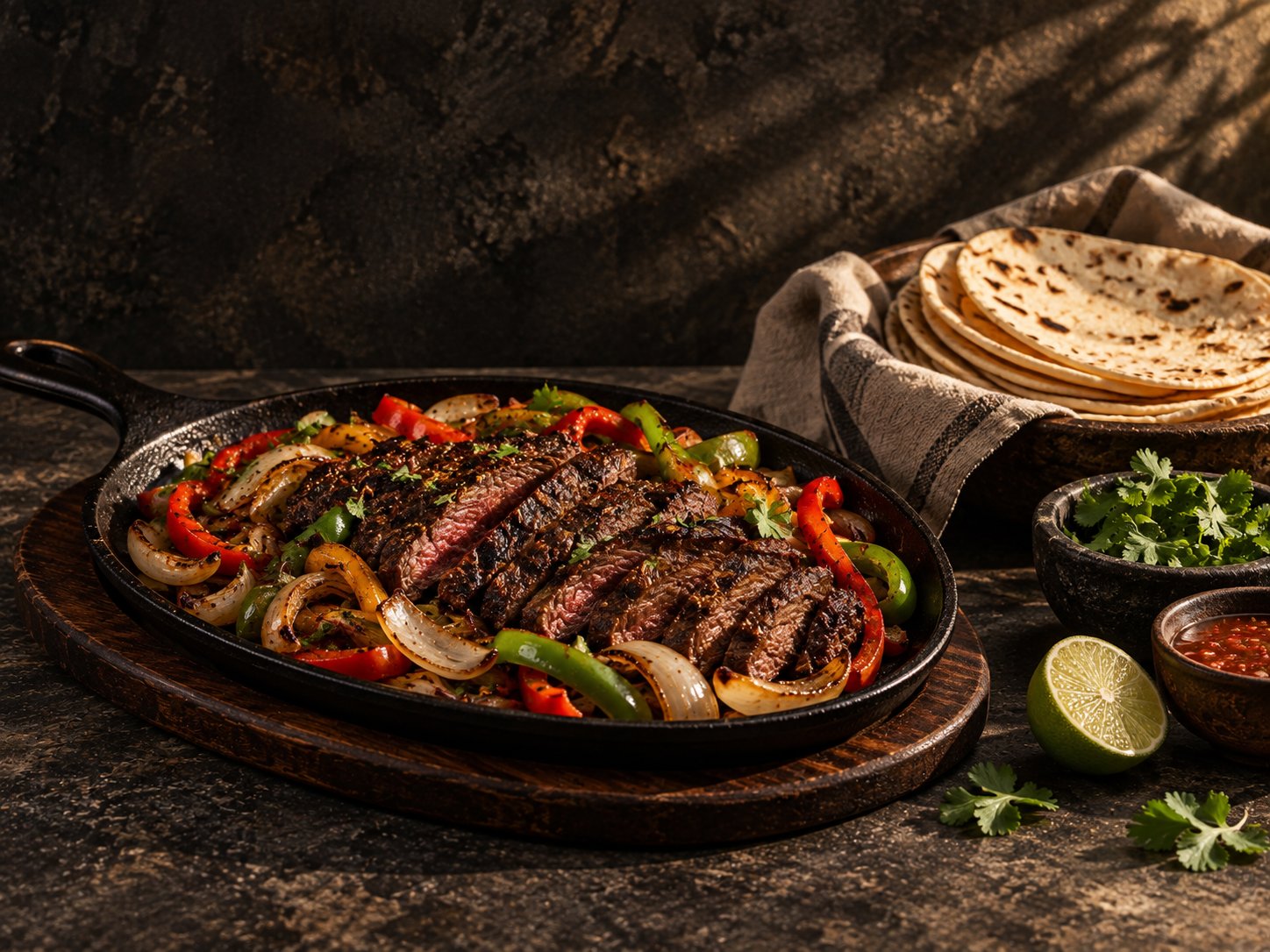
Beef fajitas
The word originally referred to the skirt cut, while the restaurant presentation expanded into the sizzling platters familiar today. South Texas ranch and working-class traditions matter to the story; Houston restaurants helped carry the dish to a much wider audience. Each recipe distinguishes its beef cut, marinade, fire, slicing, source, and restaurant-style additions instead of treating every fajita as the same dish.
Texas restaurant culture
Cheese enchiladas
Soft corn tortillas, melting cheese, chopped onion, and chile gravy form one of the clearest expressions of the Texas Mexican restaurant plate. The tortillas need enough contact with hot fat to remain pliable under sauce. The Dish DNA study follows that structure without presenting it as the only valid enchilada tradition.
Texas · Tex-Mex
Chile con queso
Queso ranges from smooth restaurant-style bowls to versions built from roasted chiles, tomato, meat, or other additions. Texture is the practical challenge: cheese, moisture, heat, and holding time must work together. Each future recipe will identify its style instead of treating every warm cheese dip as equivalent.
Mexican-American restaurant tradition
Crispy tacos
The shaped fried shell became a recognizable restaurant and home-cooking form in the United States. It should be discussed alongside—not in place of—the many soft-tortilla taco traditions of Mexico and the borderlands.
Texas restaurant culture
Combination plates
Enchiladas, tacos, tamales, rice, beans, gravy, and cheese gathered onto one numbered plate helped define the twentieth-century Tex-Mex restaurant experience. The plate is both food and business history: a practical format through which regional dishes reached a broad public.
Foundations
Rice, refried beans & charro beans
These are not anonymous sides. Fat, stock, tomato, chile, bean variety, mashing, and holding technique determine their character. Their strongest use on the site will be as connected foundation recipes that support enchiladas, fajitas, tacos, and combination plates.
Piedras Negras · Border history
Nachos
The earliest documented form is elemental: crisp tortilla pieces, melted cheese, and jalapeño, associated with Ignacio “Nacho” Anaya in Piedras Negras. Later restaurant, home, and stadium versions took different paths. Each recipe should name its structure instead of treating a composed chip, a loaded platter, and pourable-cheese concession nachos as the same dish.
A cuisine shaped through movement
Mexican American families, restaurant workers, entrepreneurs, ranch communities, and border cities all contributed to what became known as Tex-Mex. The history is larger than a single inventor or origin story.