Culinary Atlas · Texas
San Antonio
Public plaza tables, neighborhood cooks, commercial chile, and restaurant menus all belong to this city’s food history. They are connected, but they are not one origin story.
The first question to ask in San Antonio is not “Who invented Tex-Mex?” It is who cooked, who sold, who ate, and how their food became visible beyond a single table.
A city with more than one food timeline
San Antonio’s river and its surrounding communities long predate its restaurant industry. UNESCO’s profile of the city places Indigenous presence, Spanish colonial settlement, and later migration in the same long geographic story. That broad history is important, but it cannot tell us the recipe of a particular cook. The closer culinary evidence comes from menus, advertisements, family and business records, cookbooks, and accounts of public food selling.
The plaza table
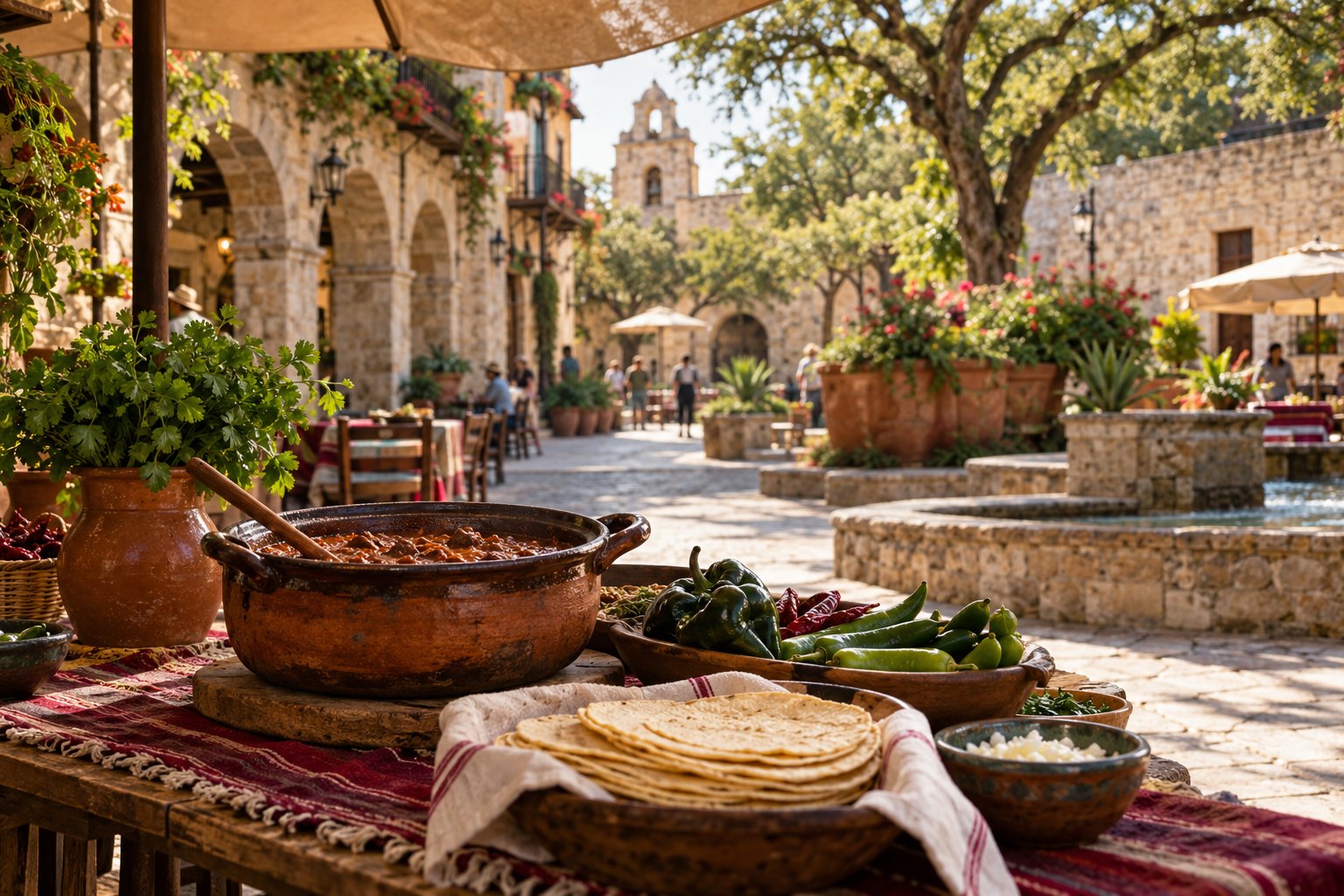
In the nineteenth century, women remembered as the chili queens sold food in San Antonio’s open-air plazas. UTSA Special Collections connects those sellers with the history of chile con carne in Texas. Their public presence matters: customers encountered Mexican and Tejana cooking at a table in the city rather than only in a private home. It would be too much to credit those women with every later restaurant dish or with a single standardized chili recipe; the record supports a public food tradition, not a universal formula.
From local chile to shelf and menu
Another change came through packaged ingredients. UTSA’s Gebhardt collection traces a San Antonio chili-powder business whose trademark dates to 1896. Its preserved company material helps show how Mexican-style flavors were marketed to a wider U.S. audience. A commercial powder is not a substitute for the women’s plaza cooking, and a restaurant menu is not a complete account of family kitchens; each is a different type of evidence about how food circulated.
Today the city’s Mexican and Texas Mexican restaurants offer many different preparations. Read a named recipe as that recipe, not as a decree about all of San Antonio. Our Texas Cheese Enchiladas teach one chile-gravy plate. The published Mi Tierra chile con queso is separately attributed; it should not be merged into a generic story of “the” city’s queso.
Follow the table
If you want to know why rice and beans often sit beside enchiladas, continue to the Dallas atlas page and the combination-plate story. That documented restaurant attribution belongs to Dallas, not to the San Antonio plaza history. Keeping those places and forms distinct is how the atlas makes the food clearer.
Sources and limits
UNESCO’s San Antonio profile supplies the broad city setting; UTSA Special Collections’ Tex-Mex overview documents the plaza tradition; and UTSA’s Gebhardt collection documents the chili-powder business. None establishes a sole inventor of Texas Mexican food or the exact recipe of every plaza seller.