The Border Table
Mexican Food
Mexican cuisine is not one fixed menu. It is a collection of regional food traditions shaped by landscape, Indigenous knowledge, colonial history, trade, migration, family practice, and constant change.
Follow the dish toward its region
Jalisco roots
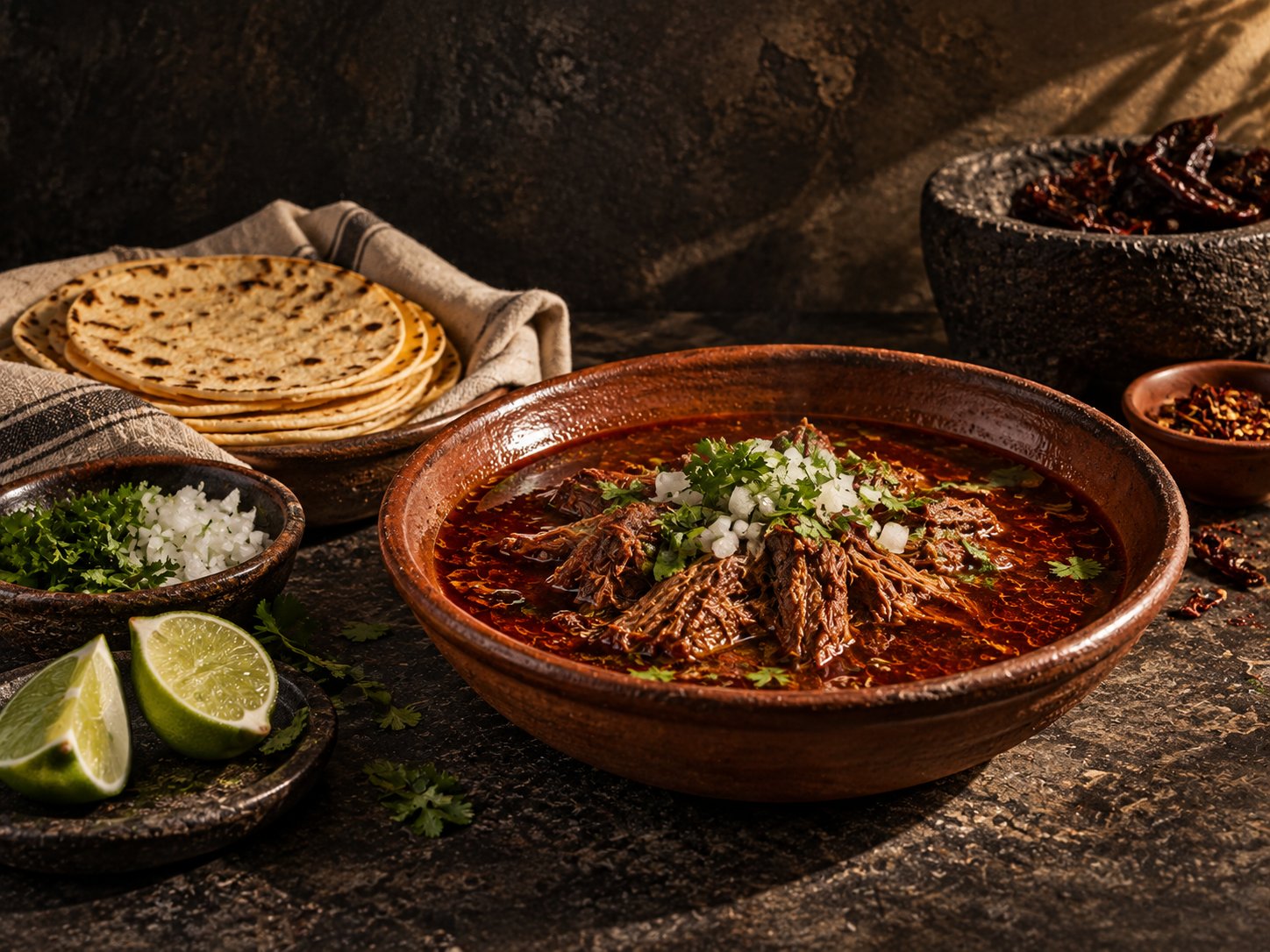
Birria
Birria is strongly associated today with Jalisco, but its meat, chile mixture, cooking vessel, and service vary. Goat remains historically important; beef versions and birria tacos have widened the dish’s contemporary reach. A useful guide should distinguish traditional regional forms from newer restaurant and social-media styles without declaring one universal formula.
Northern Mexico
Carne asada
More than grilled beef, carne asada is also a social practice: fire, tortillas, salsa, onions, and people gathered around the grill. Cut, seasoning, fuel, and accompaniments change by place and household. The recipe path will focus on the choices that determine browning, tenderness, smoke, and how the meat is served.
Mesoamerican roots · Many regions
Tamales
Tamales long predate modern national borders. Masa, wrapper, filling, size, and shape vary enormously across Mexico and beyond. Corn husks are only one wrapper; banana leaves and other regional materials matter too. The site will treat each future tamal recipe as a specific tradition rather than using one version to represent them all.
Regional Mexican
Pozole
Nixtamalized corn gives pozole its defining structure. Red, green, and white versions are connected with different regions and household practices. The important questions are the corn, broth, meat or meatless base, chile preparation, and the fresh table garnishes that complete the bowl.
Many traditions
Mole
Mole names a broad family of sauces rather than one chocolate-flavored recipe. Chiles, seeds, nuts, spices, fruit, bread or tortilla thickeners, and long preparation can appear in different combinations. Each future mole article will identify the specific regional or source tradition it follows.
Michoacan association
Carnitas
Carnitas rely on controlled cooking in fat, careful handling of different pork cuts, and a final texture that balances tenderness with browned edges. Regional and commercial traditions differ, so future recipes will state their source and method rather than claiming a single definitive version.
How these guides are framed
The Border Table separates documented history, regional association, practitioner knowledge, and editorial interpretation. Where evidence is incomplete or traditions overlap, the uncertainty stays visible.