Tools · technique
Kitchen Tools
Good tools make a cooking step easier to understand. These are the surfaces and vessels behind tortillas, salsas, beans, and slow-simmered dishes—not ingredients and not recipes.
What each tool does
Flat heat
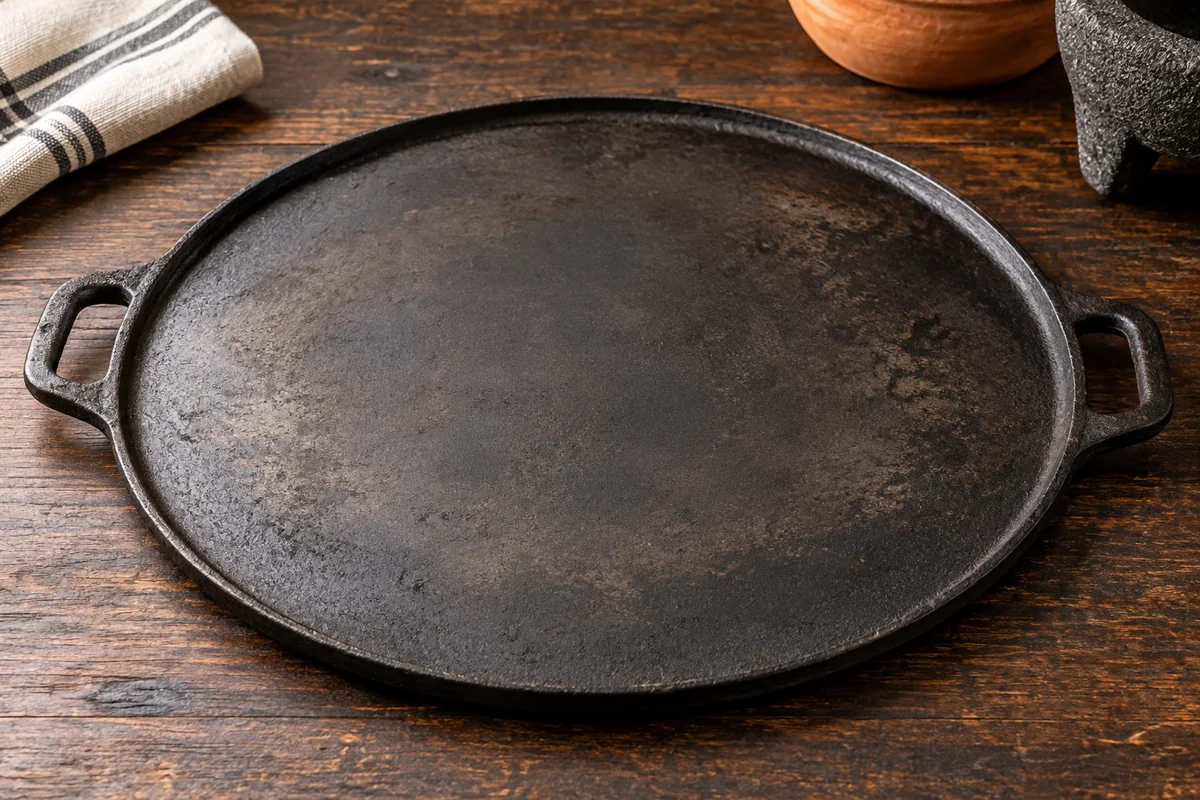
Comal
A broad griddle for tortillas and other foods that benefit from direct contact with an even hot surface. Material and size vary; a suitable flat skillet can serve the same practical role for many home cooks.
Even pressure
Tortilla press
Presses portioned masa between two liners into a thin round before it reaches the comal. It is a shaping tool, not a cooking surface; flour tortillas are usually rolled rather than pressed.
Mortar & pestle
Molcajete
A stone mortar used with a pestle to crush and mix ingredients. It can leave a different texture from a blender; choose food-safe stone and follow the maker's preparation and cleaning instructions.
Grinding slab
Metate
A stone grinding surface used with a handstone called a mano. Its broad working area makes it different from the bowl-shaped molcajete. It is a tool with a long history, not a required purchase for every modern recipe.
Cooking vessel
Cazuela
A broad term for a cooking dish or pot, often earthenware. Glaze, manufacturer guidance, and heat tolerance matter: do not place an unknown vessel over a burner or under a broiler.
Texture control
Bean masher
A hand tool for breaking cooked beans down to the texture you want. A sturdy potato masher or spoon can work, too; the important choice is how smooth or coarse to leave the beans.
For further reading: the Smithsonian's comal and tortilla-making record, its molcajete object record, and the Smithsonian Folklife discussion of mortars and metates.