The Border Table
Dish DNA
Dish DNA breaks food into technique, flavor, texture, sequence, and context. It is not a purity test. It is a way to understand cause and effect.
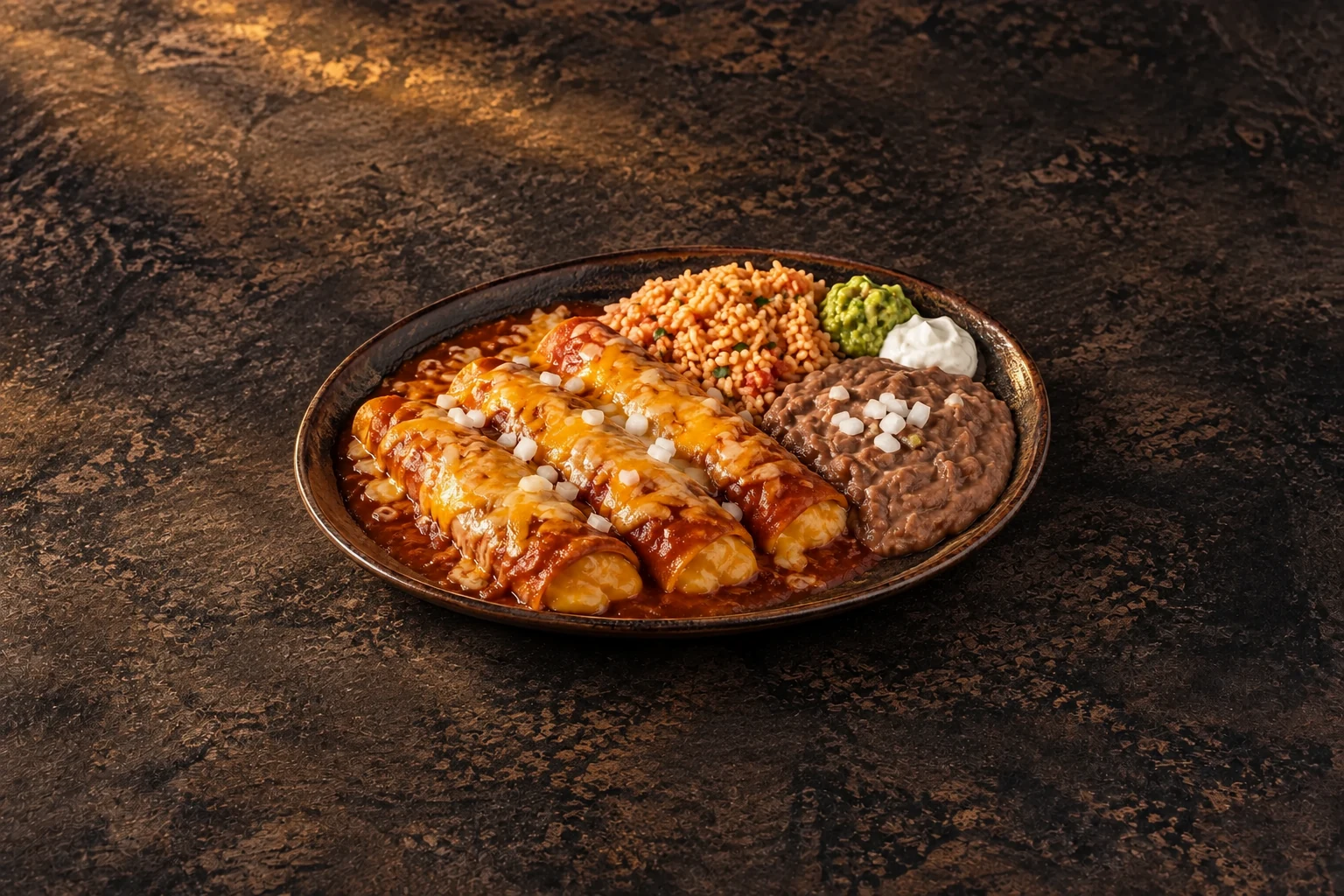
First study: cheese enchiladas
The tortilla needs a brief encounter with hot fat so it bends without dissolving. The chile gravy needs enough cooking for flour and spices to lose their raw edge. The cheese needs heat to melt without releasing excessive oil. Each action is simple; their sequence gives the dish its structure.
Tortilla
Soft enough to roll, resilient enough to hold sauce, and distinctly corn-forward.
Chile gravy
A smooth, roux-thickened sauce in which chile, cumin, stock, and browning must stay in balance.
Assembly
Sauce below and above, cheese distributed for even melting, and onion used with enough restraint to remain crisp and bright.
What Dish DNA will—and will not—do
It will explain defining roles, controlled variations, failure modes, and likely consequences. It will not call a variation inauthentic merely because it belongs to another region, family, era, or restaurant tradition.
Three more decisions that change the dish
Fajita: the cut and the slice
A hot grill colors the outside of skirt steak quickly; slicing across its long fibers changes how the cooked meat feels to eat. Compare the spare lime-and-mesquite Classic Beef Fajitas with the different marinade in Citrus-Sherry Fajitas. They share a cut, not an identical flavor.
Salsa: raw, roasted, or blended
Pico de Gallo keeps its chopped ingredients distinct. Salsa del Norte blends roasted tomato into a spoonable table salsa. Chipotle-Tomatillo Salsa begins with another fruit and chile combination. Texture and preparation tell you more than the word “salsa” alone.
Birria: broth, tortilla, and cheese
Birria de Res is the cooked meat and its broth. A birria taco puts that meat into a tortilla; quesabirria adds cheese and a griddled finish. The serving form changes, while the underlying birria recipe remains its own preparation.
One lime drink, two textures
The Classic Margarita is shaken with fresh lime and poured over a large cube. The Frozen Margarita uses the owner-supplied frozen-limeade formula and is blended. These are separate recipes; the frozen one is not presented as the historical original of the drink.
Read the decision, not just the name
A useful comparison asks what changes in the finished food when one decision changes. These examples come from the published recipes; they are explanations of method, not reports of a new kitchen test.
- One filling, two structures
- Carne Asada Tacos keep the steak and toppings open in smaller tortillas. The Mission-Style Burrito wraps steak, rice, beans, and salsa into one large, portable meal. Tortilla size and assembly change the eating experience before the protein changes at all.
- One tomato, two salsa textures
- Pico de Gallo leaves raw pieces visible and lets lime coat them. Salsa del Norte broils and blends tomatoes into a pourable table sauce. Calling both “red salsa” hides the most useful difference.
- One pot, another serving form
- Birria de Res supplies meat and broth; quesabirria adds a griddled tortilla and optional cheese. The taco is assembled from the cooked dish, not a substitute for making it.
When you compare a recipe, ask three questions: what is the ingredient’s job, what step changes its texture, and what remains optional at the table? That is more useful than a verdict about whether one family’s version is “authentic.”