Food Stories · Beans, the cooking pot & the border table
Refried Beans: From the Pot to the Plate
A pot of tender beans becomes a smooth accompaniment, a filling, or a layer beneath something crisp. Follow the bean’s history, the meaning of refritos, and two distinct recipes on The Border Table.
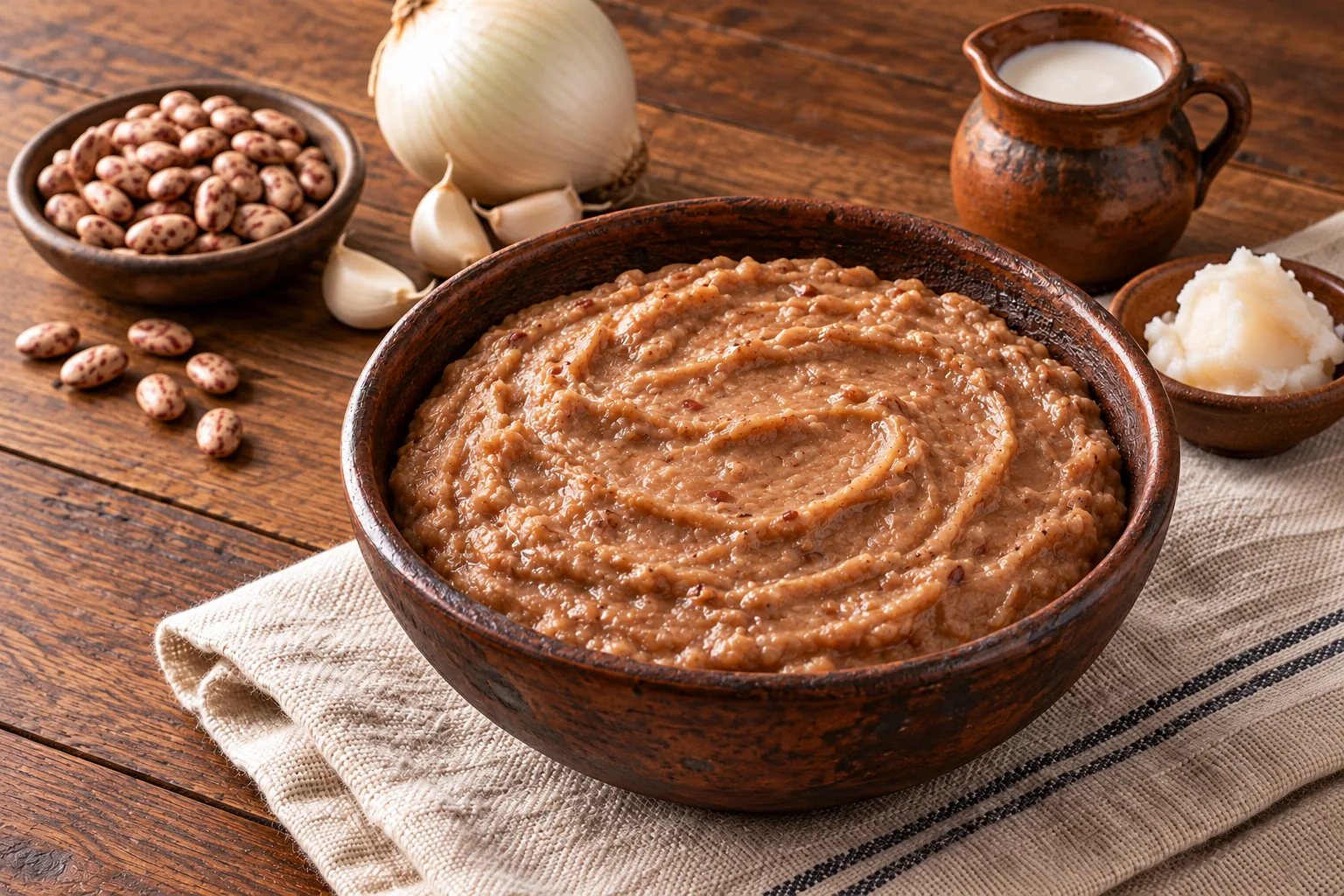
For a smooth, spoonable side, begin with our Refried Beans: cooked pintos mashed with onion, garlic, bean liquid, and dairy in lard or bacon drippings. For the owner’s archived preparation, choose Refried Beans with Shortening, which starts with dry beans and includes the bean-pot stage. The starting point changes the work you need to do before dinner.
The bean has a history older than the skillet dish
The common bean, Phaseolus vulgaris, has a deep American agricultural history. A 2014 genome study by Jeremy Schmutz and colleagues compared wild beans and cultivated landraces from Mesoamerican and Andean gene pools. Its genetic analysis confirmed two independent domestications. This research concerns the crop’s development; it does not date the first pot of refried beans.
Beans also belong to a continuing food system. UNESCO’s 2010 inscription of traditional Mexican cuisine describes corn, beans, and chile at its foundation. The account brings cultivation, harvesting, cooking, and communal eating together, with Michoacán as a paradigm and practitioners across Mexico. It recognizes knowledge and community practices that extend well beyond a restaurant side.
That broader view gives the humble cooking pot its place in the story. Growing beans and knowing how to cook them tender are substantial traditions in their own right. Mashing and cooking them with fat is one preparation within that larger life of the ingredient.
What does refritos tell you?
The RAE–ASALE dictionary entry for refreír includes frying again and frying thoroughly among the verb’s meanings. The English name “refried beans” can therefore suggest a stricter sequence than a particular recipe actually uses.
Larousse Cocina describes cooked beans mashed or blended and fried in lard or oil until the liquid reduces to a soft, firm paste. Its entry also places them with foods such as tostadas, tortas, gorditas, and panuchos. The practical sequence is clear: first cook the beans, then develop the mashed preparation. The recipe you choose determines how many pan stages it has.
Our two formulas illustrate that point. The main recipe begins with already-cooked pintos. The archived shortening recipe includes both cooking the dry beans and its subsequent fat and skillet stages. The familiar name connects them while their complete instructions distinguish them.
A staple at home and in the restaurant record
In the Handbook of Texas entry “Tex-Mex Foods,” Joe S. Graham describes whole beans cooked in an olla and several further preparations. He records pinto beans as a popular choice and mashed beans cooked with lard and aromatics among the foods served in burritos and alongside restaurant meals. His account also emphasizes differences between South and West Texas food traditions.
A specific restaurant document gives another view. The El Fenix Cafe menu catalogued approximately 1951, provided by Denton Public Library to UNT’s Portal to Texas History, lists Frijoles Refritos on its Mexican dishes page. Rice and numbered combination plates appear there too. Explore the Dallas atlas and Combination Plate story for this restaurant setting.
Choose the version by where you start
Cooked pintos, onion, garlic, and a creamy finish
Our main Refried Beans is adapted from page 378 of Cheryl Alters Jamison and Bill Jamison’s The Border Cookbook (1995), supplied by the owner. The recipe begins by softening onion and garlic in lard, bacon drippings, or a mixture. Drained cooked pintos are then mashed in the pan.
Reserved bean liquid and cream or evaporated milk go in gradually. That allows the mixture to become moist and fairly smooth before further cooking brings it to a spoonable thickness. The ground mild red chile and the listed garnishes are optional. Dairy is a choice in this specific source recipe; it is not a requirement built into the name frijoles refritos.
Dry pintos and shortening: the owner’s 2021 version
Refried Beans with Shortening starts earlier in the process. The dry beans cook in water until tender; the source adds salt near the end. Shortening is worked into the beans, and a further small amount appears in the final skillet stage, where they are mashed.
The complete recipe spells out both fat stages from the old card. Its ingredients and sequence distinguish this preparation from the dairy-enriched version above. Choose this page when you want to follow the owner’s archived formula from the dry-bean pot through the final mash.
Tender beans, useful liquid, and the texture you want
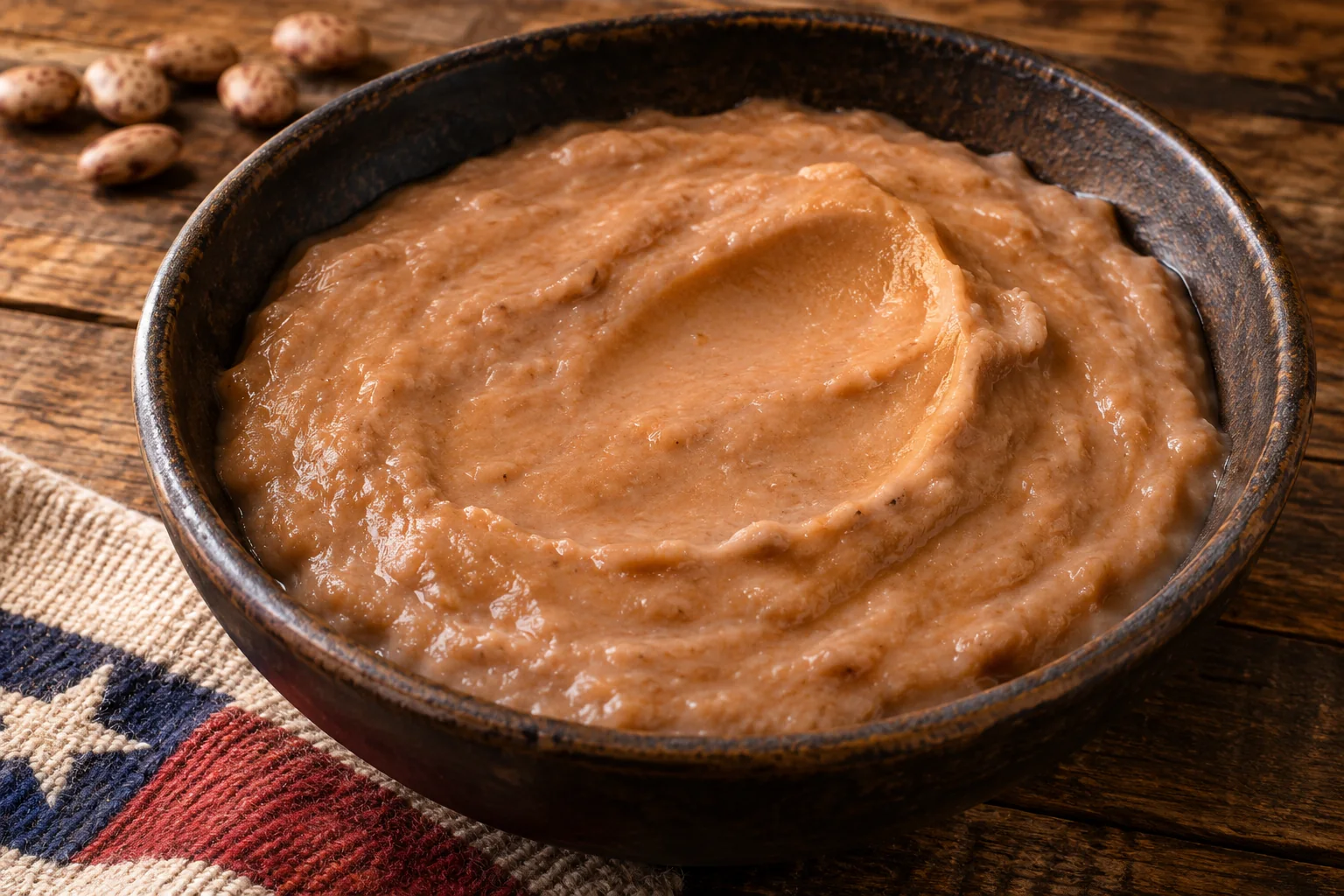
Start with the pinto-bean guide for choosing dry beans, cooking them tender, and saving cooking liquid. The pantry section keeps dry beans distinct from the prepared food in Kitchen Foundations. A bean masher gives you control over how much of the bean remains visible.
Illinois Extension’s preparation also reserves cooking liquid, mashes cooked beans, and cooks the mixture until thick; it notes that older beans can take longer to soften. Those are useful practical comparisons. Our recipes retain their own fats, seasonings, quantities, and order.
For the main version, follow onion and garlic through the Fresh Produce guide, and use the lard entry for the rendered fat. Kitchen Logic returns to the smooth, spoonable finish. Read the complete recipe for its dairy, optional toppings, and storage instructions.
A side, a filling, or a layer
For a combination plate, pair your chosen beans with Mexican Rice or the green-chile rice. The Mexican Rice story follows their different pan methods and historical setting. Add a main dish such as Carne Guisada, or explore the choices in Build Your Border Meal.
Beans also do different jobs in the existing recipes. Loaded Nachos uses a prepared refried-bean layer; the Mission-Style Burrito uses whole beans. Following those individual instructions lets the same ingredient take a different form in the finished meal.
Continue through the atlas
The Rio Grande Valley atlas connects home cooking and border food histories. Follow San Antonio and Dallas for distinct restaurant landscapes, and Houston for the cookbook rice served alongside this part of the meal. These routes connect dishes and dining settings while each recipe keeps its own source.
Sources for the Refried Beans story
- Schmutz et al., “A reference genome for common bean and genome-wide analysis of dual domestications” (2014) — genetic evidence concerning the crop.
- UNESCO, traditional Mexican cuisine, inscription 00400 (2010) — agriculture, cooking, and community knowledge.
- RAE–ASALE, “refreír” — the verb’s meanings.
- Larousse Cocina, “Frijoles refritos” — the cooked, mashed preparation and its uses.
- Joe S. Graham, “Tex-Mex Foods,” Handbook of Texas — Texas bean preparations and regional context.
- El Fenix Cafe menu, approximately 1951, and its Mexican dishes page — a restaurant record.
- Jenna Smith, Illinois Extension, “Save on sodium with homemade refried beans” (2021) — a comparison for cooked beans, reserved liquid, and mashing.
- Cheryl Alters Jamison and Bill Jamison, The Border Cookbook (1995), p. 378 — owner-supplied source for our main recipe.
- The owner’s 2021 recipe archive — source for Refried Beans with Shortening.
The agricultural history, dictionary definitions, and menu records answer different parts of the story. The recipe pages give the individual formulas and full attribution. Read Sources & Method or send a correction.