Food Stories · Cheese, chiles & Texas tables
Chile con Queso: From the Chile to the Dipping Bowl
Printed recipes, restaurant tables, and the cheese you choose help explain a familiar dip. Follow the records, then choose between two complete recipes with different textures.
Make Mi Tierra’s Chile con Queso for a smooth, cream-enriched dip with finely minced vegetables. Choose the owner’s Classic Chile con Queso for tomato, poblano, crema, and asadero or Monterey Jack. Both recipes are here in full; this story explains the different traditions and choices around them.
Start with the texture you want
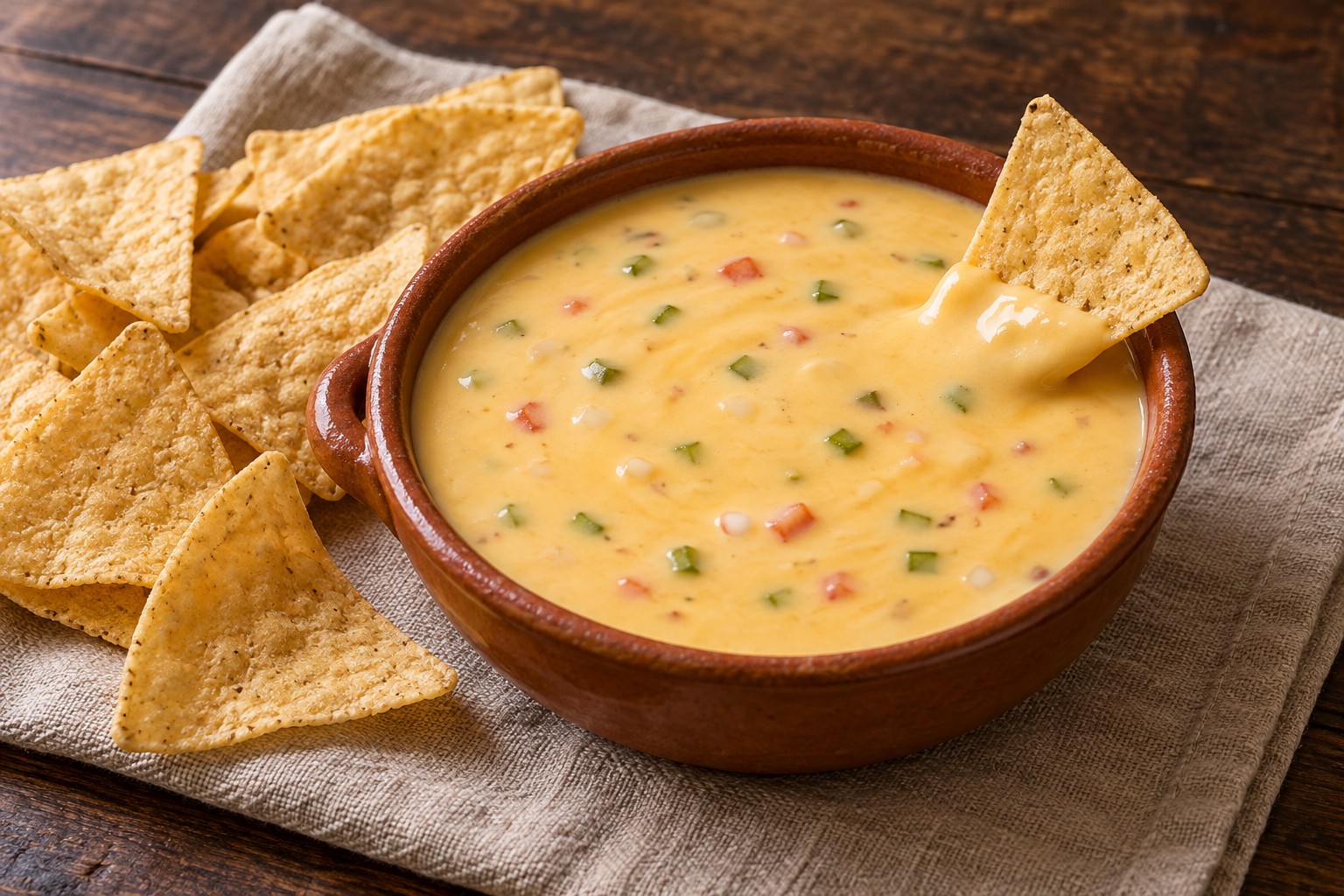
A chip lifted from a smooth bowl of queso carries a coating. A spoonful from a vegetable-forward pan brings more visible tomato and chile with the cheese. The name can encompass both experiences, and the ingredient list tells you which one you are about to cook.
Our Mi Tierra recipe combines Velveeta, sharp cheddar, and heavy cream. Its small pieces of jalapeño, tomato, and onion punctuate the cheese. The owner’s archived Classic recipe softens tomato and poblano first, adds crema and water, then melts thin slices of asadero or Monterey Jack off the heat. Read each complete method before choosing your ingredients.
For a third experience, follow Queso Flameado with Chorizo. It layers asadero around a reduced filling and goes into the oven. The companion Queso Flameado story follows that hot dish and its related fundido preparations.
The printed record contains more than one kind of queso
In an authorized excerpt from her 2017 book Queso!, published by Edible Austin, Lisa Fain follows changing printed preparations. She discusses an 1896 Land of Sunshine recipe called Chiles Verdes con Queso, built around green chiles, tomato, and cheese. She also describes an early-1920s San Antonio Woman’s Club cookbook version using American cheese, cayenne, and paprika.
Fain’s account later identifies a 1939 Lubbock church cookbook using Velveeta and a 1949 Ro-Tel advertisement pairing canned tomatoes and chiles with cheese. These are stages in the printed and commercial record she researched. They help explain changing ingredients and serving habits while leaving the exact moment of the dish’s creation unresolved.
San Antonio also has an important record of food promotion. UT San Antonio’s cookbook collection guide catalogs a 1911 Gebhardt booklet, Mexican Cooking: The Flavor of the 20th Century. The library’s company-records exhibition explains how cookbooks helped sell chili powder and later convenience foods. This is evidence of recipe circulation and marketing; the catalog entry alone does not establish a queso formula.
A named restaurant preparation in print
The recipe published here as Mi Tierra’s Chile con Queso credits Robb Walsh’s The Tex-Mex Cookbook, page 202. The publisher identifies the book’s 2004 edition. Our recipe’s source note keeps the named preparation and its ingredient choices together.
The restaurant family’s own account of Mi Tierra’s beginnings places Pedro and Cruz Cortez’s three-table café in San Antonio’s Market Square in 1941. Their dinner menu marked 08/24 lists Chile con Queso. The menu documents a serving connection; Walsh’s attributed recipe supplies the particular formula used on this site.
Explore the San Antonio atlas for the city around that restaurant table. The street, market, business, printed recipe, and home kitchen are connected parts of the story, each with its own record.
A smooth dip and a vegetable-rich pan use different methods
The Canadian Food Inspection Agency’s processing explanation describes cheeses blended with emulsifying agents and heated during manufacture. That processing background helps explain why the named cheese product in the Mi Tierra recipe behaves differently from an unprocessed melting cheese.
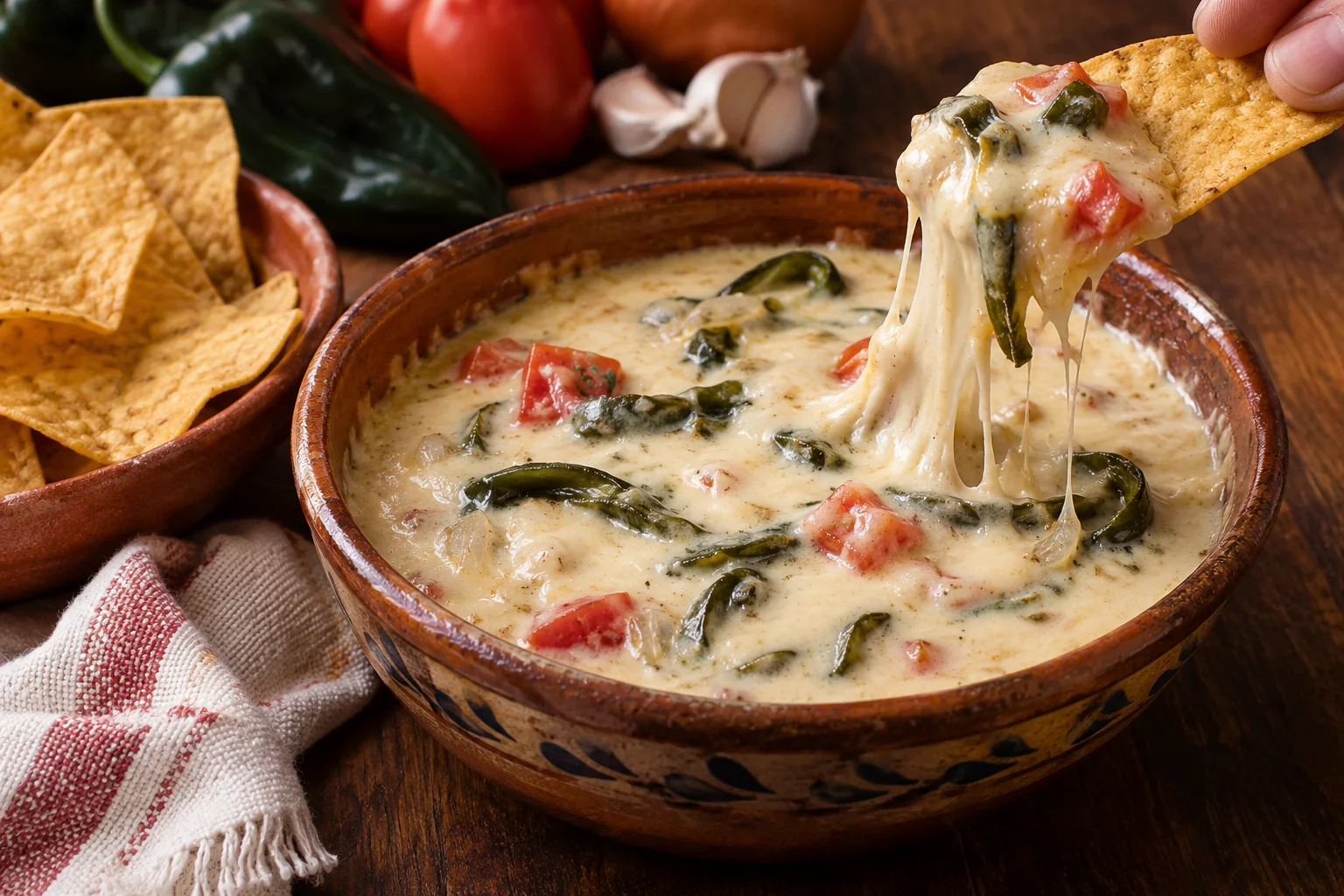
In our Mi Tierra method, gentle indirect heat melts the two cheeses before cream is added gradually. In the Classic recipe, the vegetables and liquids are already hot when the cheese is scattered over them; the covered pan then stands off the heat. These are distinct cooking sequences designed around the ingredients on their respective lists.
Use the Cheese, Cream & Crema guide to recognize the named products. A queso recipe offers a useful sequence to follow, rather than a universal rule that every cheese will behave alike. The complete pages keep measurements, cooking cues, and serving guidance close together.
Follow the chile as well as the cheese
Our smooth dip uses finely minced jalapeño; the archived Classic version names poblano in its method. The fresh-produce entries help identify both, along with tomatoes and onions. Their size and preparation matter to the finished texture.
The prepared-cheese foundations, equipment notes, and Kitchen Logic cues explain the pan choices and different endpoints. For another cheese preparation, the Quesadilla story returns the cheese to a tortilla rather than a dipping bowl.
Follow the food into another setting
The Original Ninfa’s published October 2023 lunch-and-dinner menu lists both chile con queso and queso flameado, describing them separately. The Houston atlas provides the restaurant setting around that comparison.
For the asadero named in the owner’s Classic recipe, continue through the El Paso and Paso del Norte atlas to the documented cheesemaking connection near Ciudad Juárez. An ingredient’s regional setting and a restaurant serving are different kinds of connection. Choose the complete Mi Tierra dip, Classic queso, or oven-baked flameado for the dish you want at home.
Sources for the Chile con Queso story
- Lisa Fain, Queso! excerpt in Edible Austin (2017) — her research into printed recipes and commercial promotion.
- UT San Antonio, Mexican Cookbooks and Gebhardt exhibition — collection records and cookbook marketing.
- Penguin Random House, The Tex-Mex Cookbook — publication details; the recipe’s source note records page 202.
- La Familia Cortez, How It All Began and Mi Tierra menu marked 08/24 — family history and serving record.
- CFIA, Formulation and processing controls — processed-cheese background.
- The Original Ninfa’s, October 2023 menu — Houston serving comparison.
- The owner’s Classic queso and Queso Flameado — the separate archived preparations discussed here.
Sources checked 9 November 2026. Read Sources & Method, or send a correction.