Ingredients · fresh
Fresh Produce
The fresh ingredients behind a dish have different jobs. Choose a chile for its flavor as well as heat, a tomatillo for its tartness, and a lime for the final lift.
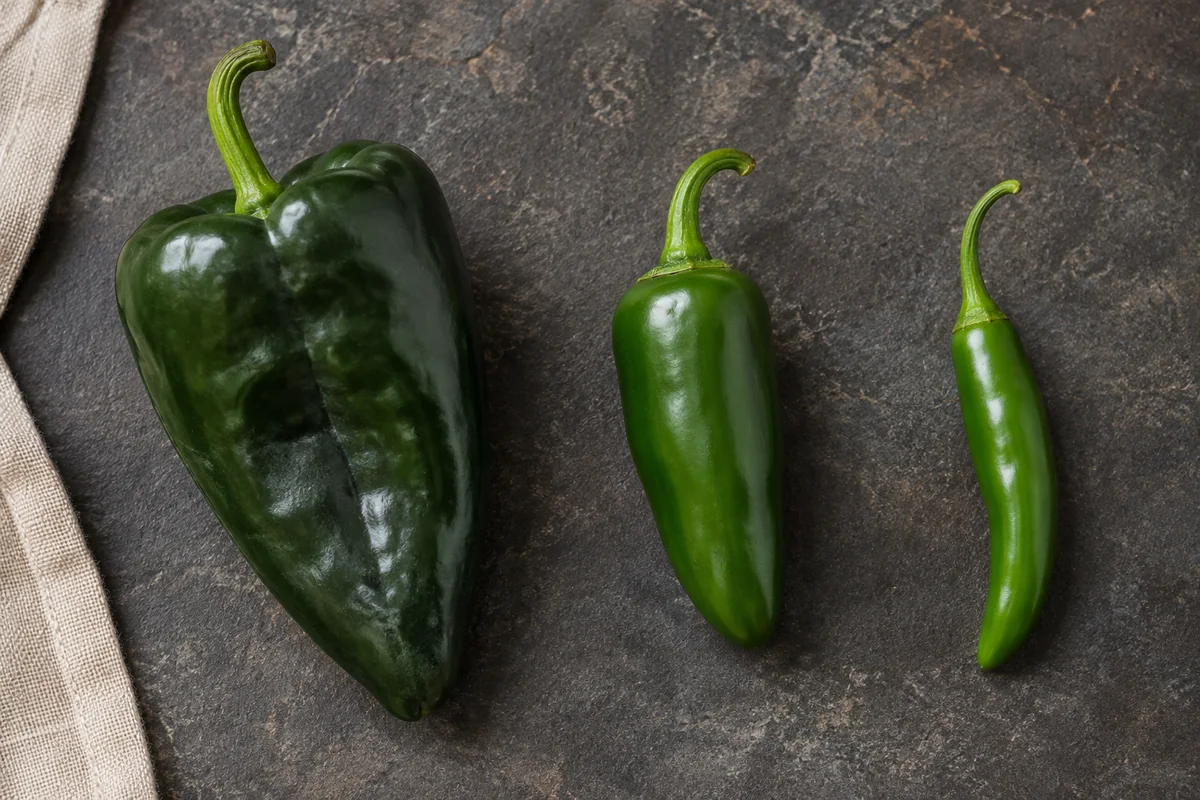
Fresh chiles
These are fresh produce, not pantry chiles. A dried ancho comes from a ripened poblano; a pasilla is generally a different dried chile. Market names are not always consistent, so look at the actual pod as well as the label.
Long green chile
Anaheim
A long, relatively mild green chile used roasted, peeled, and chopped. New Mexico-type chiles include many cultivars; an Anaheim label does not tell you exactly which one you have.
Broad & dark green
Poblano
A broad-shouldered fresh chile that can be roasted and peeled or cooked whole. When a ripe poblano is dried, it is commonly called an ancho; do not confuse it with the usually longer, darker dried pasilla.
Thick-fleshed
Jalapeño
Choose fresh jalapeños when you want a firm chile that can be sliced, chopped, or pickled. A smoked-dried jalapeño becomes chipotle, a different ingredient in the pantry.
Small & slender
Serrano
A small fresh chile often chopped into salsa for a direct, bright heat. Its size is not a reliable heat measurement: taste a tiny amount before deciding how much to use.
Small chile
Pequin
Small piquín-type peppers can be notably hot. Names such as piquín and chiltepín may be used differently in different markets, so do not assume that two small red chiles are identical.
Fruity & forceful
Habanero
Habaneros can bring a fruity aroma and substantial heat. Start sparingly, use gloves for extended handling, and never treat a fixed heat ranking as a promise about an individual pepper.
Handle hot chiles with care
Capsaicin can irritate skin and eyes. Wash hands and tools after cutting hot chiles; avoid touching your face. If chile gets in an eye, rinse with plenty of lukewarm water for 15 minutes and seek medical advice if symptoms persist. Do not put bleach or other cleaning chemicals on skin or in eyes.
Beyond the chile basket
Husk-covered fruit
Tomatillos
Look for firm fruit that fills its papery husk. Remove the husk and wash away the tacky coating before preparing it. Tomatillos are not green tomatoes and may be used in a bright salsa or cooked sauce.
Finishing acidity
Limes
Use juice when a dish needs brightness at the end, or zest when you want citrus aroma without extra liquid. Size and juice yield vary, so measure for a recipe instead of assuming every lime is equal.
Cactus pads
Nopalitos
Nopalitos are cut young cactus pads, not the plant's fruit. Buy cleaned pads if you are new to them; uncleaned pads can carry fine spines that demand careful removal.
Cactus fruit
Prickly-pear fruit
The fruit is distinct from the edible pad and may be sold as tuna. Its small hairlike spines can be hard to see, so handle unpeeled fruit with suitable protection or buy it already cleaned.
For further reading: New Mexico State University on chile types; Oregon State University on poblano and pasilla; Utah State University on tomatillos; Poison Control on capsaicin exposure.