Food Stories · Avocado, texture & the table
Guacamole: Avocado, History, and the Table
A Nahuatl name, a printed avocado sauce from 1831, and the choices inside today’s bowl. Follow the story back to a simple guacamole you can make.
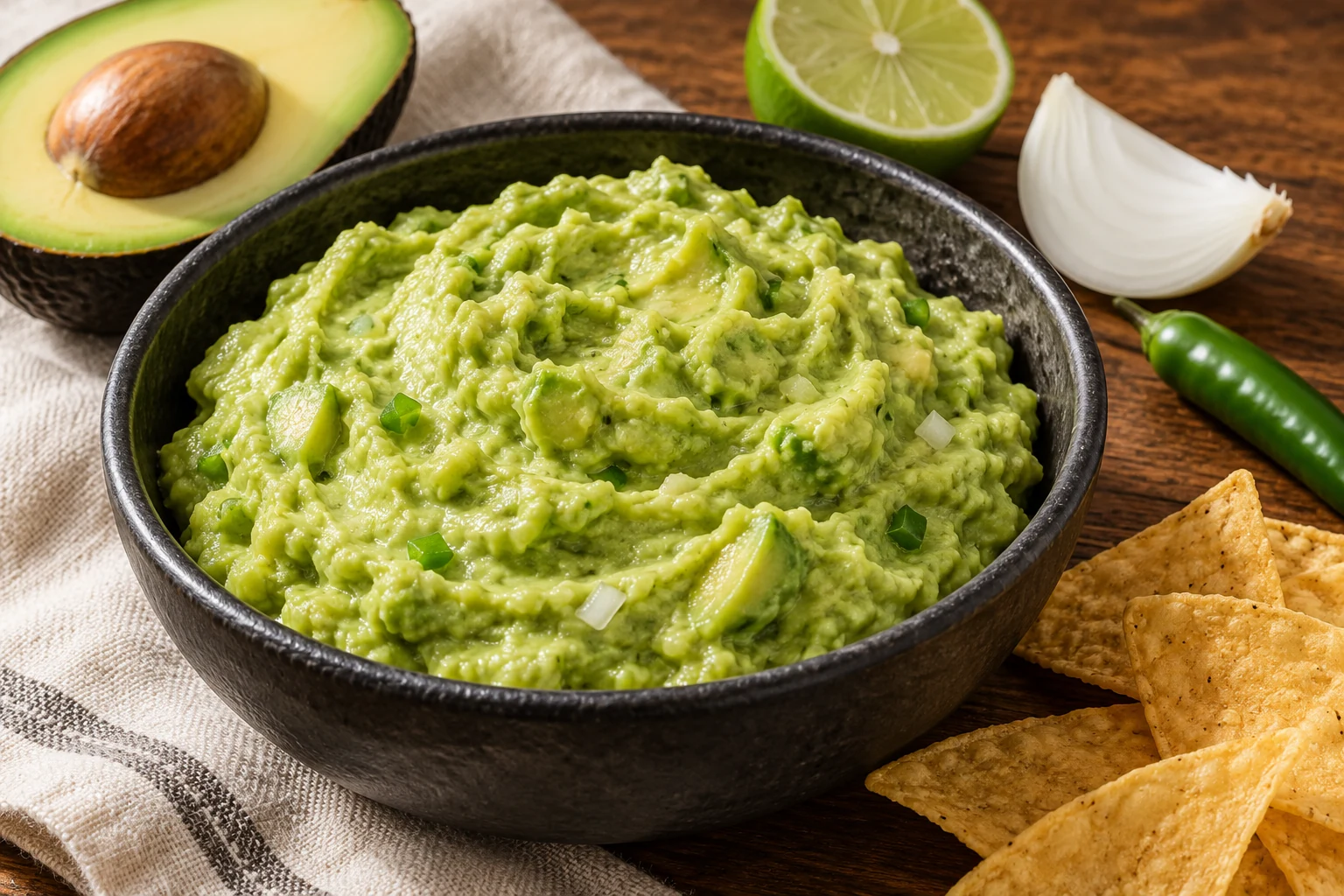
Our Classic Guacamole keeps avocado at the center: ripe Hass fruit, white onion, green chile, salt, and lime, with lemon as the recorded alternative. A fork makes it mostly creamy while leaving a few small pieces. That particular bowl is a useful place to begin a story with many variations.
The name carries a Mexican language history
The RAE–ASALE dictionary traces “guacamole” to the Nahuatl word ahuacamulli. The word connects the dish to an Indigenous language whose vocabulary remains part of everyday Mexican food talk. An etymology tells us about a name; it does not identify the first person to mix the ingredients in a particular modern bowl.
El Colegio de México’s Diccionario del español de México describes a salsa based on ground or chopped avocado pulp, generally with tomato, onion, cilantro, and green chile. Its examples include tacos and carne asada with guacamole. The emphasis on the avocado and its preparation helps explain why guacamole works both as something to scoop and as an accompaniment to a meal.
An avocado sauce already in print in 1831
UTSA Special Collections reproduces “De aguacate” from El cocinero mexicano (1831), page 137. It calls for avocado ground with green chile, which may be raw or roasted, and a little water. Chopped onion is offered for those who want it. This is a concrete printed example of an avocado-based sauce with choices built into its method.
This is a dated cookbook example, with choices of chile treatment and onion. Use today’s complete recipe for cooking; the older passage provides historical context.
The tool also has a history. Museo Amparo’s record of a western Mexican stone mortar explains its suitability for grinding condiments, fruits, and vegetables into sauces or pastes. Our molcajete guide follows that equipment. The recipe here uses a fork and bowl, which gives the cook direct control over the mash.
Several ingredients can belong to the wider tradition
Larousse’s culinary dictionary describes guacamole with green chile, tomato, onion, and cilantro, and records regional additions that can include fruit, aromatic leaves, or insects. It also describes guacamole served with tacos, rice and beans, and fried corn-tortilla chips. The entry gives a view of the preparation’s range across Mexican tables.
Our five-ingredient version takes a simpler path. Tomato and cilantro are omitted in its source. The finely minced onion and chile season the avocado, and the citrus stays restrained. Use that full recipe for this bowl; use another documented recipe when you want a different variation. “Classic” on this page names the preparation published here, without making its ingredient list a rule for every kitchen.
If you want distinct pieces of tomato, onion, chile, and cilantro alongside the avocado, make Pico de Gallo as a separate salsa. Keeping the bowls separate lets the guacamole retain its creamy character and gives everyone a choice at the table. The Restaurant-Style Salsa story follows those fresh, roasted, and cooked preparations.
The avocado decides how the mash will feel
The ripe fruit is worth finding before you reach for the seasonings. The California Avocado Commission recommends gentle pressure in the palm to judge readiness. Ripe fruit yields slightly. Hass skin usually darkens during ripening, but other varieties can stay green, so color alone is an incomplete guide.
The University of California’s harvesting guidance distinguishes maturity on the tree from the softening that occurs after picking. For the home cook, that helps explain why an avocado can be mature yet still too firm for the creamy mash described in this recipe. Our avocado guide connects the fruit choice directly to the finished guacamole.
Make a creamy base with small pieces
In this recipe, hand mashing is a texture choice. Press most of the avocado with the fork, then stop while a few small pieces remain. The onion and chile are minced finely so their flavor spreads through that base. Follow the measured citrus and salt on the recipe page, then taste as directed. Longer mashing changes the texture; extra garnishes change the particular version you are making.
Read the onion, serrano, jalapeño, and lime profiles when choosing the produce. The FDA’s produce guidance recommends washing produce under running water and keeping ready-to-eat produce separate from raw meat and its utensils. That matters even when the avocado’s skin will be discarded.
Prepare the bowl close to serving. The California Avocado Commission advises citrus and a covering against exposed cut avocado to limit discoloration. Our recipe gives its own covering, refrigeration, and serving directions. Keep those directions with the quantities when you cook.
Put it beside the meal you want to make
A small bowl can connect several dishes without taking over the plate. Serve this guacamole alongside Classic Beef Fajitas, Carne Asada Tacos, or Loaded Nachos, as the recipe suggests. Offer a fresh or cooked salsa separately when you want another texture or level of heat.
For the places around those meals, explore the Rio Grande Valley and Reynosa–Tamaulipas atlas articles. They follow distinct border histories and tables. The San Antonio article adds another Texas food setting. These links help place a meal while the guacamole recipe retains its own source and ingredients.
Sources for the Guacamole story
- RAE–ASALE, Guacamole — the Nahuatl etymology.
- El Colegio de México, Guacamole — the Mexican Spanish definition and examples.
- UTSA Special Collections, Salsas 1831 — the reproduced avocado-sauce passage.
- Museo Amparo, stone mortar and handstone — equipment context.
- Larousse, Guacamole — regional variations and serving contexts.
- California Avocado Commission, choosing and using avocados — ripeness and handling.
- University of California, Harvesting and Storing Avocados — maturity and softening.
- FDA, Selecting and Serving Produce Safely — washing and separation.
The Classic Guacamole recipe contains the full ingredient amounts, method, and its owner-supplied source note.
Read the Salsa story · More Food Stories · Suggest a correction