Food Stories · Piedras Negras, Eagle Pass & the restaurant table
Nachos: From the Original Bite to the Loaded Plate
A crisp corn chip, melted cheese, and a border restaurant story lead to two recipes you can cook: the owner’s individually topped nachos and our Loaded Nachos with optional fajitas.
Start with the bite rather than the mound. In both of our recipes, a chip receives its own beans and cheese before it reaches the oven. That makes the serving easy to understand: every piece carries the filling, and the cool accompaniments can stay beside the hot platter. Choose Original Individually Topped Nachos for the owner’s archived version, or Loaded Nachos (Nachos El Norte) for the bean-and-cheese base and its optional fajita finish.
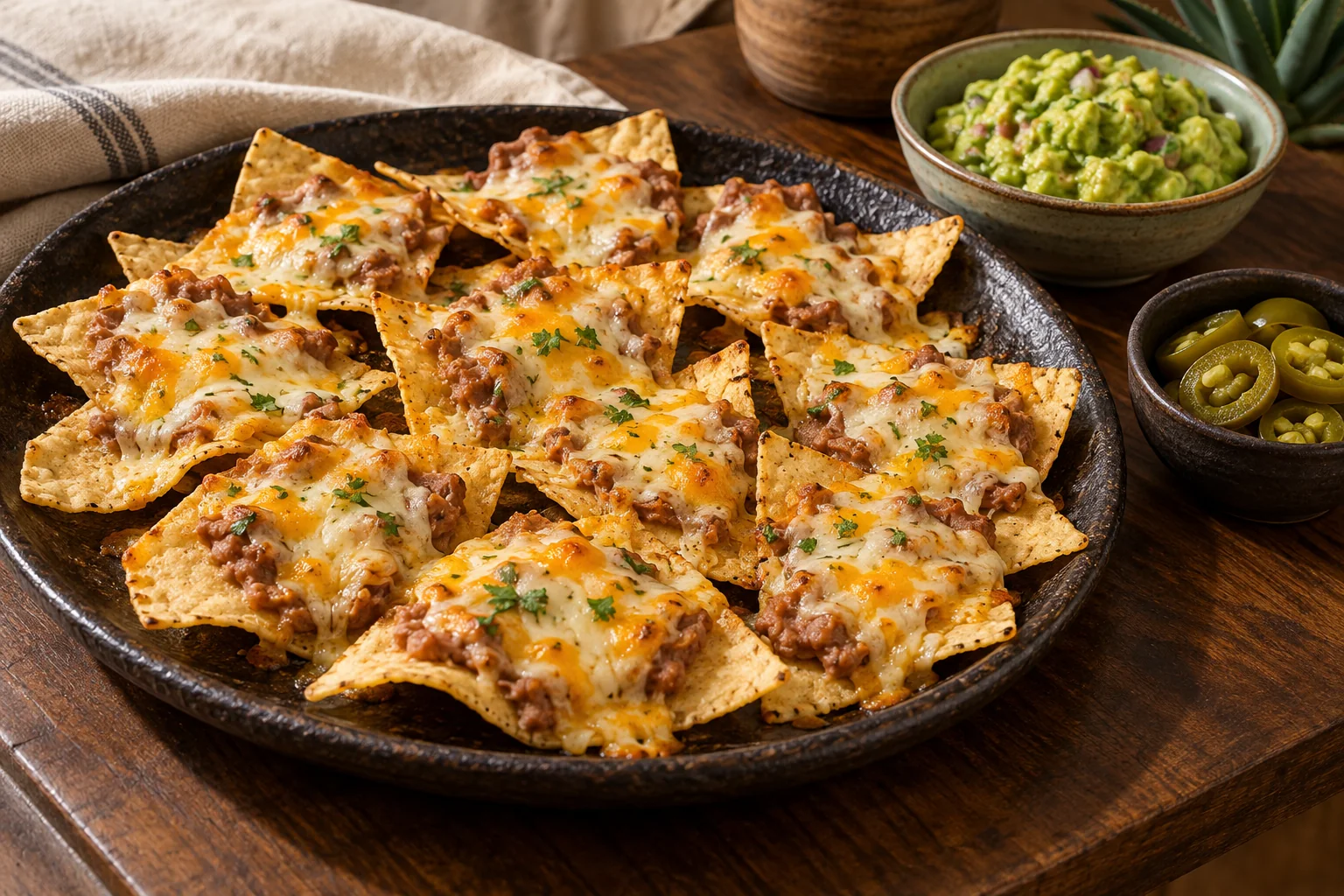
A Mexican border beginning
Piedras Negras’s visitors bureau credits Ignacio “Nacho” Anaya with creating the dish in 1943 while serving visitors outside normal restaurant hours. Its account places the invention in Piedras Negras, Coahuila, across the river from Eagle Pass, Texas. The city still celebrates that association through its Nacho Fest.
There is a useful distinction between the place’s remembered origin story and the printed evidence that survives. Smithsonian’s account identifies the restaurant as the Victory Club and describes tortilla pieces with melted cheese and jalapeño. It recounts U.S. military wives as the diners. Those details come through later reporting; a retelling is not a transcript of the meal.
The Piedras Negras–Eagle Pass atlas follows the two cities beyond that restaurant account: the river crossing, rail connections, regional foods, and the communities for whom this is home. Naming the Mexican birthplace keeps it visible when the dish appears on a Texas menu.
What a church cookbook helps establish
Smithsonian reports that Oxford English Dictionary researcher Adriana P. Orr investigated the name in 1988 and traced a 1954 St Anne’s Cookbook, printed by the Church of the Redeemer in Eagle Pass, containing “Nachos Especiales.” That is a published foothold close to the border, rather than proof supplied by a modern menu. This account of the cookbook comes through Orr’s research as reported by Smithsonian; it is not a claim that we inspected the original volume.
A dated recipe record and an invention claim answer different questions. The former establishes that a named dish was being recorded; the latter asks who first made it, where, and under what circumstances. Keeping those questions separate lets the story retain a person and a place without supplying reconstructed conversation or treating every detail of a familiar anecdote as settled.
What “original” and “loaded” mean here
Our Original Individually Topped Nachos preserves the owner’s 2021 recipe card. It puts warm refried beans, grated cheese, and jalapeño on individual chips, with pico de gallo, escabeche, and guacamole available alongside. “Original” refers to that earlier site recipe. It does not mean an authenticated reconstruction of Anaya’s first serving, and its beans should not be read back into the simpler origin account.
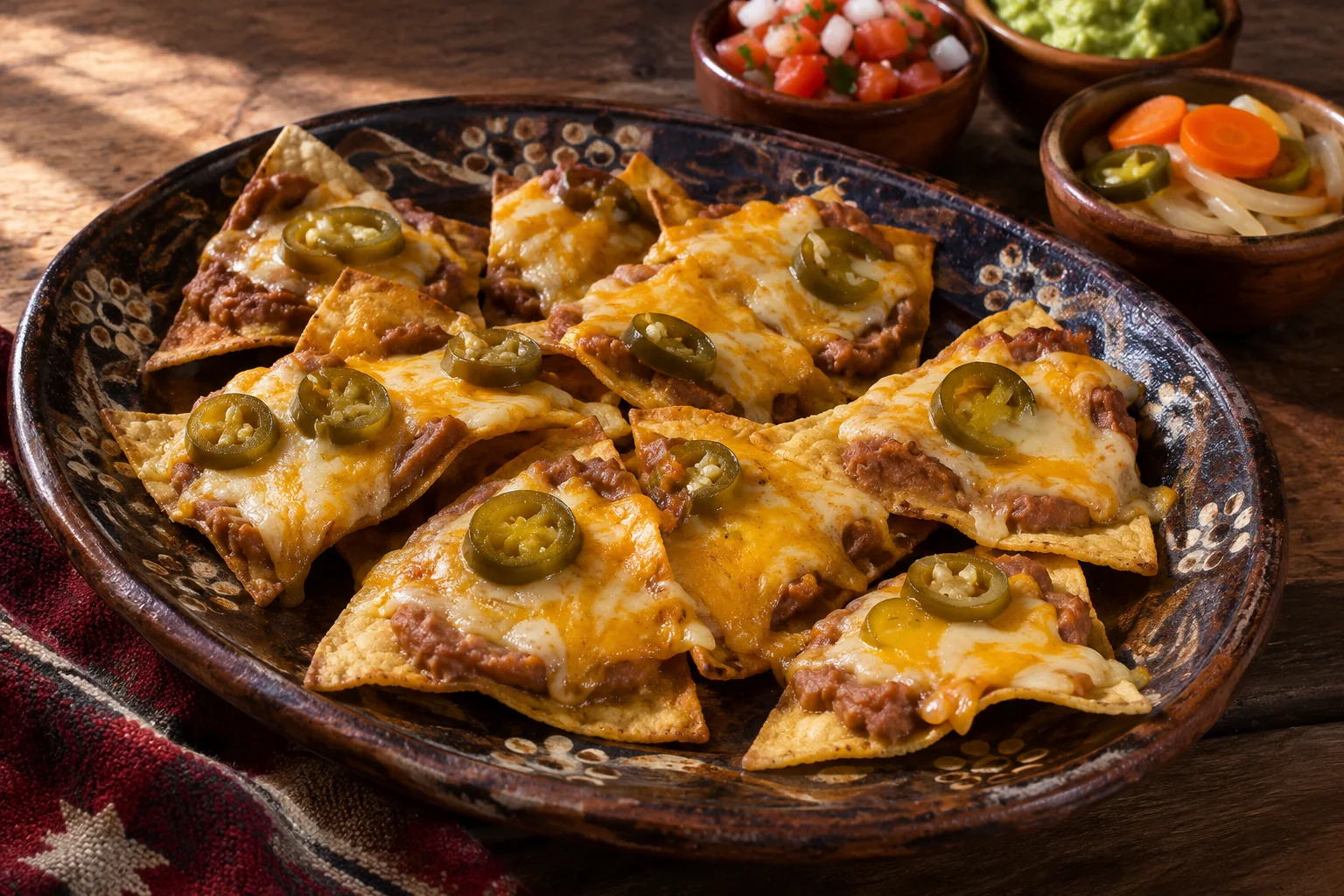
Loaded Nachos takes its bean-and-cheese foundation from Cheryl Alters Jamison and Bill Jamison’s The Border Cookbook (1995), page 144, “Nachos El Norte.” The recipe page identifies the source and separates the serving variations: jalapeños and guacamole alongside, chile on each chip, or an optional cooked-skirt-steak topping. The owner-supplied Brown’s Nachos scan supports serving chile at the side; it does not establish the origin of the Jamisons’ recipe.
These are related preparations, so the choice is mostly about the finish. Both give each chip its own share of beans and melted cheese. The archived version includes jalapeño during assembly; the Loaded Nachos base passes it separately so diners choose the heat. The fajita option adds cooked steak with onions and peppers. “Loaded” here describes a fuller set of choices, not a requirement to pile every topping into a deep heap.
The stadium chapter came later
Ricos dates its introduction of concession nachos to 1976. Smithsonian’s reporting places Frank Liberto’s version at Arlington Stadium for Texas Rangers games and explains the emphasis on a quickly served cheese sauce. That is a later development in distribution and service, distinct from Anaya’s restaurant story.
A sauce poured over chips and grated cheese melted on individual pieces produce different plates. Neither of our two recipes calls for a concession-style cheese sauce. Their texture comes from the chip, the thick beans, and cheese melted in the oven. Remembering the stadium chapter helps explain why two people can picture quite different food when they hear “nachos.”
Keep the crisp bite and make the table your own
Follow the assembly in the recipe you choose. Warm, spreadable beans belong on the chips; watery toppings need more care. A separate bowl of guacamole or pico de gallo lets each diner add a cool bite just before eating. The jalapeño guide explains the chile, while Restaurant-Style Salsas offers other accompaniments for the table.
For the steak finish, the Loaded Nachos page links its lime-molasses fajita option, which includes peppers and onions. Read the Fajita story for the wider skirt-steak tradition. Preparing fajitas for nachos is a serving choice in this edition, not evidence that steak belonged to the first nachos.
The two recipes also give refried beans a different job from a side dish: a thin spread on a sturdy chip. That change in scale is part of the pleasure. A platter can be generous while each piece remains small enough to lift and eat with its filling intact.
Sources and further reading
- Piedras Negras visitors bureau — the local Anaya account and the city’s nacho commemoration.
- K. Annabelle Smith, “The History of Baseball Stadium Nachos”, Smithsonian Magazine, May 7, 2013 — Orr’s cookbook research, the reported Victory Club account, and interviews about stadium service.
- Ricos, “Business Solutions” — the company’s own 1976 concession-nacho history.
- Cheryl Alters Jamison and Bill Jamison, The Border Cookbook (Harvard Common Press, 1995), p. 144 — the source identified on our Loaded Nachos recipe page.
- The owner’s 2021 nacho card and supplied Brown’s Nachos scan — recipe and serving sources, distinct from evidence for the dish’s invention. Their roles are described on the linked recipe pages.
For the setting, continue to Piedras Negras–Eagle Pass. To cook, choose the archived individually topped recipe or Loaded Nachos. If you have a dated menu, cookbook, or other evidence that clarifies the history, send a correction.