Food Stories · Rice, restaurant tables & home kitchens
Mexican Rice: Grain, Heat, and the Table
Tomato-colored rice has a long journey behind it and more than one method in the pan. Follow the records, then choose between our Houston cookbook version and a recipe from the owner’s home archive.
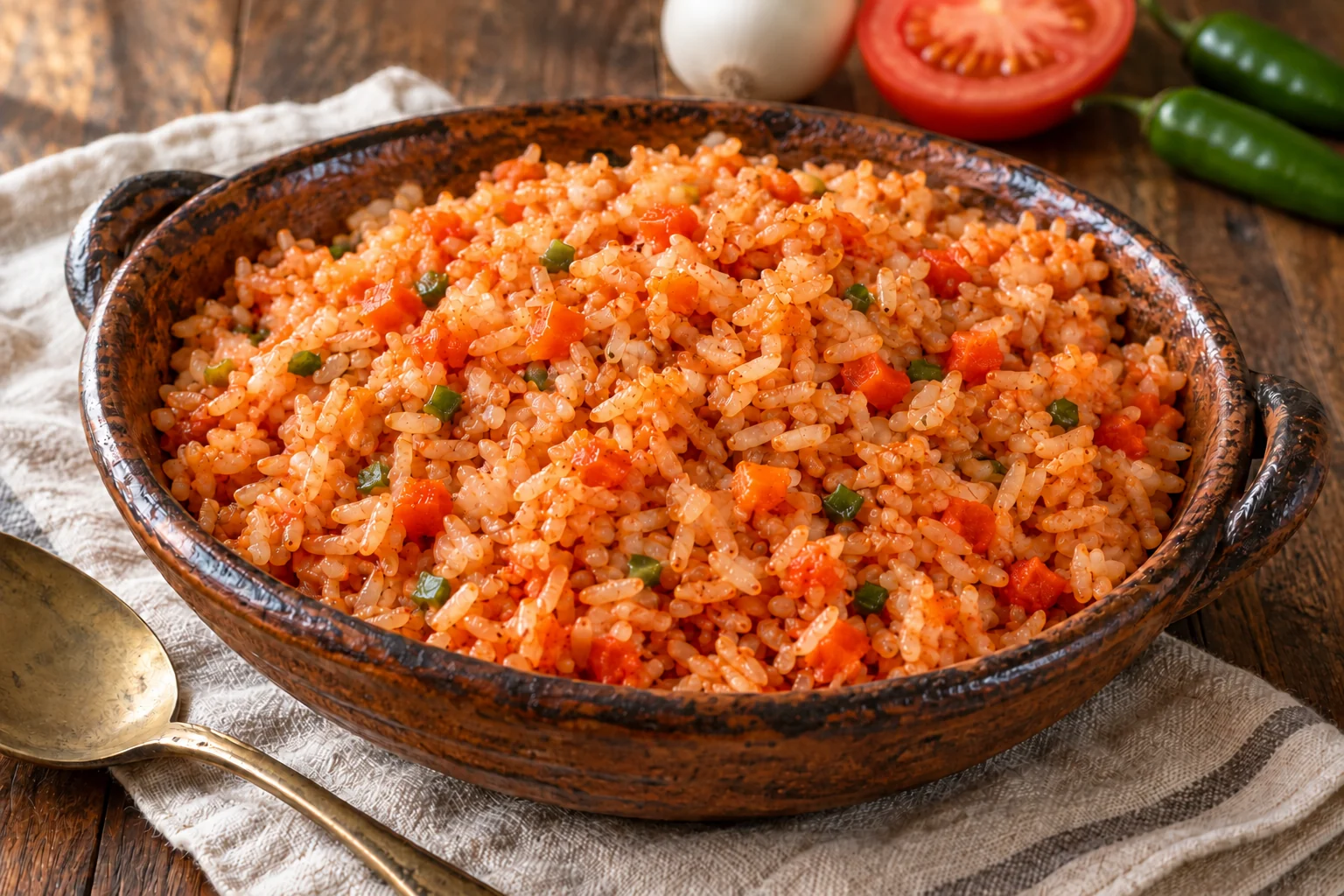
Start with Mexican Rice for tomato blended with chicken broth and garlic, softened onion, finely cut carrot, and serrano. Choose Mexican Rice with Green Chiles for toasted rice, sliced onion and green pepper, and a tomato-and-chile base. Their separate recipes give you two particular ways to cook a familiar accompaniment.
A grain carried along several routes
Rice belongs to the history of crops introduced to colonial Mexico. Historian Paulina Machuca’s 2013 study of the Balsas–Jalisco region follows plant movements through both Atlantic and Pacific connections. She reports Atlantic-route rice cultivation in Veracruz and Puebla by the end of the sixteenth century, and examines a Pacific history linked to the Manila galleon.
Machuca also discusses rice purchases for the hospital at Acapulco late in that century. Drawing on Joseph de Acosta, she notes rice cooked in milk or with fat from the cooking pot in Mexico and Peru. These records show an ingredient entering several kitchens and preparations. They establish neither a first tomato-rice recipe nor an inventor of today’s restaurant side.
That distinction keeps the story useful: the arrival of a crop, the development of a dish, and the printing of a particular recipe are different events. The rice pictured here comes from an identifiable modern cookbook; the grain’s earlier journey is a wider history.
Red rice, Mexican rice, and regional choices
Larousse Cocina’s entry for arroz rojo describes tomato-seasoned rice cooked with water or chicken broth, with garlic and onion among its ingredients. It records the name arroz a la mexicana in Mexico City and central Mexican states. The same entry describes achiote added to tomato in Tabasco, parts of Chiapas, and the Yucatán Peninsula, and additions such as peas, potato, chile strips, corn, and cheese in Durango.
Those examples help explain why a familiar color does not promise an identical ingredient list. A menu name is a starting point; the recipe tells you which vegetables, liquid, seasonings, and cooking sequence belong in this pan. Our green-chile version, for example, still uses a tomato base. Its name refers to ingredients in that specific archived formula.
A printed South Texas example from 1971
UTSA Special Collections presents Mexican Rice from The World of Mexican Cooking, written by Mary Margaret Curry and illustrated by Betty Stiff, published in 1971. The introduction places the book in South Texas cooking and discusses a Texas development of Mexican dishes.
The rice recipe on page 73 sautés the grains until golden before adding its tomato sauce, cumin, water, and other ingredients. This is a dated example of a toasted method. It makes an illuminating comparison with our main recipe, whose source asks for opaque grains without browning. The year belongs to the cookbook; UTSA’s online presentation is much later.
Two recipes, two instructions worth keeping distinct
Houston cookbook rice: soften, coat, cover
Our main Mexican Rice is adapted from “Los Tios Mexican Rice” on page 163 of Robb Walsh’s The Tex-Mex Cookbook (2004), supplied by the owner. Onion softens first; rice then turns opaque in the oil. A smooth blend of tomato, broth, and garlic supplies the cooking liquid, while finely cut serrano and carrot remain in the finished dish.
The covered simmer and covered rest are part of that recipe’s sequence. Its pan cue is especially important: adding the liquid before the grains brown follows this source’s intention. Read the Houston atlas for the restaurant setting around the cookbook connection.
The owner’s archived rice: toast, blend, simmer
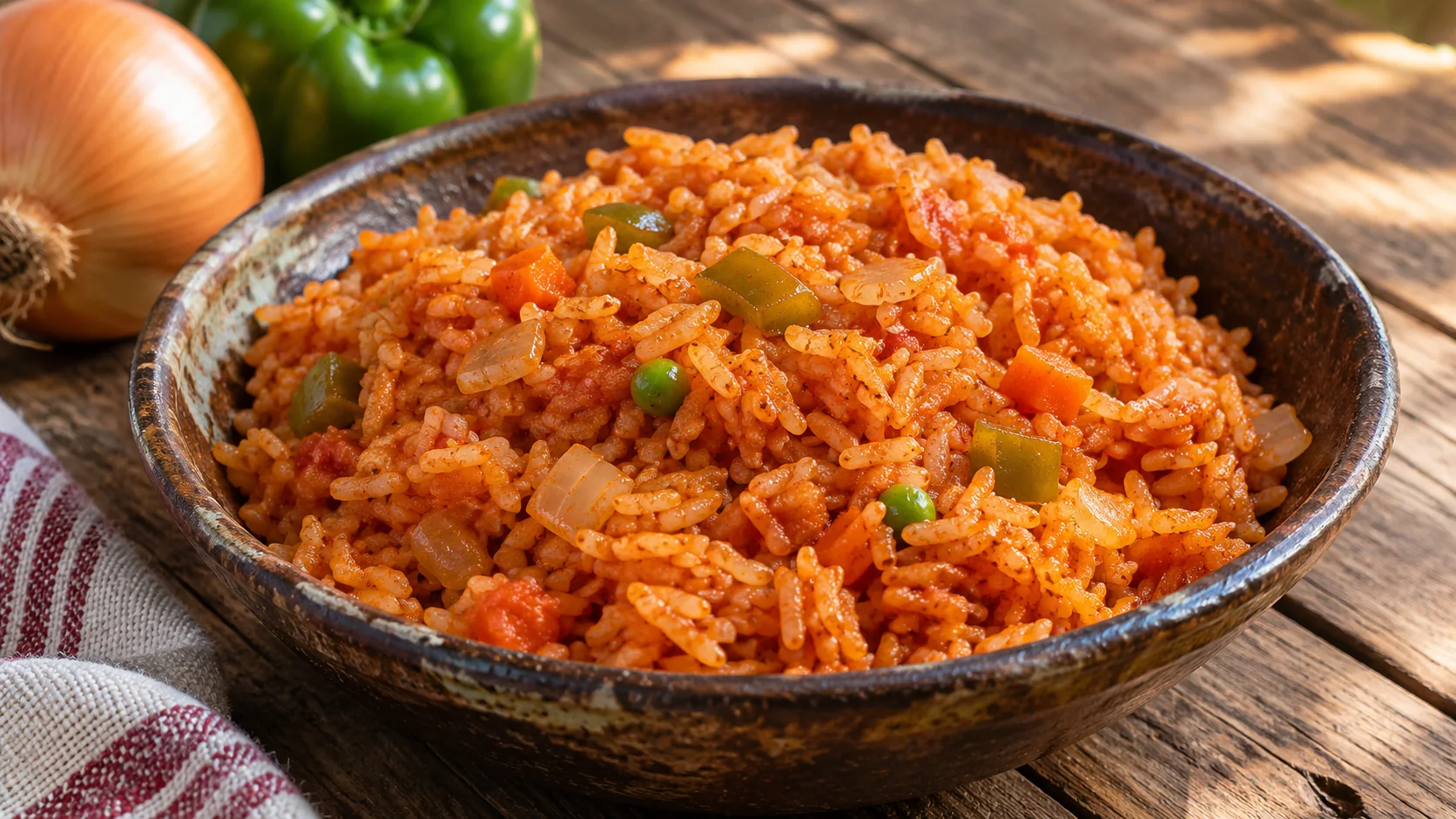
Mexican Rice with Green Chiles comes from the owner’s 2021 site archive. Here rice takes on color alongside sliced onion and green pepper. The blended tomato-and-chile mixture, hot water, bouillon, and seasonings then join the pan. Peas and carrots are optional.
The complete page explains the archive’s one-cup blended tomato measure and its unspecified can size. Follow those instructions when making this version. The two rice pages offer separate ingredient balances and methods, so choose one complete formula for the meal.
Rice and beans in the Texas restaurant record
The El Fenix Cafe menu held by Denton Public Library and digitized by UNT is catalogued approximately 1951. Its Mexican dishes page lists Mexican Rice With Chile and Frijoles Refritos as well as numbered combination plates. This is a concrete record of both preparations within a Dallas restaurant menu.
At Los Tios today, the online menu lists Mexican rice and a choice of beans with taco plates and other meals. It documents a present serving pattern; Walsh’s cookbook remains the source for the rice you cook here. Continue with The Texas Combination Plate and our Refried Beans story to follow the rest of the meal.
Read the ingredient, then watch the pan
Uncooked rice belongs with the dry pantry ingredients. Tomato, onion, and serrano belong in Fresh Produce: use the tomato, onion, and serrano entries to follow those ingredients back to the recipes.
Kitchen Logic compares the opaque-grain cue with other cooking decisions. In our main rice, finely chopped onion softens before the rice is added; the finished grains are gently fluffed after their covered rest. In the archived recipe, the initial color develops before the liquid arrives. Each complete recipe gives its own timing and tenderness checks.
Follow the places, then put a meal together
Start in Houston for the Los Tios connection and continue to Dallas for the menu record. The San Antonio and Rio Grande Valley atlas pages place restaurant meals and home cooking within their own local histories.
At your table, pair the rice you choose with Refried Beans or the owner’s shortening version, then select the main dish in Build Your Border Meal. The atlas follows places; the linked recipes give the quantities and method for dinner.
Sources for the Mexican Rice story
- Paulina Machuca, “El arribo de plantas a las Indias Occidentales” (2013) — documentary study of introduced crops and Atlantic/Pacific connections, including rice.
- Larousse Cocina, “Arroz rojo” — names, ingredients, and selected regional variations.
- UTSA Special Collections, Mexican Rice from Curry’s 1971 cookbook — a dated South Texas cookbook comparison.
- El Fenix Cafe menu, catalogued approximately 1951, and the Mexican dishes page — Dallas restaurant evidence.
- Los Tios menu — current accompaniments, checked 9 November 2026.
- Robb Walsh, The Tex-Mex Cookbook (2004), p. 163 — owner-supplied source for our main rice; see the recipe’s full attribution.
- The owner’s 2021 recipe archive — source for Mexican Rice with Green Chiles.
The historical sources describe crops, published recipes, or menus. The two complete recipe pages identify the particular versions served here. Read Sources & Method or send a correction.