Culinary Atlas · South Texas
Rio Grande Valley
The lower river plain holds ranch histories, irrigated crops, and families whose food stories do not stop at a modern border crossing.
“The Valley” is a useful regional name, not the name of one dish or one family’s cooking. Its agricultural and human histories explain more than a claim that everything came from only one side of the river.
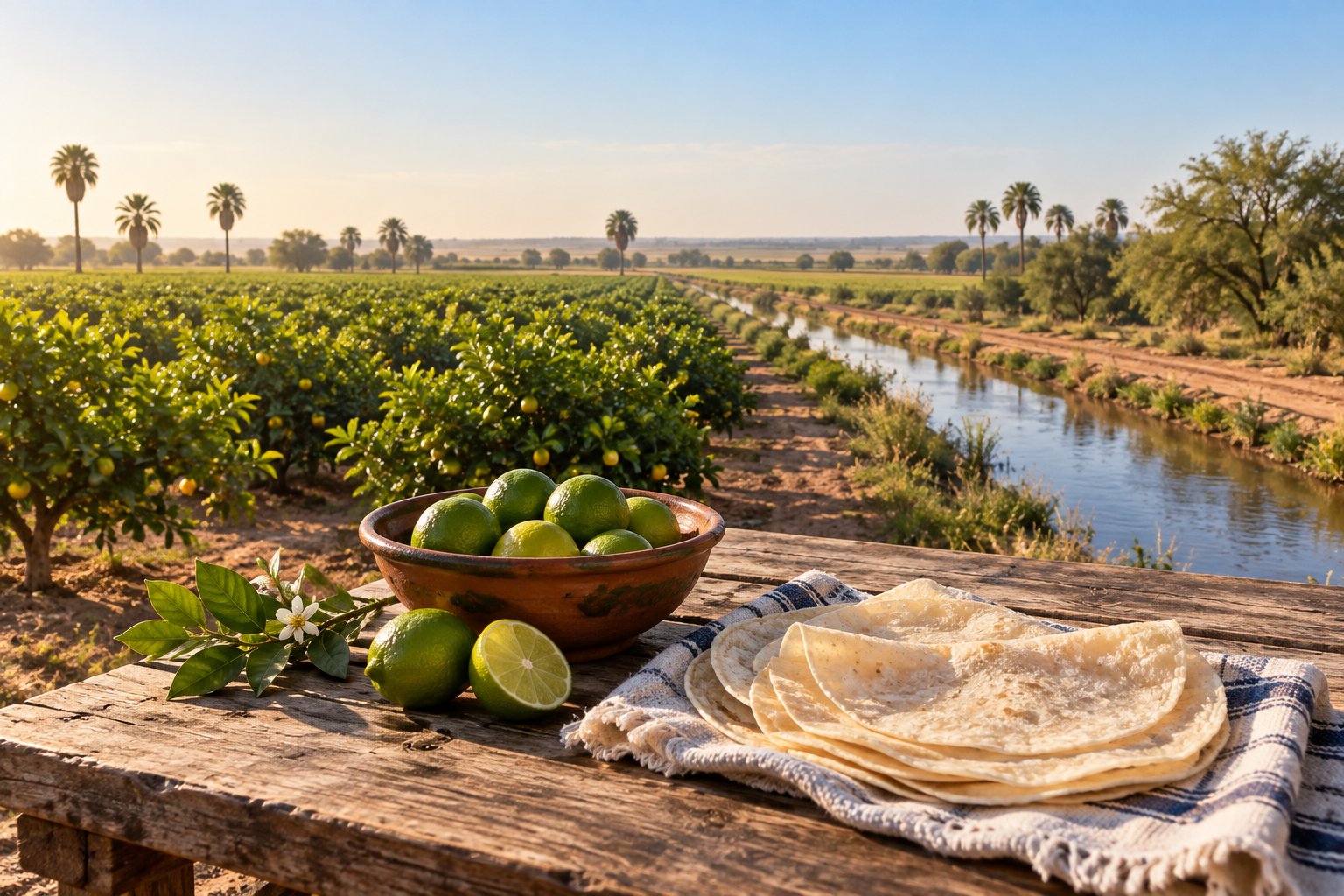
Ranch country before the citrus postcard
The Handbook of Texas describes cattle-ranch grants in the lower Rio Grande region under Spanish rule in the eighteenth century. That ranch history is one reason beef and outdoor cooking belong in the region’s conversation. It does not yield a single original fajita marinade or barbacoa method. Cooking also lived in homes and communities whose recipes were not necessarily written down.
The river linked communities even as sovereignty and borders changed. UTSA Special Collections describes lasting culinary ties between Texas and northern Mexican states including Tamaulipas. That relationship is a better starting point than treating “Mexican” and “Tex-Mex” as sealed boxes.
What changed in the fields
Large-scale irrigation beginning in the late nineteenth century and the railroad’s arrival in 1904 reshaped the Valley’s economy. The Handbook records commercial citrus production from the early twentieth century and a wider range of vegetables, including tomatoes, onions, carrots, and peppers. The familiar image of grapefruit groves is real, but it is only one layer of the region. A dish cannot be assigned to a particular farm or era merely because it contains one of these crops.
Two memories, two kinds of evidence
The Border Table’s founder remembers lime, salt, pepper, and mesquite-grilled skirt steak near Pharr. Our Classic Beef Fajitas translates that recollection into a cookable recipe. It is not a recovered restaurant formula. The founder also remembers eating tacos a la plancha in Reynosa; the Café Rey taco page labels its method a reconstruction. Neither memory can stand for the whole Valley or northern Tamaulipas.
For the wider reported path from ranch and outdoor cooking to fajita concessions and restaurants, read the fajita food story. It distinguishes the public record from a person’s remembered meal. To compare a different part of the border, move west to Paso del Norte.
Sources and limits
The Handbook of Texas Valley entry supplies ranch, irrigation, railroad, and crop history; UTSA Special Collections supplies the wider Texas–northern Mexico culinary frame. Personal food memories are attributed above rather than treated as documentary proof of a regional standard.