The Border Table · Source Edition
Pico de Gallo
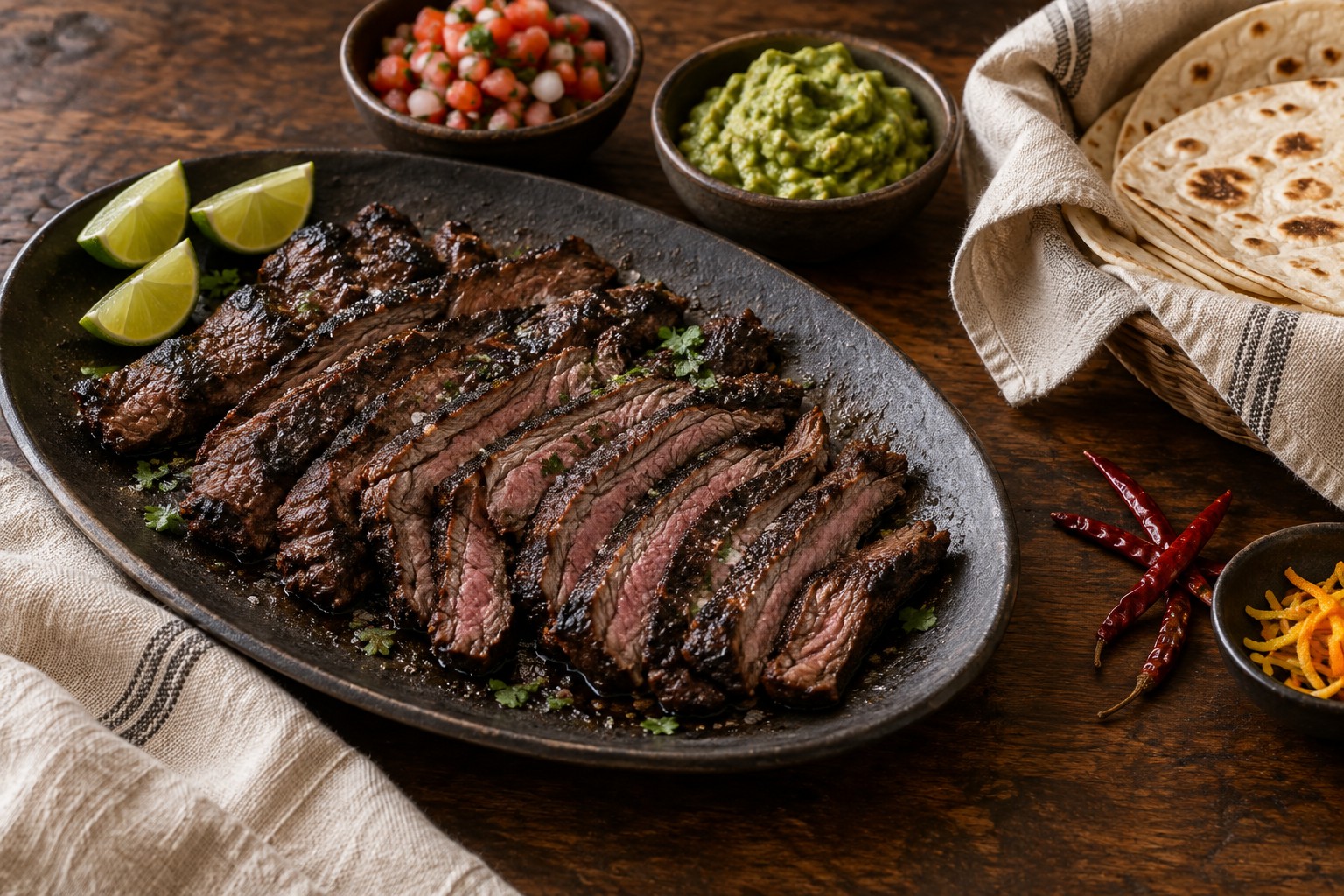
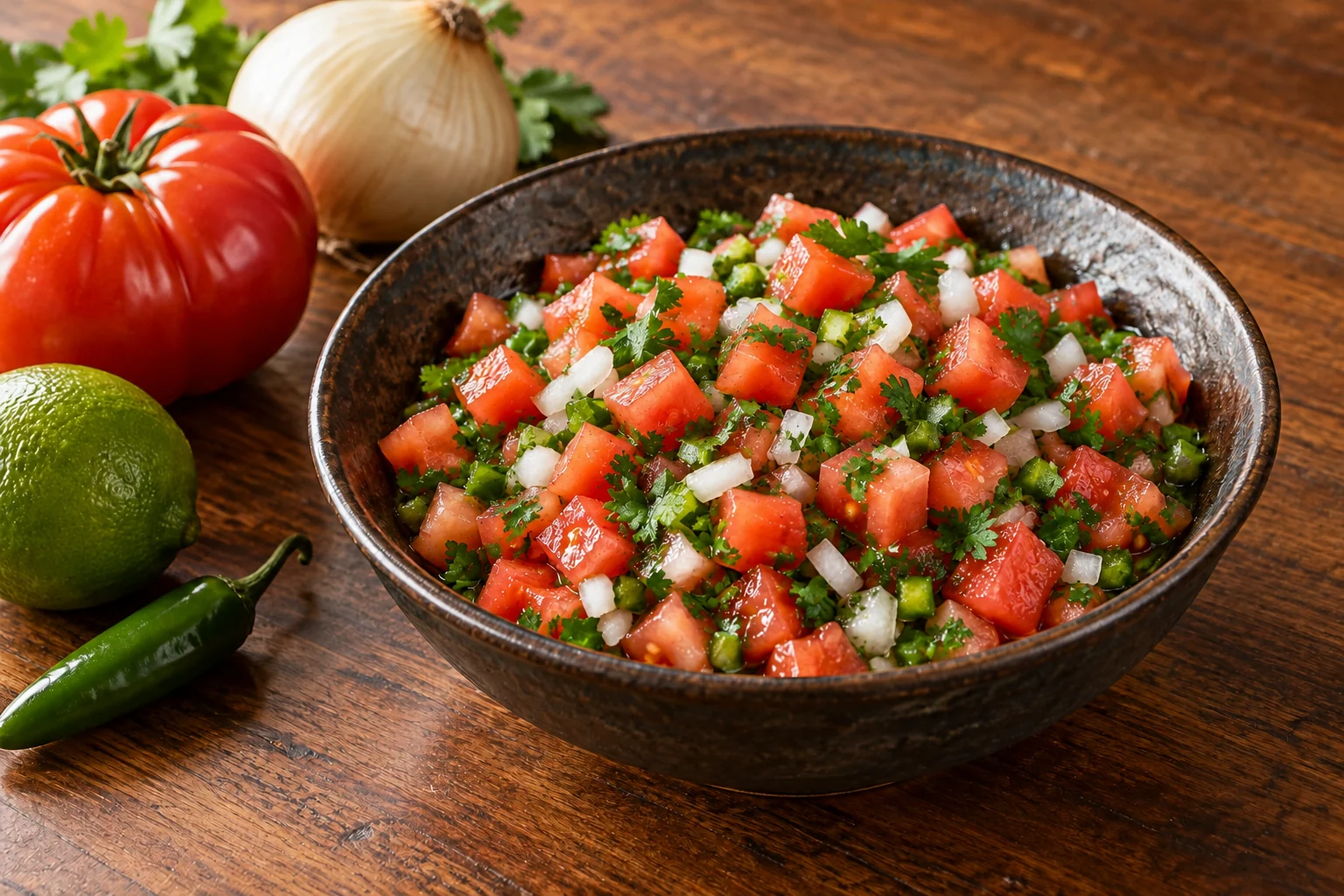
A bright, chunky tomato salsa for fajitas and tacos, with both green and white onion and a generous measure of fresh jalapeño.
A Texas version adapted from Cheryl Alters Jamison and Bill Jamison’s The Border Cookbook.
Make the pico de gallo
- Prepare the produce. Wash and dry the tomatoes, jalapeños, green onions, cilantro, and lime before cutting. Chop the tomatoes, mince 4 jalapeños, slice the green onions, and chop the white onion and cilantro. Keep the tomato juices.
- Mix and season. Combine the tomatoes and their juices, minced jalapeños, both onions, cilantro, and lime juice in a bowl. Add salt to taste. Taste a small spoonful before adding the fifth jalapeño; the source range is 4 to 5.
- Chill and serve. Cover and refrigerate for at least 30 minutes. Stir once more and serve chilled with fajitas, tacos, or other meat and cheese dishes. The source recommends eating it on the day it is made.
Keep the texture fresh
Chop by hand rather than blending: the tomatoes, onions, chile, and cilantro should stay distinct. If the bowl releases a lot of juice during chilling, stir it back in or lift the salsa with a slotted spoon when serving.
Change the heat
For a gentler version, use fewer jalapeños. That changes the source recipe’s intended heat and has not been evaluated as an equivalent version by The Border Table. The cookbook also suggests a seasonal color variation using a few yellow tomatoes or a mix of red and green jalapeños.
Serve and store
Serve chilled and preferably the day it is made. Keep the cut-tomato salsa refrigerated at 40°F (4°C) or below; do not leave it at room temperature for more than 2 hours, or 1 hour above 90°F (32°C). Wash raw produce under running water before cutting it. FDA produce guidance · USDA time-and-temperature guidance.
Understand it
Why two kinds of onion?
White onion gives the chopped mixture a firm, sharp bite; sliced green onion brings a milder onion note and green color. The tomato and lime juices dress the vegetables without turning the salsa into a purée.
Know it
What does “pico de gallo” mean here?
The Border Cookbook describes this as a Texas version for fajitas and notes that a similar chopped relish in northern Mexico is often called salsa mexicana or salsa cruda. Larousse Cocina’s culinary dictionary also records the name salsa mexicana cruda and documents several other regional preparations called pico de gallo. These sources establish neither a single birthplace nor a proven explanation for the name. This page therefore treats the cookbook’s regional wording as attribution, not an origin story.
Source and method
Where this version comes from
The owner supplied page 40 of Cheryl Alters Jamison and Bill Jamison’s The Border Cookbook (1995), headed “Pico de Gallo.” We retained its ingredient amounts, approximate 2½-cup yield, 30-minute chill, and same-day serving advice. The preparation is rewritten in our own words, with a produce-handling note and an estimated 15-minute chopping time. The Border Table has not independently kitchen-tested this edition. “Texas version” is the cookbook’s framing, not a claim that it began in a particular Texas town.
- The Border Cookbook — publication and author record; the owner-supplied page is retained privately.
- Larousse Cocina — the name’s regional range.
- FDA and USDA FSIS — produce handling and cold holding.
Adapted 9 October 2026. Tell us if something needs correcting.