Culinary Atlas · River, city, and regional tables
Reynosa & Tamaulipas
Begin with a remembered taco in Reynosa, then follow the river, the city’s changing site, and the different food traditions of the border, Gulf coast, and wider state.
Start in Reynosa, beside the Río Bravo/Rio Grande in northern Tamaulipas, then look toward the state’s Gulf coast and Huasteca. Following these different settings gives a more useful picture of its food than a single list of “northern dishes.”
A city that moved with the river
The state’s Reynosa history dates the colonial settlement to March 14, 1749. It records arrivals from Nuevo León and a 1757 inspection describing substantial livestock.
Repeated flooding led to relocation in 1802. The account describes land for a plaza, market, homes, church, and municipal buildings. A municipal anniversary report from 2025 places the commemoration in Reynosa Díaz, the original riverside settlement.
The state profile also describes irrigated plains and livestock activity. That gives the food story a setting in water, land, and the work of provisioning a city. For the neighboring agricultural and ranching landscape, continue to the Rio Grande Valley atlas.
Railway objects reveal an everyday city
An INAH report published March 23, 2023 describes archaeological work at Reynosa’s former station. Investigators recovered rails and track hardware, pottery fragments, and glass containers. Some bottles had held soft drinks or beer, alongside containers for other everyday products.
The report dates the last passenger service to February 15, 1997. Its account also records restoration of a former railway warehouse and plans to display recovered objects in a railway museum. The city’s March 2025 anniversary announcement subsequently referred to the museum’s inauguration. Those dated accounts show how an industrial site became a place for remembering the city.
Archaeologist Seidy Guadalupe Velázquez León also described Reynosa as a place of transit and noted the participation of workers from Veracruz in recovering the rails. That observation gives migration a human scale. It does not tell us what every traveler ate, but it helps explain why the city’s history includes people arriving, working, and developing a relationship with the place.
Read the state through several food traditions
The state’s culinary overview connects Tamaulipas with neighboring Nuevo León, the Gulf, and the Huasteca. It lists machaca, grilled meat, and cabrito alongside seafood and corn preparations. In Reynosa itself, the municipal profile singles out flour tortillas and carne asada.
Farther along the Gulf, the state identifies Tampico with stuffed crab, crab salpicón, seafood soups, and shrimp dishes. Its wider list includes pork tamales, filled gorditas, bocoles associated with El Mante, and enchiladas associated with Tula. Corn and wheat preparations coexist in this account; the flour tortilla on a Reynosa table represents one part of that variety.
A 2024 statement from the state tourism department also names chochas, or pita flowers, jacubes, and regional sweets such as pemoles. These examples invite attention to ingredients beyond beef. They describe a wider culinary landscape rather than the menu of a single border restaurant.
For your own cooking, choose a particular preparation before choosing its accompaniments. A griddled taco, a simmered beef dish, and a grilled steak use different methods even when flour tortillas, beans, or salsa may appear at the table.
A remembered Café Rey meal gives the map a table
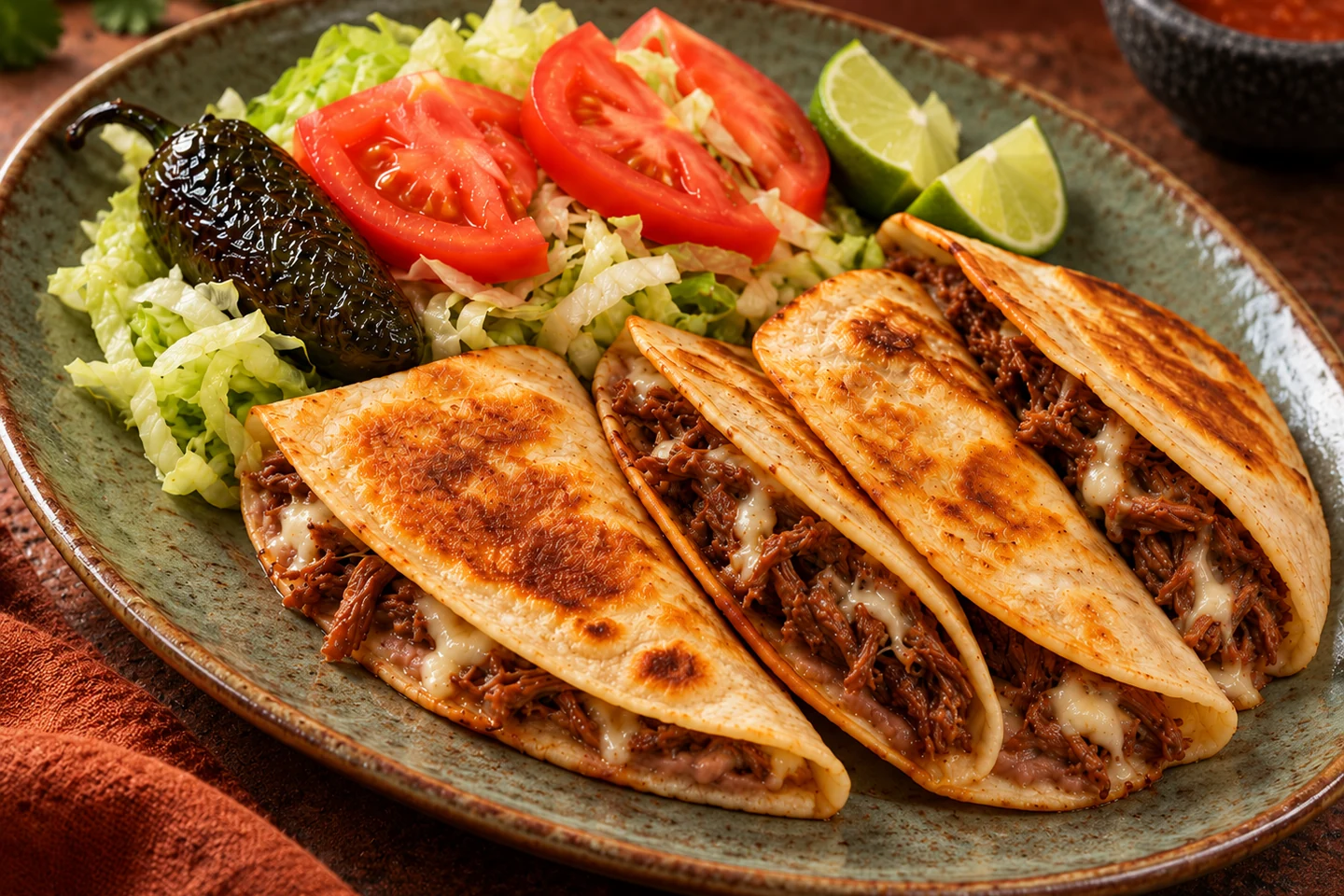
Our founder’s recollection of Café Rey centers on shredded-beef tacos with beans, melted cheese, thin flour tortillas, and cool salad. The separate Café Rey story follows that memory alongside the public menu evidence, then leads to the complete home recipe.
The city’s business listing names Café Rey and tacos a la plancha. The public menu on Rappi describes shredded beef, cheese, beans, and salad in the taco order. These sources anchor a particular dish in Reynosa. The seasoning and two-stage beef method on our recipe page belong to our reconstruction.
What the name “a la tampiqueña” can tell you
The state culinary overview includes carne asada a la tampiqueña among Tamaulipas’s emblematic dishes. A place-name is a useful starting point for exploration, but the recipe in front of you still determines what to cook.
The owner’s Carne Asada a la Tampiqueña is a steak-only archive recipe, with citrus seasoning and a flat-top method. It does not supply a whole restaurant combination plate. Follow that version as written, and choose Mexican Rice or Refried Beans separately if you want sides. Our combination-plate story explains another restaurant format without merging the recipes.
Follow a useful path into the kitchen
- For the remembered taco: read the Café Rey story, then cook Tacos a la Plancha. Its method keeps the beef, beans, and assembly together.
- For the wrapper: begin with the flour tortilla guide and Homemade Flour Tortillas. The latter is the site’s butter variation, not a claim about Café Rey’s dough.
- For a different beef preparation: the owner’s Carne Guisada and Beef-Cheek Barbacoa lead into the neighboring Valley account. Their individual methods remain on their recipe pages.
- For the components: explore pinto beans, the chuck roast guide, and the Restaurant-Style Salsas collection.
Explore the place and its records
- Tamaulipas government: Reynosa — settlement history, landscape, agriculture, and named foods.
- Reynosa’s March 2025 anniversary account — the original settlement and museum announcement.
- INAH Bulletin 159, March 23, 2023 (PDF) — railway archaeology, everyday objects, and the researcher’s observations.
- Tamaulipas government: Gastronomía and its August 2024 culinary overview — regional foods across the state.
- Café Rey story and sources — firsthand memory, restaurant listings, and the independent home recipe.
Historical dates belong to the cited records. The linked recipes are individual cooking versions; the sources do not establish one formula for all of Reynosa or Tamaulipas.
More places in the Culinary Atlas · Continue to the Valley · Suggest a correction