Food Stories · Chile, technique & the border table
Restaurant-Style Salsas: Fire, Texture, and the Table
A fresh chop, a roast, a grind, or a simmer changes the salsa. Follow the ingredients and the written record, then choose a bowl for the meal you are making.
Our Restaurant-Style Salsas collection brings together six complete recipes. Start with Salsa del Norte for roasted tomatoes blended into a loose red sauce, or Pico de Gallo for distinct pieces of fresh tomato, onion, chile, and cilantro. The choice changes what lands on a chip or beside a taco.
Stone, chile, and a written record
The history includes the tools used to bring ingredients together. Museo Amparo’s catalog describes a volcanic-stone molcajete and its handstone from western Mexico, assigned to the Classic–Postclassic period. The museum explains that this mortar could grind condiments, fruits, and vegetables into sauces or pastes. It gives physical context to a cooking practice that continues alongside knives and blenders.
Printed recipes show how varied sauces could be. UTSA Special Collections reproduces sauces from El cocinero mexicano of 1831, including a toasted-chile preparation with ancho, pasilla, and pulque, and a sauce based on avocado and green chile. The old collection ranges beyond the red tomato salsa familiar at many Texas restaurant tables.
The Secretaría de Cultura’s “Las salsas” overview also gathers examples from historical cookbooks. It describes preparations involving roasting, frying, raw chopping, vinegar, and several kinds of chile. Its contemporary examples distinguish raw, boiled, fried, and roasted green salsas, with comparable variations for red tomato. That range makes the cooking verb as informative as the color.
A name does not tell the whole method
One useful restaurant record comes from Guadalajara. UTSA’s presentation of Edith Metcalfe de Plata’s Cocina Mexicana Vegetariana (1985) identifies her as the chef of Las Margaritas. The book’s “Salsa Picante” combines chopped vegetables and seasonings without a cooking stage. It is a dated example of that name being used for a fresh preparation.
Our owner’s archived Salsa Picante follows a different sequence: tomato purée, onion, jalapeño, vinegar, water, and seasonings simmer before an overnight chill. Both the name and the method deserve attention. A restaurant, cookbook, or household may use a familiar word for its particular preparation.
Larousse’s Pico de Gallo entry records an especially wide regional range, including fruit-based versions as well as the name salsa mexicana cruda. Our two tomato-based picos are specific recipes within that wider vocabulary. The sources reviewed here do not establish a proven explanation for the name “rooster’s beak.”
A Texas chapter in the bottled-salsa story
The Texas State Library’s Chips and Salsa exhibit places Pace Foods and its picante sauce in 1947. It also presents a 1970 Texas Department of Agriculture photograph of a Pace display and a later tourism image of chips with salsa. These records show commercial production and promotion as part of salsa’s Texas story.
The Handbook of Texas biography of Linda Pace adds the family’s role in developing the sauce, followed by marketing and a larger San Antonio plant. Read this as one commercial chapter within a longer food history. The recipes here retain their own cookbook or owner-archive sources.
A local paper trail reaches the lower border too. The University of Texas Rio Grande Valley’s Border Studies Archive catalogs a salsa-picante folder covering 1980–1989 in its Traditional Mexican American Folklore collection. That record gives a route into documented community food material; it does not establish a single Valley salsa formula.
Choose the recipe by what you want on the spoon
Roasted and blended: Salsa del Norte
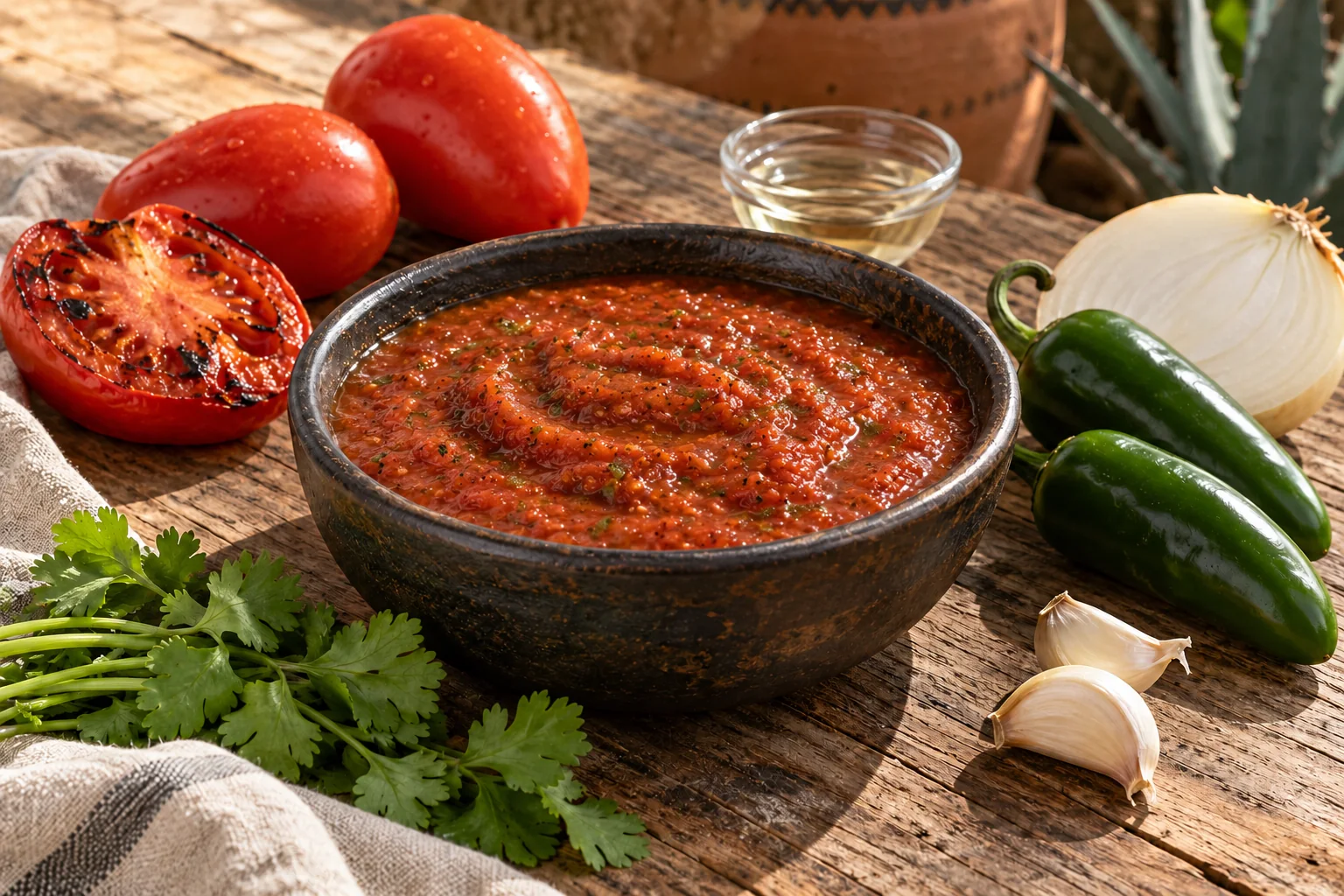
Salsa del Norte broils whole tomatoes before blending them with jalapeño, onion, cilantro, garlic, and its other seasonings. Keeping the softened tomatoes and their pan juices gives this recipe its mostly smooth, spoonable base. Its published source note identifies The Border Cookbook, page 38.
Roasted and chopped: Chipotle–Tomatillo
Chipotle–Tomatillo Salsa broils tomatillos, softens onion separately, and keeps a chopped finish. Chipotle supplies smoke and heat; Mexican oregano and the recipe’s vinegar are part of this particular combination. The source credited on its page is page 39 of the same book.
Fresh pieces: two picos
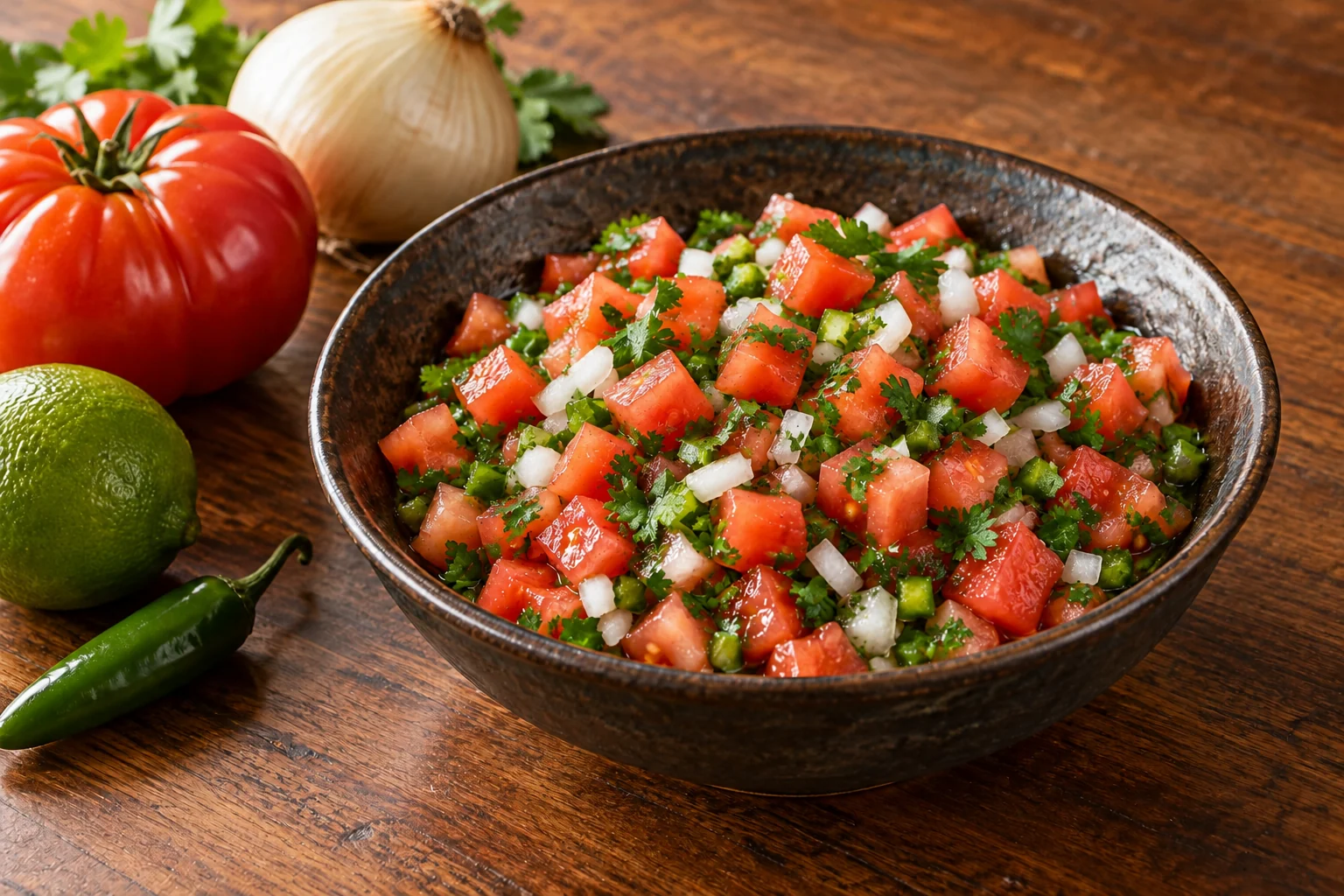
The Pico de Gallo adapted from page 40 of The Border Cookbook uses both white and green onion with jalapeño. The owner’s 2021 Serrano Pico de Gallo specifies serrano and offers lime juice or vinegar. Follow each recipe’s quantities, cutting, and resting instructions. Their different chile and onion choices are part of their identities.
Cooked tomato: two different lengths of cooking
Ranchera Sauce softens onion and green chile before a brief tomato simmer. The archived Salsa Picante uses tomato purée and a longer simmer before chilling. One suits a warm spoonful over eggs or beside tacos; the other is a cooked, chilled table salsa. Their complete pages give the method and storage guidance.
Follow the ingredient in the form the recipe names
Use tomatoes for their fresh pieces or softened flesh, and tomatillos for the separate husked fruit in the chipotle recipe. The jalapeño and serrano profiles help identify the fresh chiles. Our chipotle guide distinguishes the whole dried chile from the canned form specified by the salsa.
The molcajete guide explains the mortar, while Kitchen Foundations places prepared salsa alongside other things you make. For a creamy avocado accompaniment, read the Guacamole story and make the five-ingredient recipe.
These recipes are for serving and refrigerated storage. The National Center for Home Food Preservation explains why safe canning depends on the ingredients, their proportions, acidity, and a validated process. Follow a suitable preservation recipe when making shelf-stable jars.
Return to the meal and the place
Explore the San Antonio atlas for the city’s wider food and restaurant histories. Follow the Rio Grande Valley and Reynosa–Tamaulipas articles for distinct border settings, then choose a salsa for the dish you are cooking. These are connections between tables and places, rather than origin claims for every recipe in the collection.
Sources for the Salsa story
- Museo Amparo, molcajete and handstone — the cataloged object and its possible uses.
- UTSA Special Collections, Salsas 1831 — reproduced historical sauce recipes.
- Secretaría de Cultura, Las salsas — historical examples and different preparations.
- UTSA Special Collections, Salsa Picante 1985 — the Guadalajara restaurant cookbook and its fresh salsa.
- Larousse, Pico de gallo — regional meanings.
- Texas State Library, Chips and Salsa — the commercial chapter and archival photographs.
- Erika Arredondo-Haskins, Linda Pace, Handbook of Texas — the family business and San Antonio connections.
- UTRGV Border Studies Archive, Salsa Picante folder — the collection’s dated catalog record.
- National Center for Home Food Preservation — the distinction between table salsa and a canning process.
Recipe-specific sources and complete cooking directions are on the six recipe pages in the collection.
Read the Guacamole story · More Food Stories · Suggest a correction