The Border Table · Source Edition
Classic Beef Fajitas
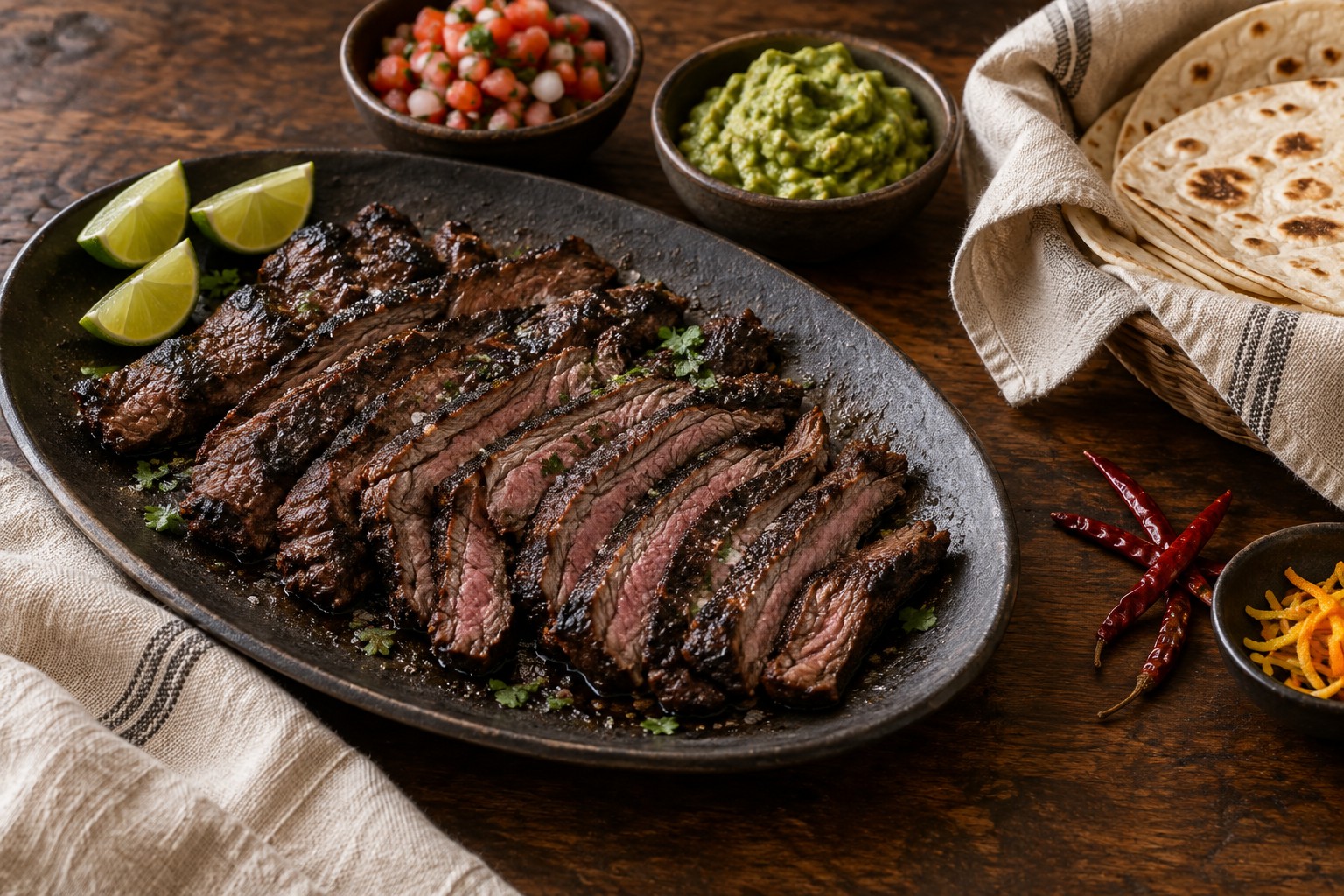
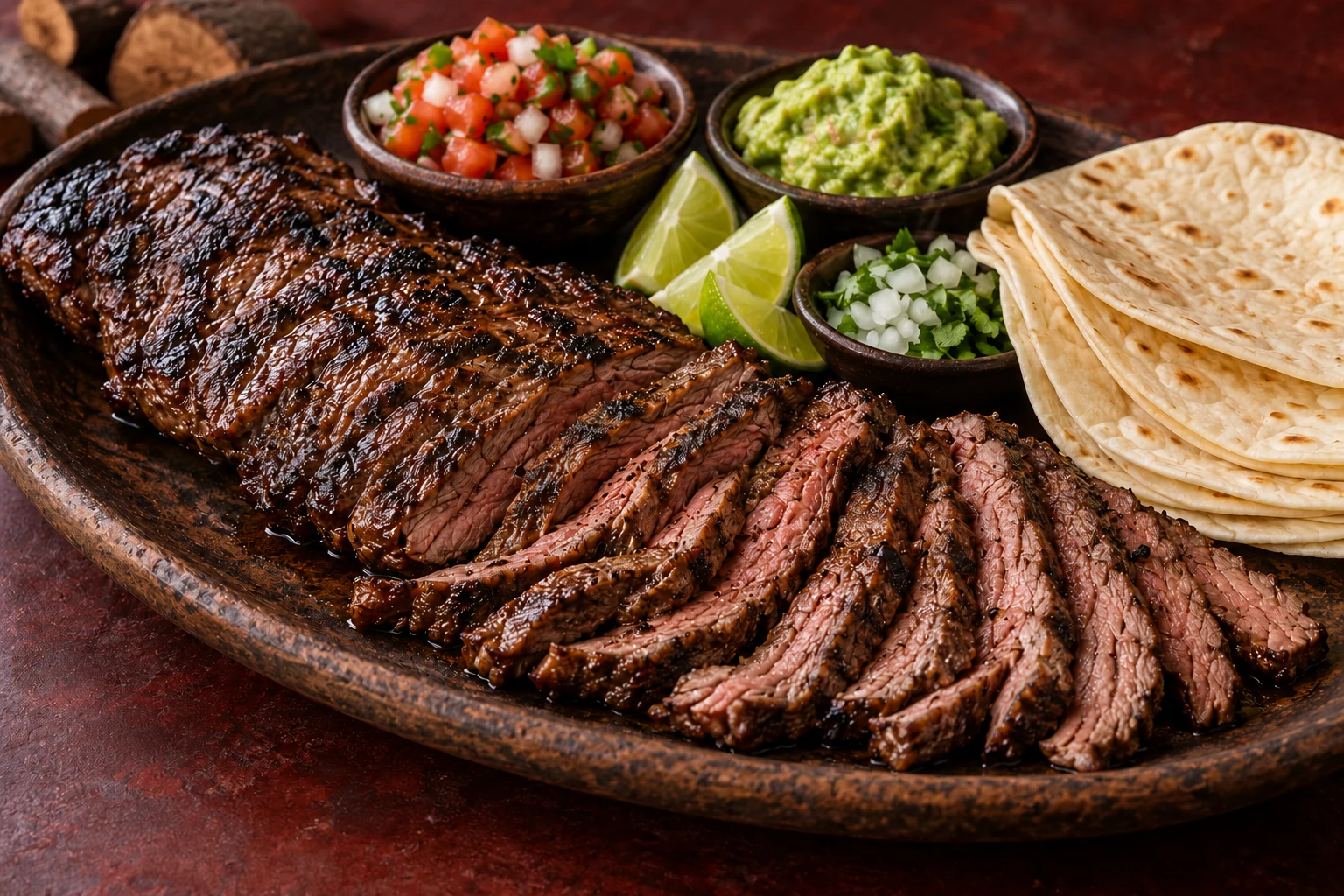
Two large limes, salt, pepper, and a fiercely hot mesquite grill give whole skirt-steak strips their charred edges. Slice across the grain and let everyone build their own fajitas.
The idea
This is the simple skirt-steak fajita method our founder remembers enjoying in Pharr, Texas. It uses lime, salt, and pepper rather than a long spice blend. Mesquite is the preferred fire. It is a personal recipe and memory, not a claim to reproduce the Round-Up restaurant's formula.
Cook it
- Marinate. Trim away any tough outer membrane, if needed. Leave the skirt steak in whole strips. Pat dry, season both sides with salt and pepper, then add the lime juice and turn to coat. Cover and refrigerate for 4 hours.
- Drain and heat the grill. Remove the strips from the marinade and discard the liquid that touched raw beef. Set steak on a clean rack or tray for about 30 minutes to let excess moisture drain while a very hot fire is prepared. This does not mean the center must reach room temperature. Mesquite is preferred; a very hot gas grill also works. Keep a cooler area available.
- Grill. Place the strips close to the heat and turn once. Begin checking after roughly 2–3 minutes per side. Aim for a few charred edges, not an all-over burnt crust. Thickness and fire vary: use a thermometer in the thickest part. The FoodSafety.gov safe minimum for whole beef steaks is 145°F (63°C), followed by at least a 3-minute rest. Move to the cooler zone if the exterior browns too fast.
- Rest and slice. Transfer the steak to a clean platter and rest 15 minutes. Cut thin slices across the visible long fibers; spoon the clean resting juices over the meat.
- Serve. Warm the flour tortillas just until soft and flexible. Set out the steak, tortillas, and optional toppings in separate dishes so everyone can season and garnish their own fajitas.
If something goes wrong
If the steak seems wet, give it more time to drain and pat its surface dry before grilling. If the outside chars before the center reaches temperature, shift it to the cooler part of the grill. If the sliced steak feels chewy, check that you cut across—not along—the long muscle fibers.
Keep it safe
Marinate in the refrigerator. Discard marinade that touched raw meat. Use a clean platter for cooked steak. Refrigerate leftovers within 2 hours, or within 1 hour when the temperature is above 90°F (32°C).
Understand it
A drier surface browns faster over fierce heat. Slicing across skirt steak's pronounced grain shortens the muscle fibers in each bite. The remembered 2–3 minutes per side is a first check, not a guaranteed safe endpoint; thickness, fire, and a thermometer decide when it is done.
Know it
Our founder remembers a similar straightforward fajita style from visits to the Round-Up in Pharr, Texas, with his grandfather. That is a firsthand recollection, not a documented restaurant recipe. Read more in our fajitas guide.
Source and care notes
The two strips, two large limes, four-hour marinade, mesquite preference, 15-minute rest, and four servings come from the founder's account. The approximate shopping weight, starter seasoning measures, and tortilla count are editorial guides and have not been independently kitchen-tested. Food-safety guidance: FoodSafety.gov safe minimum temperatures and FoodSafety.gov four steps to food safety.