Food Stories · Melted cheese, chorizo & regional tables
Queso Flameado: Asadero, Chorizo, and the Hot Dish
Cheese, a cooked filling, and a hot vessel come together at the table. Follow fundido preparations, northern cheesemaking, and the owner’s oven-baked queso flameado.
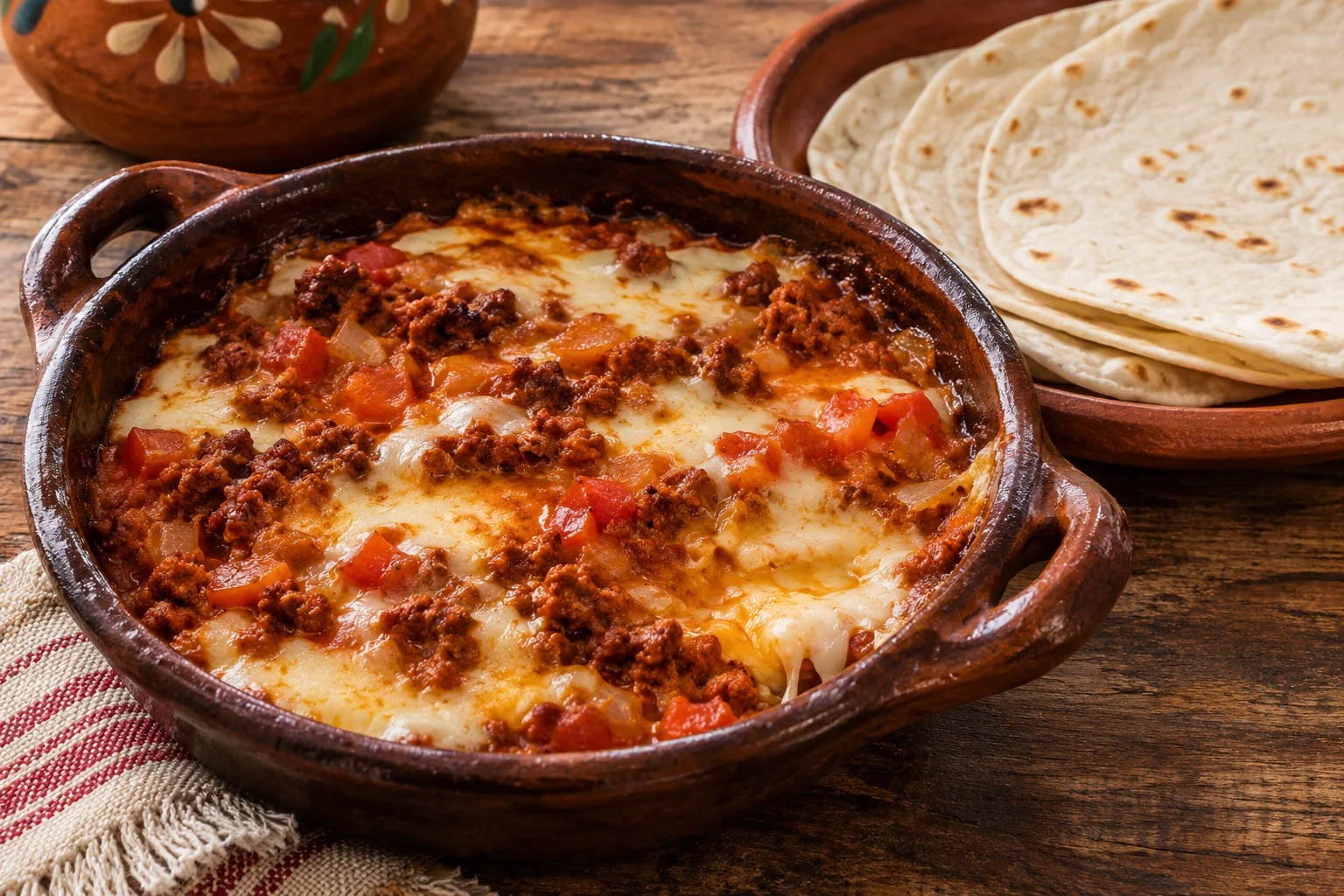
Open Queso Flameado with Chorizo for the owner’s full recipe. Asadero surrounds a cooked chorizo, tomato, and onion filling, and the casserole goes into the oven. Warm tortillas or sturdy chips carry the cheese from the hot dish to your plate.
A family of names, with the method close at hand
Larousse Cocina’s Queso fundido entry describes melted cheese served hot in small clay dishes or metal plates with corn or flour tortillas. It records plain cheese, chorizo mixtures called choriqueso, poblano strips, and other additions. Its methods include heating in a vessel, using a griddle, and baking.
The dictionary also records queso flameado among the related names. That range makes the written method useful: the name points toward a family of hot cheese preparations, while a particular recipe tells you how to cook one. The owner’s version gets its heat from the oven and keeps its original asadero-and-chorizo assembly.
A smooth dip brings another texture to the table. The Chile con Queso story follows two such preparations, including the cream-enriched Mi Tierra recipe and the owner’s tomato-and-poblano Classic queso. Comparing all three helps you choose the result you want.
Asadero connects the dish to a working cheese landscape
The Larousse asadero entry identifies a melting cheese associated with Chihuahua and made in several other Mexican states. Its discussion includes stretched-curd preparation and uses in quesadillas, burritos, and chile con queso. The same ingredient can therefore connect several meals without making their recipes identical.
For a closer regional record, Óscar Arturo Sánchez Carlos and Elizabeth Bautista Flores studied cheese production and consumption in northwestern Chihuahua. Their 2017 article in Chihuahua Hoy focuses on Mennonite cheese and distinguishes related cheeses in the market. On printed page 311, they locate much asadero production in Ahumada, south of Ciudad Juárez, and discuss its use in prepared foods.
Their historical account places the Mennonite communities’ arrival in Mexico in 1922. That history belongs to their cheese study; asadero remains a distinct regional ingredient.
Follow this ingredient connection in the El Paso and Paso del Norte atlas, alongside the region’s wider food history.
Published fundido recipes show different assemblies
Larousse’s published Queso fundido recipe, from Verde, blanco y rojo en la cocina mexicana, describes a central-Mexican taquería preparation. It uses Chihuahua cheese with cecina and roasted chilaca strips, baked in small dishes and served with tortillas and salsa. It is one documented preparation within the wider family.
Pati Jinich’s Poblano Rajas and Chorizo Queso Fundido offers another comparison. She cooks chorizo and a vegetable mixture separately, melts a mixture of cheeses in the oven, then adds the toppings and bakes again. Warm tortillas accompany the hot dish. Her complete recipe keeps those choices together.
Our archived version uses asadero and a reduced tomato-picante filling placed between two layers of cheese. Those differences are worth recognizing before you cook. Follow one complete recipe’s cheese, liquid balance, oven setting, and assembly rather than combining parts of the examples without measuring their effect.
The owner’s casserole is built in stages
The published recipe begins by cooking the Mexican chorizo. Onion, tomato, and picante sauce then become a filling that simmers until excess liquid has evaporated. That reduction belongs before the cheese goes into the oven: it prepares the middle layer for the casserole.
Half the shredded asadero goes below the filling and the remainder above it. The oven melts the cheese around the cooked mixture. The recipe’s proportions make cheese the main component, with chorizo contributing its seasoning and texture through the filling. Garlic remains the optional ingredient recorded on the old card.
Bring the finished dish to the table promptly on a trivet. Tortillas can wrap around the cheese and filling; chips need enough strength to carry a portion. The recipe supplies the measured ingredients and cooking checks, including the chorizo endpoint. This story follows the preparation around those instructions.
The restaurant menu preserves useful distinctions
Mi Tierra’s dinner menu marked 08/24 lists Queso Flameado with melted Monterey Jack, house Mexican sausage, and tortillas, alongside a separate Chile con Queso. Read the San Antonio atlas for the setting of that menu. The owner’s home recipe keeps its own asadero and layered filling.
The Original Ninfa’s October 2023 menu lists three distinct dishes: a chile-con-queso dip, seared panela called queso asado, and a tableside queso flameado with melting cheese and chorizo. The Houston atlas connects those menu choices with the city’s restaurant story.
These menus document different named servings at particular restaurants. Together with the home and cookbook preparations, they show why reading both the ingredient description and method is more useful than expecting every hot cheese dish to share one texture.
Follow the ingredients and the vessel
The asadero and Monterey Jack notes lead into the wider Cheese, Cream & Crema guide. The tomato and onion entries return to the filling, while the prepared-salsa entry connects the picante component with its own cooking paths.
For Mexican chorizo, compare our separate pork and beef recipes before choosing a complete preparation. Each has its own measures and handling. The equipment notes explain the ovenproof vessel; Kitchen Logic compares melted cheese with a flowing dip.
Make Homemade Flour Tortillas to serve alongside, and follow their northern Mexico and Texas story. The prepared-cheese foundations bring the three queso recipes back together when you are deciding what to cook.
Sources for the Queso Flameado story
- Larousse Cocina, Queso fundido — names, serving forms, and methods.
- Larousse Cocina, Queso asadero — ingredient and regional uses.
- Sánchez Carlos and Bautista Flores (2017), La producción quesera en el noroeste de Chihuahua, especially p. 311 — regional cheese research.
- Larousse Cocina, Queso fundido recipe and Pati Jinich’s rajas-and-chorizo recipe — separate published comparisons.
- Mi Tierra menu marked 08/24 and The Original Ninfa’s October 2023 menu — restaurant serving records.
- The owner’s 2021 Queso Flameado with Chorizo — this site’s formula and assembly.
Sources checked 9 November 2026. Read Sources & Method, or send a correction.