The Border Table · Source Edition
Classic Chile con Queso
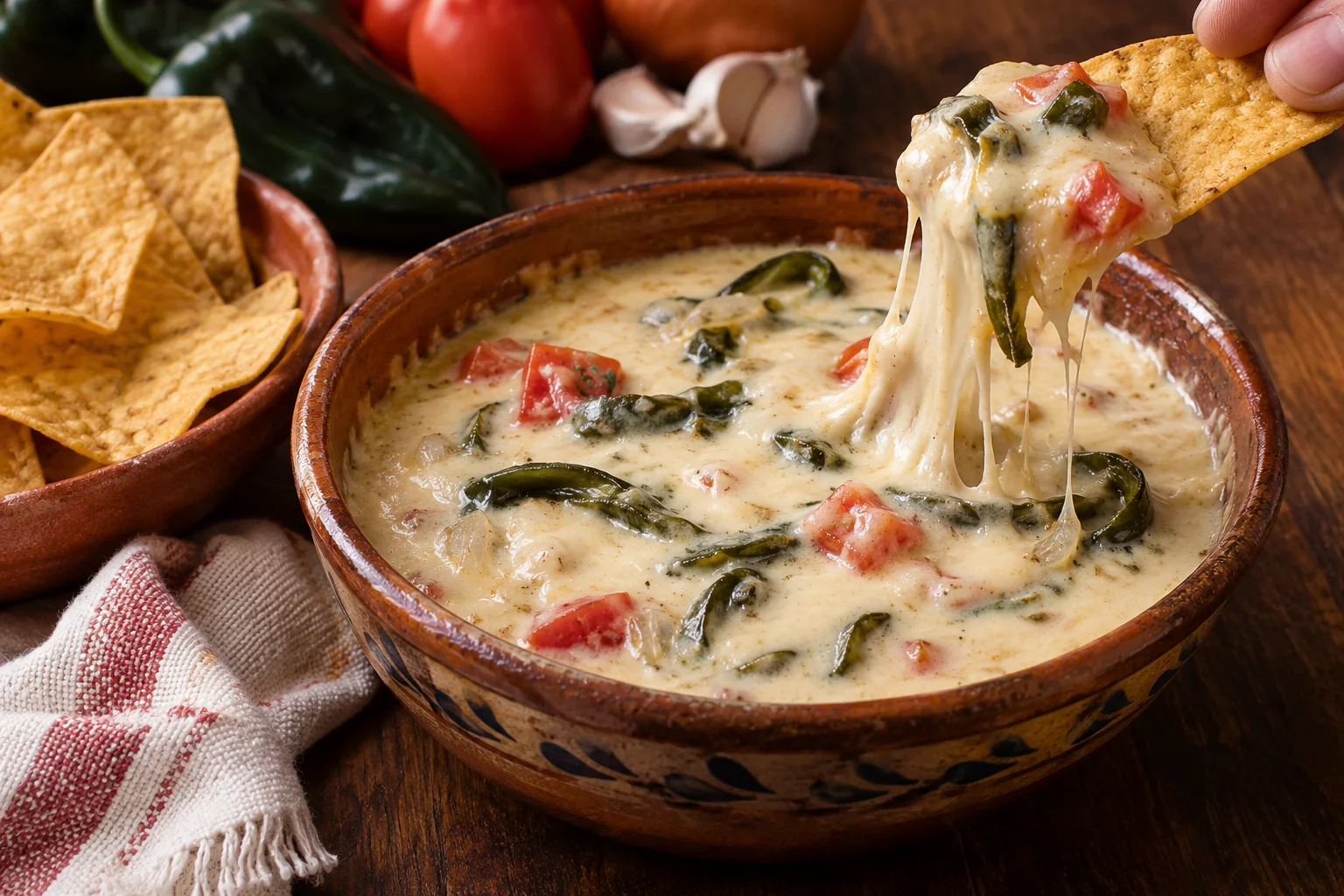
A stovetop queso of fresh tomato, poblano, crema and melting cheese.
The owner’s 2021 version uses asadero or Monterey Jack, not processed cheese.
Cook it
The owner’s 2021 version uses asadero or Monterey Jack, not processed cheese.
- Soften the vegetables. Melt the butter in a heavy saucepan over medium heat. Add the onion and garlic and cook a couple of minutes. Stir in the chopped tomatoes and poblanos, cover, lower the heat and cook about 5 minutes.
- Add the dairy. Stir in the crema and water. Bring just to a boil uncovered, then scatter the thin cheese slices over the mixture.
- Melt off the heat. Stir quickly, cover the pan and remove it from the heat. Let stand 5 minutes, then uncover, stir if needed to finish melting and add salt to taste. Serve with tortilla chips.
Serve it
Bring the pan or a warmed bowl to the table with sturdy tortilla chips. Stir once if a little liquid separates while standing.
Understand it
What makes this version work
The old ingredient line calls for ‘2 chiles’ without naming them; the old method calls them poblanos. This page follows that internal clue and makes it visible. Thin pieces of asadero or Monterey Jack melt more readily after the pan leaves the heat. Crema and water go in before the cheese, while tomato and chile soften first. This is a vegetable-forward queso, distinct from the oven-baked chorizo queso flameado.
Know it
The recorded recipe and its place at the table
Chile con queso has many restaurant and home forms in Texas. This exact butter, tomato, poblano, crema and cheese version appears in the owner’s 2021 archive. No inventor or restaurant attribution is supplied in the source card. The Border Table presents it as one documented variation rather than the sole classic formula, and keeps both cheese choices the archive allows.
Sources and method
About this version
The ingredient proportions and core method come from the owner’s 2021 Authentic Tex-Mex Recipes card. The Border Table has clarified the instructions for readers without claiming an undocumented inventor or origin for the exact formula. The external source gives broader culinary context; it does not authenticate the owner’s private recipe.
- Texas State Historical Association, Tex-Mex Foods.
- FoodSafety.gov, Four Steps to Food Safety — refrigeration and safe handling guidance where relevant.
See our corrections policy to suggest an update.