The Border Table · Research Edition
Homemade Flour Tortillas
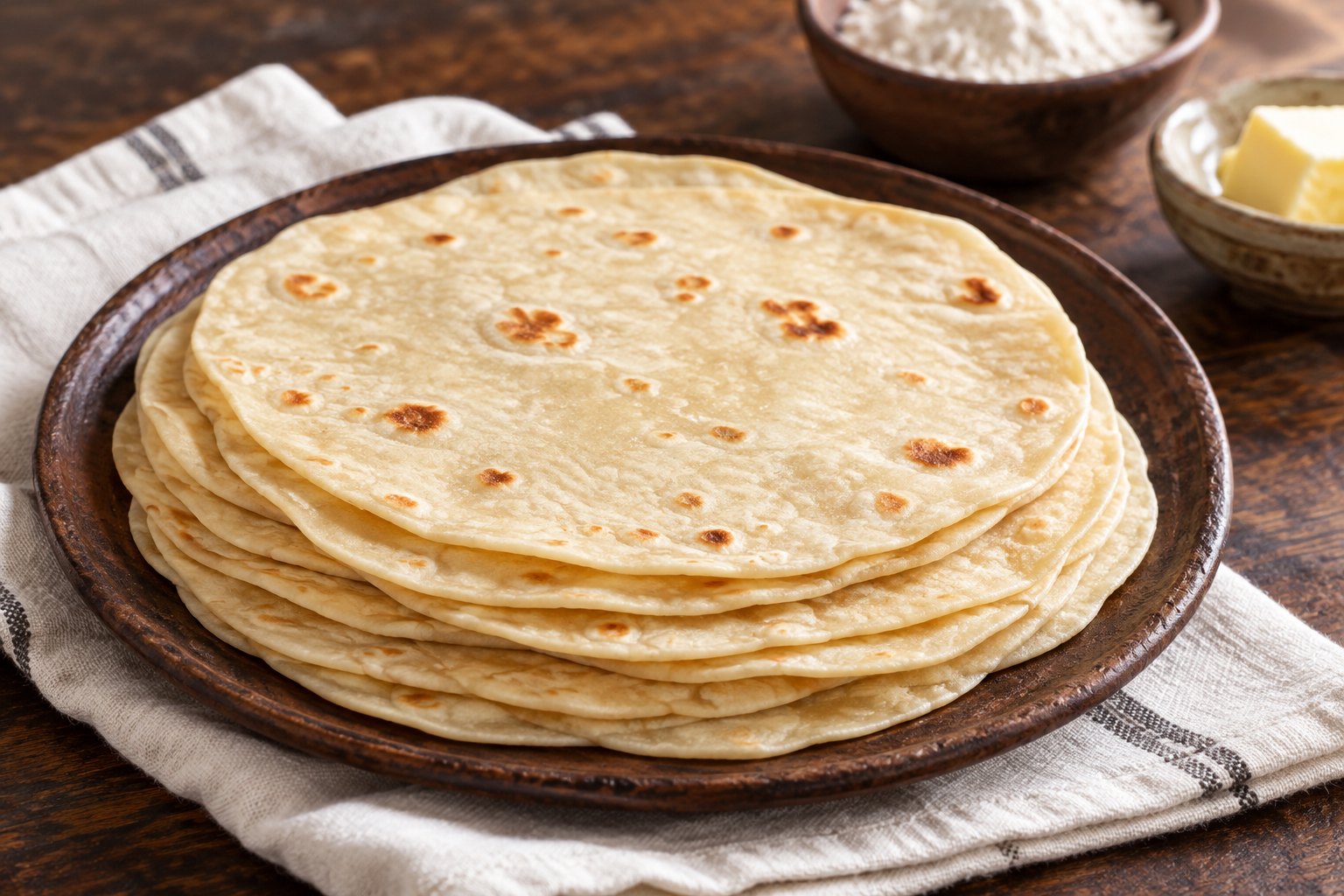
Thin, pale, supple tortillas with a little more butter for a creamy richness—ready to fold around a taco or eat warm from the comal.
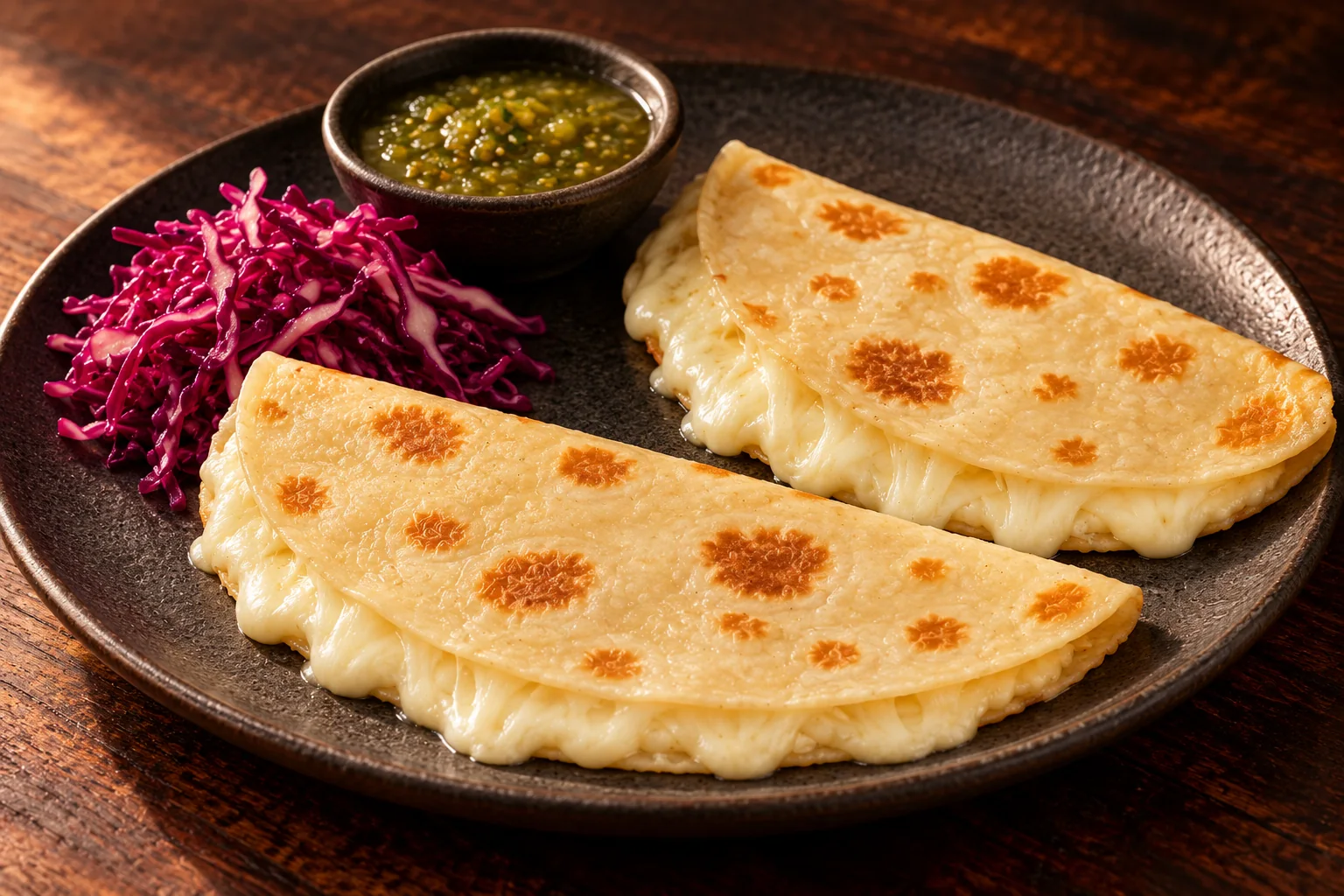
Our butter-rich variation makes small tortillas for tacos and quesadillas. Across the region, cooks also make flour tortillas with other fats.
Make the tortillas
Before you start: Set out the butter to soften. Have a clean towel and covered container ready; trapping the warmth after cooking helps keep the rounds pliable.
- Mix the dry ingredients. Whisk the flour and salt in a wide bowl. Use the weight if you can; packed cups can add enough flour to make the tortillas tough.
- Work in the butter. Rub the softened butter into the flour with your fingertips until no large pieces remain and the mixture looks evenly sandy. This is a butter-rich version, so measure the fat rather than adding more by eye.
- Bring the dough together. Add 170 g of the warm water and stir until a shaggy dough forms. If dry flour remains, add water a teaspoon at a time, up to about 185 g total. Knead gently for 2 to 3 minutes, just until the dough is cohesive and smooth. It should feel soft and slightly tacky, not wet enough to stick heavily to your hands.
- Divide and rest. Divide into 10 equal pieces, about 55 g each, and shape into balls. Cover tightly with a clean towel or wrap and rest for 30 minutes at room temperature. Keep the dough covered so the surface does not form a dry skin.
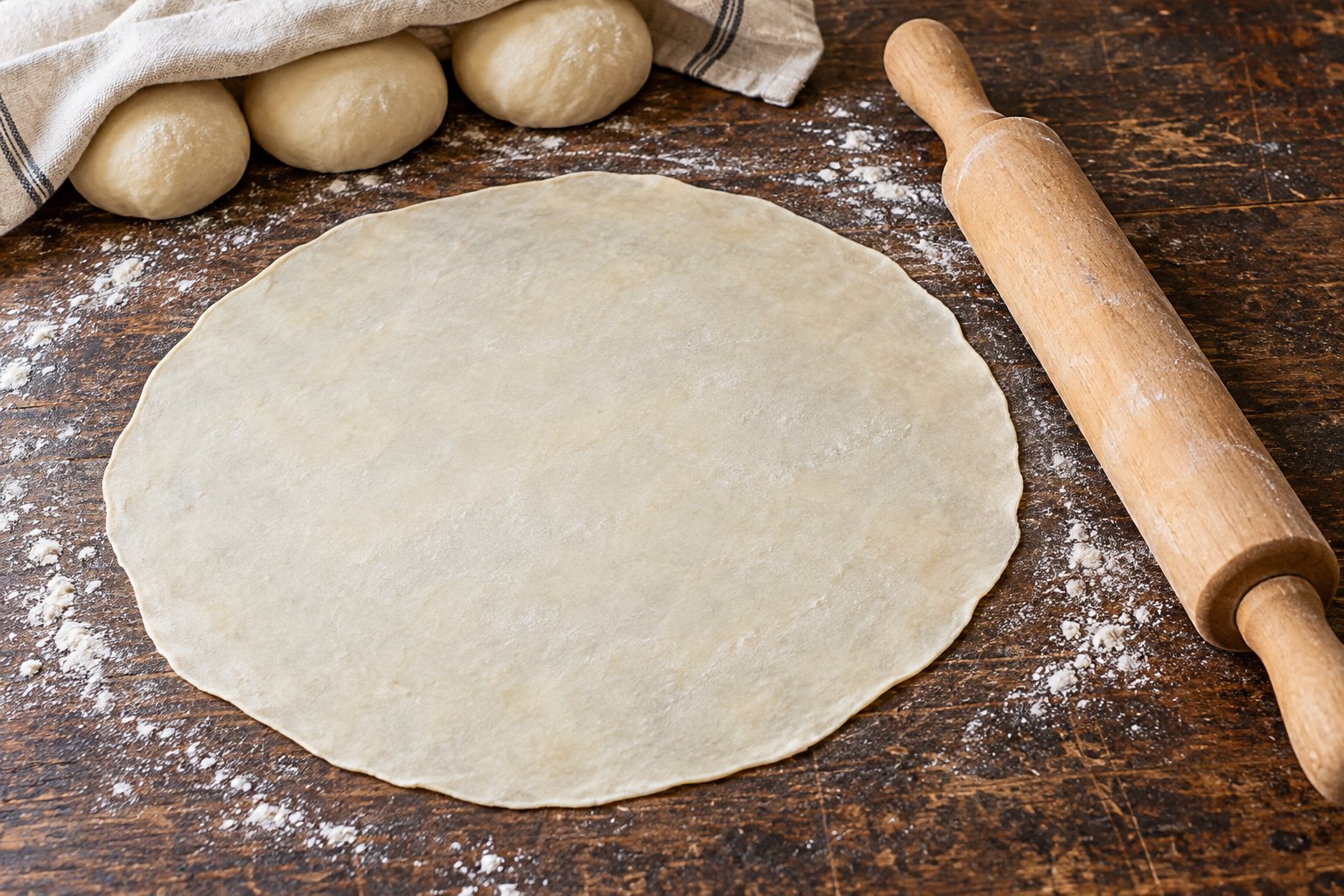
- Roll thin. Heat a dry, heavy 9-inch-or-larger skillet or comal over medium-high heat. Roll one ball at a time into a thin, roughly 7-inch round, turning it as you work and using only enough flour to prevent sticking. Aim for a delicate edge and an even center, not a thick rim. Keep the other balls covered.
- Cook and cover. Lay one round on the hot, ungreased surface. When the upper face begins to look opaque and a few small blisters appear, usually after about 30 to 45 seconds, turn it. Cook the other side about 20 to 40 seconds, until both sides are cooked and only lightly freckled. Adjust the heat if brown patches spread before the center cooks. Transfer immediately to a towel-lined tortilla keeper or plate and cover; repeat with the remaining dough.
When the dough fights back
If a round springs back, cover it and let it rest another 10 minutes, then roll again. If the dough cracks at the edge, work in a few drops of water and rest it covered. If it sticks to the counter, dust the surface lightly instead of adding a large amount of flour to the dough. If the cooked tortillas are stiff, try a slightly shorter cook and cover them while warm; if they look raw in the middle, roll more evenly or reduce the heat enough to finish the center before the spots darken.
Serve and keep
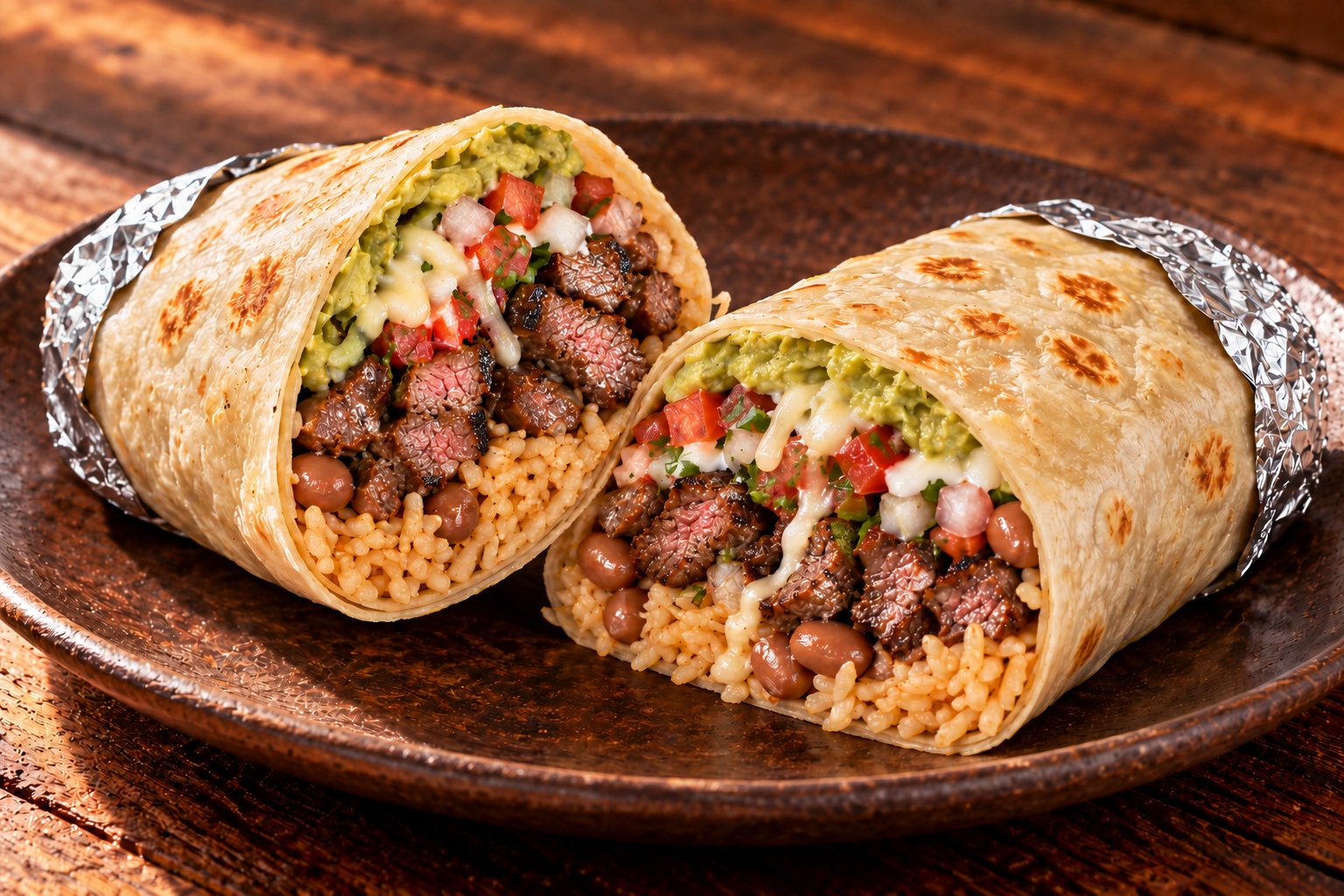
Serve warm. This batch is sized for small tacos and folded quesadillas; a large Mission-style burrito needs a substantially larger round. Cool leftovers, wrap well, and refrigerate for up to three days, following King Arthur Baking’s homemade-tortilla guidance. Reheat briefly on a dry skillet and keep covered until serving. Freeze well wrapped if storing longer.
Understand it
Why butter, rest, and quick heat?
Working softened butter through the flour distributes fat before the water arrives. Fat limits some gluten development; that makes the dough easier to roll and the finished tortilla more tender. This version uses 70 g butter for 300 g flour—a modest increase over the 57 g butter in King Arthur Baking’s 298 g flour comparison recipe. Resting gives the dough time to hydrate and relax. A hot, dry pan cooks a thin round quickly; covering each tortilla after cooking limits drying. These are technique expectations from the sources, not results of a Border Table kitchen trial.
Know it
Where flour tortillas belong
Corn tortillas have a much older place in the foodways of what is now Mexico. Wheat arrived during the colonial period; Cocina Sonorense, hosted by Mexico’s Secretaría de Cultura, traces wheat cultivation in Sonora to Jesuit missions in the early seventeenth century and describes flour tortillas as one regional use of that grain. The book records more than one form: very thin tortillas de harina de agua, cooked quickly without deep browning, and a separate wheat-flour tortilla made with fat. Its water tortilla is not this butter recipe.
Across the Texas border, flour tortillas are also part of South Texas breakfast-taco practice. Food writer Mando Rayo discusses that connection in a Texas Standard interview. That is an attributed account of a living regional food culture, not proof of a single inventor or date. Butter is our chosen flavor variation; lard, shortening, and oil appear in other cooks’ versions. No one fat defines every flour tortilla.
Sources and edition
About this version
This butter-rich formula is a Border Table variation guided by the cooking sources below and a preference for thin, pale, supple tortillas. It is not presented as an inherited family recipe or as the only traditional way to make them. The times, yield, and texture cues are estimates; we have not independently cooked this exact revision. The images illustrate the intended result.
- Ernesto Camou Healy and Alicia Hinojosa, Cocina Sonorense, Secretaría de Cultura copy — Sonoran wheat context and distinct flour-tortilla forms, especially pp. 51–53 and 294–297.
- King Arthur Baking, How to Make Tortillas from Scratch — butter, hydration, rest, dry-pan cooking, and storage comparison.
- Pati Jinich, Tortillas de harina — a contrasting lard-based home method and a useful reminder that formula and size vary.
- Texas Standard interview with Mando Rayo — South Texas flour-tortilla context, attributed to the interviewee.
Research Edition prepared 26 October 2026. Tell us if something needs correcting.