Food Stories · Northern Mexico and Texas
Flour Tortillas: Northern Mexico and the Texas Table
Wheat, water, fat, and a hot comal lead into a larger story of fields, skilled hands, regional choices, and the meals a soft tortilla makes possible.
A warm flour tortilla should bend around its filling. That simple quality connects a small breakfast taco with a much larger burrito, while leaving room for different doughs and traditions. Start with our butter-rich Homemade Flour Tortillas or the owner's Flour Tortillas with Shortening, then follow the grain and the hands behind the wrapper.
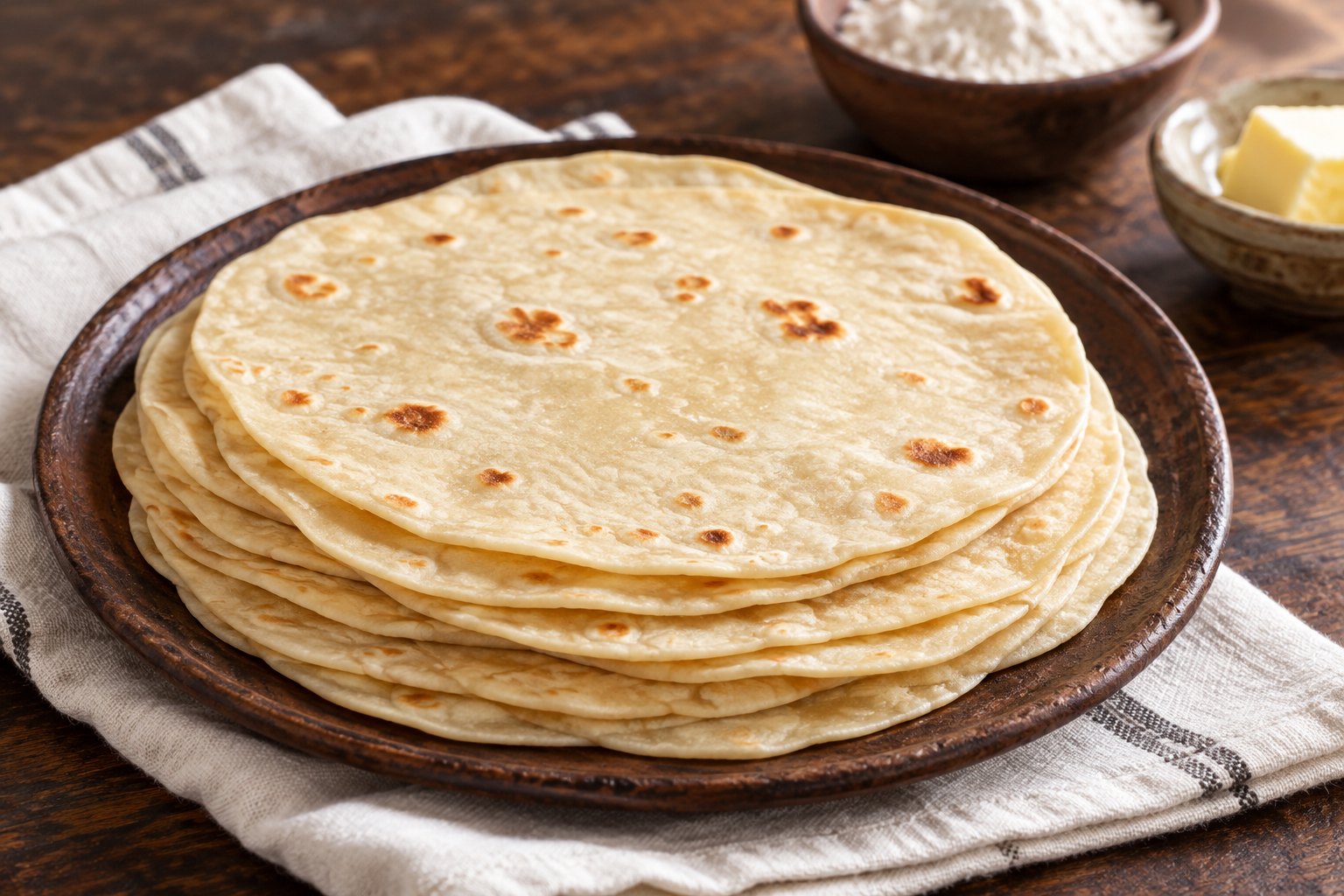
Wheat joined a landscape that already knew corn
In Cocina Sonorense, Ernesto Camou Healy and Alicia Hinojosa place maize and wheat together in the region's food history. Their account describes corn's older presence and wheat's introduction through Jesuit missions in the early seventeenth century. It gives the grain a historical setting; it does not identify the first person to turn wheat flour into a tortilla.
At Tumacácori, the National Park Service explains how wheat could grow through winter and be harvested in June, adding a crop between the region's corn seasons. Flour for bread and large, elastic tortillas became part of that agricultural landscape. Water, cultivation, and the timing of harvest belong in the story alongside the finished round.
The Arizona & Sonora atlas follows those connections through Indigenous farming knowledge and changing crops. The corn tortilla guide follows a distinct preparation with its own place at the table. Flour tortillas are one important branch of the region's cooking.
One Sonoran book records several flour tortillas
Cocina Sonorense's tortilla section distinguishes hand-stretched tortillas de harina de agua from a dough mixed with vegetable shortening. The water-tortilla method still coats the dough balls with fat before resting. Its name should not be read as a promise that every stage is fat-free.
The water version is stretched very thin through the edges and cooked quickly without browning deeply. The shortening version has a different mixing and cooking sequence. Those recorded differences are useful: a pale surface, a particular fat, or a round's size can belong to a specific method rather than a rule for every tortilla.
Our butter recipe is its own formulation. Its creamy flavor is the choice behind that page, while the archived shortening recipe preserves another dough. Reading them beside regional sources helps a cook recognize variety without blending their measurements into an imaginary universal recipe.
A flour tortilla belongs to living Texas food culture
In a March 2025 Texas Standard interview, food writer Mando Rayo connects flour tortillas and breakfast tacos with the region's vaquero history. He also discusses Miguel and Danny Cobos, brothers from the Rio Grande Valley who brought their own taco business to Austin. His account gives the food named people and a route between places.
At The Border Table, several meals make those differences practical. The owner's Classic Beef Fajitas meet a tortilla at the table; the Breakfast Burrito needs a larger wrapper that can close around its filling. The Rio Grande Valley atlas and El Paso & Paso del Norte atlas give those cooking paths their regional context.
These are useful connections between meals and places, without assigning the same origin to every filled tortilla. A taco served open, a closed burrito, and a packet fried as a chimichanga make different demands of the dough.
The story also includes the work of making tortillas
A home kitchen is one setting; a neighborhood business is another. The City of Dallas's Luna Tortilla Factory record names Maria Luna and her 1938 building permit. It identifies the factory as a surviving part of Little Mexico and records its departure from that location in 2007.
That record makes a businesswoman and a working building visible in food history. It does not identify every tortilla the factory made or establish the origin of our flour dough. The Dallas atlas keeps that neighborhood history alongside the city's restaurant tables.
Fat, rest, and rolling explain the tortilla in your hands
Pati Jinich's flour tortilla recipe uses lard or vegetable shortening, a covered rest, a rolling pin, and an ungreased comal or skillet. It is a named cook's method to compare with our two recipes. The comparison shows why choosing a fat and following the complete dough matters more than treating the word traditional as a fixed ingredient list.
King Arthur Baking's tortilla guide explains that working solid fat through flour limits gluten development and makes the dough easier to roll. Butter also contributes its own flavor. Resting the dough gives it time to relax; forcing a round that keeps shrinking is less useful than allowing the covered rest specified by its recipe.
The recipe and intended meal guide the size. A small round can fold around a modest taco filling. A burrito needs enough clear border to close its ends. Thin, even rolling helps the center and edge cook together; a thick rim and a very thin middle ask the pan to do two different jobs.
Follow your chosen recipe's heat and timing, then keep the cooked stack covered as directed. The flour tortilla guide provides further handling and storage advice. These decisions bring the history back to an ordinary kitchen: a tortilla earns its place by working with the meal it accompanies.
Choose the dough, then choose the table
Use Homemade Flour Tortillas for the butter-rich dough, or Flour Tortillas with Shortening for the owner's archived version with baking powder. Their fat, water, rest, and yield belong to their respective recipes.
Read the Mission Burrito story for a larger wrap, the Chimichanga story for a crisp fried packet, or the Café Rey memory for another flour-tortilla meal. For cheese and sauce on corn tortillas, continue to the Cheese Enchilada story.
Put the flour tortilla around melting cheese
The Quesadilla story follows a changing name through corn masa, flour tortillas, and regional cooking methods. Start with our folded flour-tortilla cheese quesadillas, or compare the white-corn version with mushrooms, sweet corn, and chipotle. The Arizona–Sonora atlas supplies the wider wheat-growing context.
Read the sources, then make the tortillas
- Camou Healy and Hinojosa, Cocina Sonorense, fifth edition, 2007 — grain history and separate tortilla methods, especially printed pp. 51–53, 294, and 296.
- National Park Service, Cultivated Landscapes — seasonal farming and wheat at Tumacácori.
- Texas Standard interview with Mando Rayo, March 6, 2025 — attributed Texas food connections.
- City of Dallas, Luna Tortilla Factory — the named business and building.
- Pati Jinich, Tortillas de harina and King Arthur Baking's tortilla guide — distinct working methods and dough explanations.
Make the butter tortillas · Make the shortening tortillas · More Food Stories · Suggest a correction