Culinary Atlas · West Texas & Chihuahua
El Paso & Paso del Norte
Before the river became a national boundary, it was a crossing, a farming corridor, and a route joining communities on both banks.
To understand food in this region, begin with water. The land around the Rio Grande made cultivation possible in an otherwise dry landscape, while roads and settlements connected people and provisions far beyond the pass.
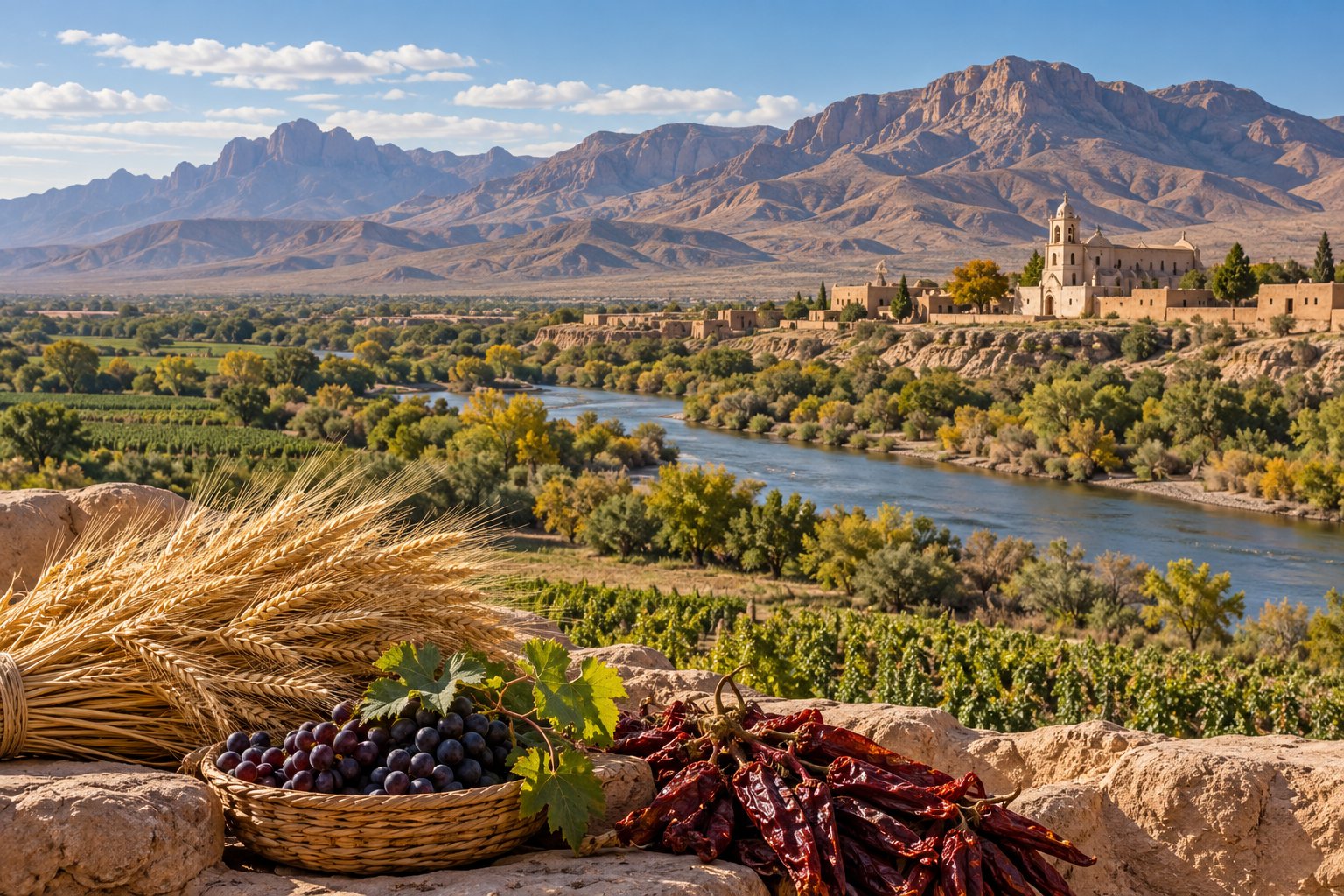
One pass, two present-day cities
The National Park Service explains that El Paso del Norte once named the pass and connected settlements on both sides of the river. The colonial-era principal settlement lay on the south bank in what is now Ciudad Juárez; the city now called El Paso grew on the north. The later international boundary changed political administration, but it did not erase the earlier geography or everyone’s family ties.
This distinction matters for the table. A chile, grain, or tortilla found on either side is not automatically “from” one present-day nation because a map now draws a line through the region. Specific culinary claims require specific evidence.
Acequias, wheat, grapes, and orchards
The same National Park Service account describes an irrigation ditch dug near the crossing in the seventeenth century to support wheat, grapes, and fruit trees. It also records orchards, fields, and vineyards along the river in later descriptions. These are documented crops and water systems, not proof of an unchanged dish served today. They show why this stretch of river sustained more than travel: people planted, harvested, traded, and fed communities here.
The NPS history of Socorro Mission adds another essential perspective. After the Pueblo Revolt of 1680, Pueblo people and Spanish settlers moved into the Paso del Norte area; the mission community reflects Indigenous as well as colonial histories. A food account that mentions only Spanish settlers would miss that movement and the people who helped sustain the region.
What the atlas can—and cannot—connect yet
Our current recipe collection does not contain a researched El Paso-specific family or restaurant recipe. We will not relabel a generic burrito or chile dish as one. This page establishes the place and the documentary questions; future linked recipes should identify their own cook, community, source, or local method. For now, compare the geographically different Lower Rio Grande Valley and its documented ranch-and-irrigation history, then browse recipes by their actual titles and sources.
Sources and limits
The NPS Paso del Norte landscape account supports the river, crossing, settlement, and crop details. The NPS Socorro Mission history supports the account of Pueblo movement and mission community. We do not infer an exact historic recipe from either source.