Food Stories · Fresh salsa and regional tables
Pico de Gallo: Fresh Salsa and Regional Tables
Tomato, onion, chile, and citrus bring a fresh contrast to a hot meal. Follow the name through Mexican food traditions, printed recipes, and family kitchens, then choose a pico for your table.
Start with the salsa you want to eat. Our Pico de Gallo brings together jalapeño and two kinds of onion. Our Serrano Pico de Gallo uses a different chile quantity and offers lime juice or vinegar. Both leave the ingredients in fresh, distinct pieces.
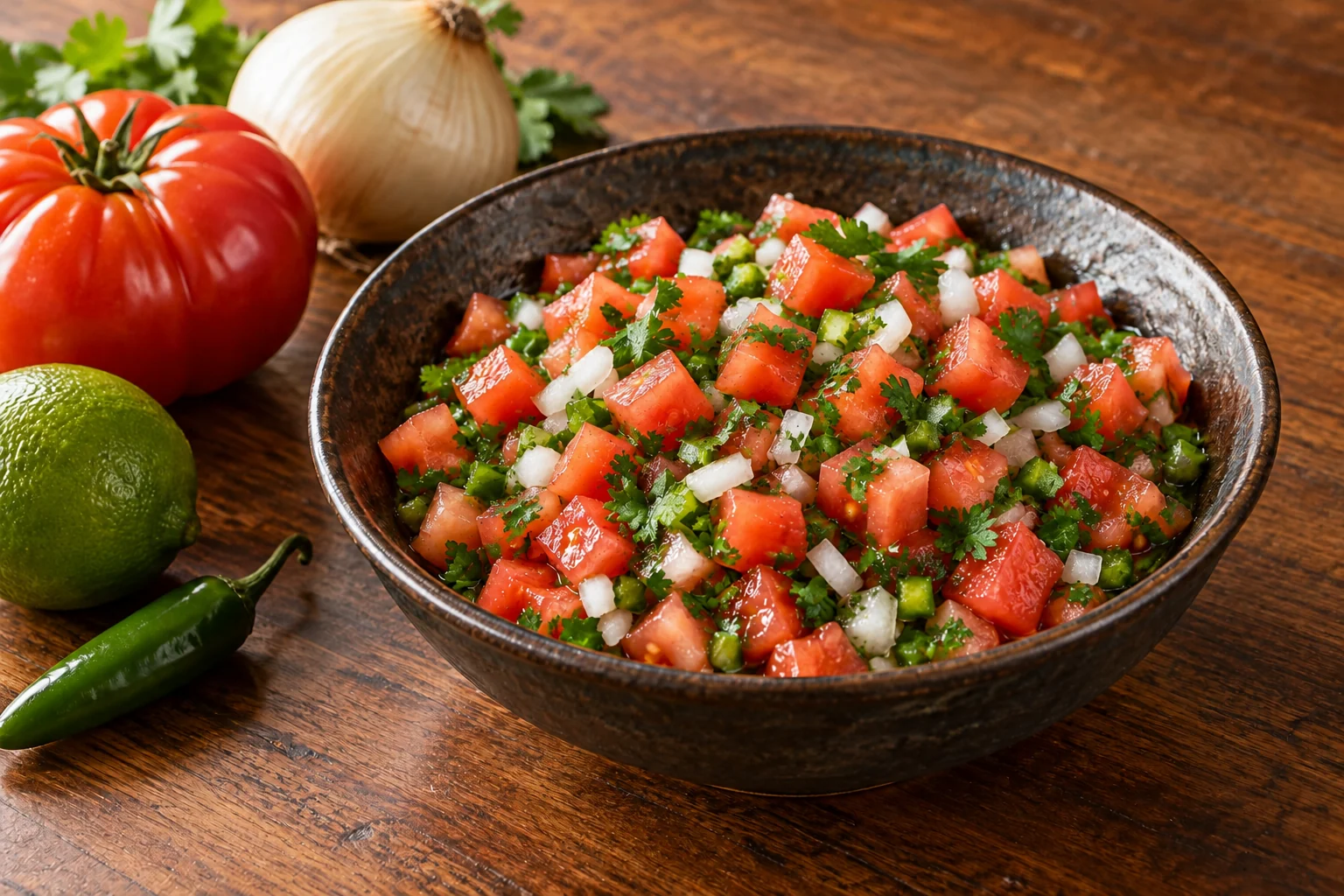
A name shared by different fresh preparations
At many taco tables, pico de gallo means a chopped tomato salsa. El Colegio de México’s Diccionario del español de México defines that usage through raw, chopped tomato, onion, and green chile. The pieces matter: the mixture keeps the character of its vegetables rather than becoming a smooth sauce.
Larousse’s Salsa mexicana entry describes a similar raw preparation with cilantro, salt, and sometimes lime. It names serrano as a common chile, with jalapeño also used, and connects the green, white, and red ingredients with the Mexican flag. Its separate Pico de gallo entry follows a much wider range of mixtures, including fruit.
That range makes the ingredient list a useful guide when a familiar name leads to something unexpected. The name translates literally as “rooster’s beak,” but the sources here do not establish a single inventor, birthplace, or securely dated explanation for it.
The Secretaría de Cultura’s salsa overview places chopped salsa mexicana alongside raw, cooked, fried, and roasted sauces. Our serrano pico shares that chopped tomato-onion-chile-cilantro combination; the jalapeño recipe brings its own proportions and two onions. Explore the nine-style salsa guide to compare their methods.
A fresh salsa in a 1985 Guadalajara cookbook
UT San Antonio Libraries reproduces a Salsa Picante from Edith Metcalfe de Plata’s Cocina mexicana vegetariana (1985). The library identifies her with Guadalajara’s Las Margaritas restaurant and records an English-language edition in 1989.
Her chopped mixture offers tomato or tomatillo, with onion, chiles, cilantro, cider vinegar, and sugar. UT San Antonio connects it with the preparation now called pico de gallo. Read it beside our two recipes as another cook’s version: the choice of vegetables and acid changes the bowl.
The Jalisco atlas widens the view beyond one Guadalajara restaurant to the state’s food traditions and regional differences.
Recipes travel with the people who make them
Secrets of Salsa / Secretos de la Salsa (2002), edited by Kira Brennan, grew from an English-language class in California’s Anderson Valley. UT San Antonio’s account describes students sharing salsas, translating recipes, and collecting 25 of them in a bilingual book.
It reproduces María Elena Mendoza’s tomato-and-serrano salsa and Teresa Álvarez’s mango-and-cucumber pico de gallo. Álvarez, identified as originally from Uruapán, remembers her grandmother making it. Follow the Michoacán atlas for the regional setting behind that family account.
A salsa can carry a memory as well as ingredients. Here, named cooks bring that connection into view.
The bowl may hold fruit as well as tomato
Larousse records jícama-and-orange mixtures in Campeche, Yucatán, and Quintana Roo, and fruit-and-vegetable combinations in Jalisco. Its examples include different citrus, chiles, and crisp produce. Pico de gallo can therefore name a snack, salad, or accompaniment that looks quite different from the tomato salsa beside a Texas fajita plate.
That wider use is an invitation to explore. For the tomato preparations here, follow the complete recipe you choose; the fruit mixtures belong to their own cooks and methods. The Restaurant-Style Salsa story compares fresh, roasted, blended, and cooked sauces across the rest of our collection.
Choose between two tomato picos
Jalapeño and two onions
Our Pico de Gallo is adapted from Cheryl Alters Jamison and Bill Jamison’s The Border Cookbook (1995), page 40. White and green onions join the tomato, jalapeño, cilantro, and lime. The recipe keeps the tomato juices and includes a refrigerated chill.
Serrano and a choice of acid
Our Serrano Pico de Gallo comes from our original 2021 recipes. It uses plum tomatoes, one onion, cilantro, and its stated range of serrano. Choose lime juice or vinegar for the listed amount, then follow that recipe’s resting and serving guidance.
Chile strength varies, so a chile name alone will not predict the heat of your finished bowl. Each recipe gives its own amounts and options. Start with the version that suits your table, keeping its proportions together.
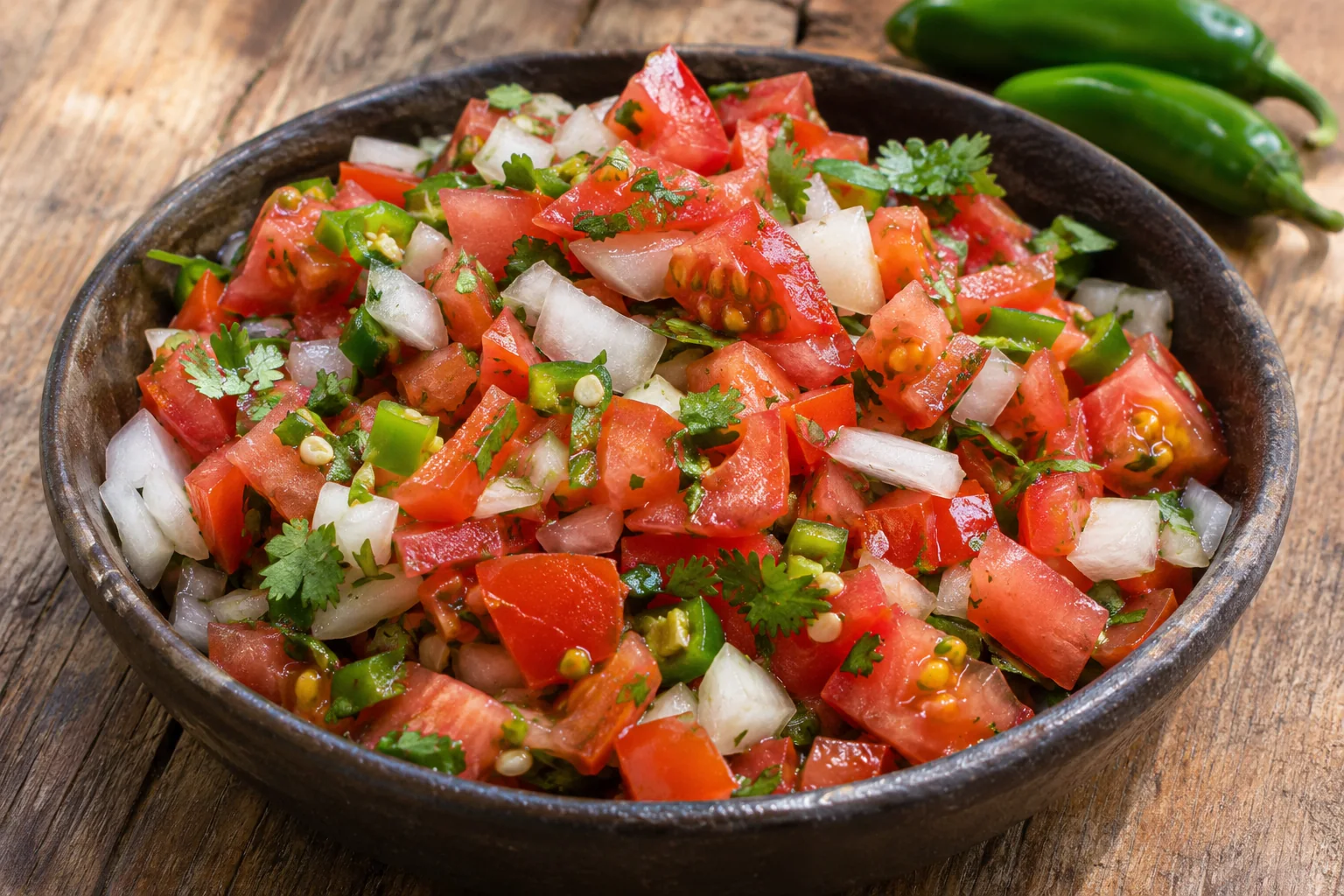
Put the fresh salsa beside something hot
Serve a bowl alongside Classic Beef Fajitas or Carne Asada Tacos, or use the preparation named in the Mission-Style Burrito. Keep the salsa separate when everyone wants to choose their own helping.
The produce guides explain the tomatoes, white and green onions, cilantro, jalapeño, and serrano in these bowls. Chopping, chilling, and serving advice stays with each complete recipe.
For the wider border table, explore the Rio Grande Valley and Reynosa and Tamaulipas. UTRGV’s Border Studies Archive also catalogs Salsa Picante material dated 1980–1989 in its Traditional Mexican American Folklore collection. It offers a path into community food records alongside the named cookbook and family accounts above.
Sources and further reading
- El Colegio de México, Diccionario del español de México: pico, sense 8 — the chopped raw tomato-salsa usage.
- Larousse Cocina: Salsa mexicana — ingredients, chiles, and the color association.
- Larousse Cocina: Pico de gallo — regional fruit and vegetable preparations.
- UT San Antonio Special Collections: Salsa Picante 1985 — Metcalfe de Plata’s cookbook and a reproduced recipe.
- UT San Antonio Special Collections: Secrets of Salsa, 2002 — the bilingual cookbook and named contributors.
- UTRGV Border Studies Archive: Recipes — Salsa — Picante (1980–1989) — the collection’s folder record.
Make Jalapeño Pico de Gallo · Make Serrano Pico de Gallo · More Food Stories · Send a correction