Culinary Atlas · A landscape across a border
Arizona & Sonora
Follow southern Arizona and neighboring Sonora through river farming, desert foods, winter wheat, and the many tables behind a familiar flour tortilla.
A chimichanga is one doorway into this region. The larger story includes farming and gathering, wheat and corn, home cooking and restaurant claims. This article focuses on southern Arizona and its connections with Sonora, rather than treating either whole state as one uniform kitchen.
A desert with rivers, mountains, and seasons
The Arizona-Sonora Desert Museum describes a region extending across the present international boundary and including a range of habitats. The desert itself and the wider region interpreted by the museum are not identical outlines. Mountains, river valleys, and the Gulf coast help explain why a Sonoran food story reaches beyond one image of cactus and dry ground.
At Tumacácori, the National Park Service describes winter rain and summer monsoons as two important precipitation seasons. The timing and reliability of water matter to farming. A field beside the Santa Cruz River faces different possibilities from a dry slope, even within the same broad region.
Begin with the people who grew and gathered food
The park's agricultural history records O'odham use of Santa Cruz floodplains and hand-dug irrigation canals. Corn, tepary beans, squash, and gathered foods such as saguaro fruit and mesquite belong in that account. The landscape was worked and understood before the Spanish mission period.
That knowledge also has a present tense. On San Xavier Cooperative Farm's own website, the farm describes its commitment to traditional crops, cultural and environmental values, and economic development within the community. Run by members of the Tohono O'odham Nation, it includes respect for land and water and opportunities for Elders to share farming knowledge in its mission.
These named accounts keep Indigenous food traditions visible as living practices. They also remind a reader that a restaurant's best-known fried tortilla does not stand for every meal grown, gathered, or cooked in the region.
Winter wheat added another kind of tortilla
The National Park Service explains wheat's place after Spanish contact at Tumacácori: a crop grown through winter could be harvested before the next corn crop. Its flour supplied bread and large, elastic tortillas. Irrigation and the timing of harvests give that change a practical setting.
For a modern cook, wheat and corn tortillas also behave differently at the table. Our flour tortilla guide follows the soft wrapper used for burritos and chimichangas; the corn tortilla guide follows the other staple. Neither guide replaces the specific dough and method of a named community or cook.
The political boundary changed within an older landscape
The National Archives' Gadsden Purchase Treaty account dates the initial agreement to December 1853 and its final approval to 1854. It describes the acquisition of land in what is now southern Arizona and southwestern New Mexico. The boundary divided a region with existing communities, fields, and travel connections.
That change helps explain why a culinary atlas follows relationships between places as well as state names. It does not date a particular tortilla recipe or tell us who first fried a filled burro. Those questions need their own records. The Chimichanga story keeps the restaurant accounts and their limits together.
Sonora holds more than one familiar beef dish
Mexico's national cultural information entry names Sonoran beef and Gulf seafood alongside wheat preparations. Its chivichangas use large flour tortillas; coyotas bring wheat into a sweet filled preparation. These examples show different uses of ingredients rather than a single obligatory menu.
The Sonora tourism department's food overview also names carne asada, machaca, carne seca, burritos, and coastal foods. Its description of machaca connects dried and finely separated meat with preparations including eggs. That is regional context, not the braised chuck filling in this site's chimichangas.
A place name on a recipe should therefore invite a closer question: which cook, which cut, and which method? Our recipe gives its own answers. The cultural entries help show the wider table around it.
Heritage ingredients still reach working kitchens
Tucson City of Gastronomy's heritage product list identifies foods using Sonoran white wheat, mesquite, and prickly pear, with named makers. It is a concrete example of regional ingredients appearing in contemporary breads and other foods. The list is a record to explore, not a guarantee of today's stock or a complete catalogue of local cooking.
Restaurant memory is another part of that living landscape. Tucson and Phoenix appear in competing chimichanga accounts, while the full story distinguishes dated reporting, family claims, and unresolved beginnings.
Start with the recipe, then follow an ingredient
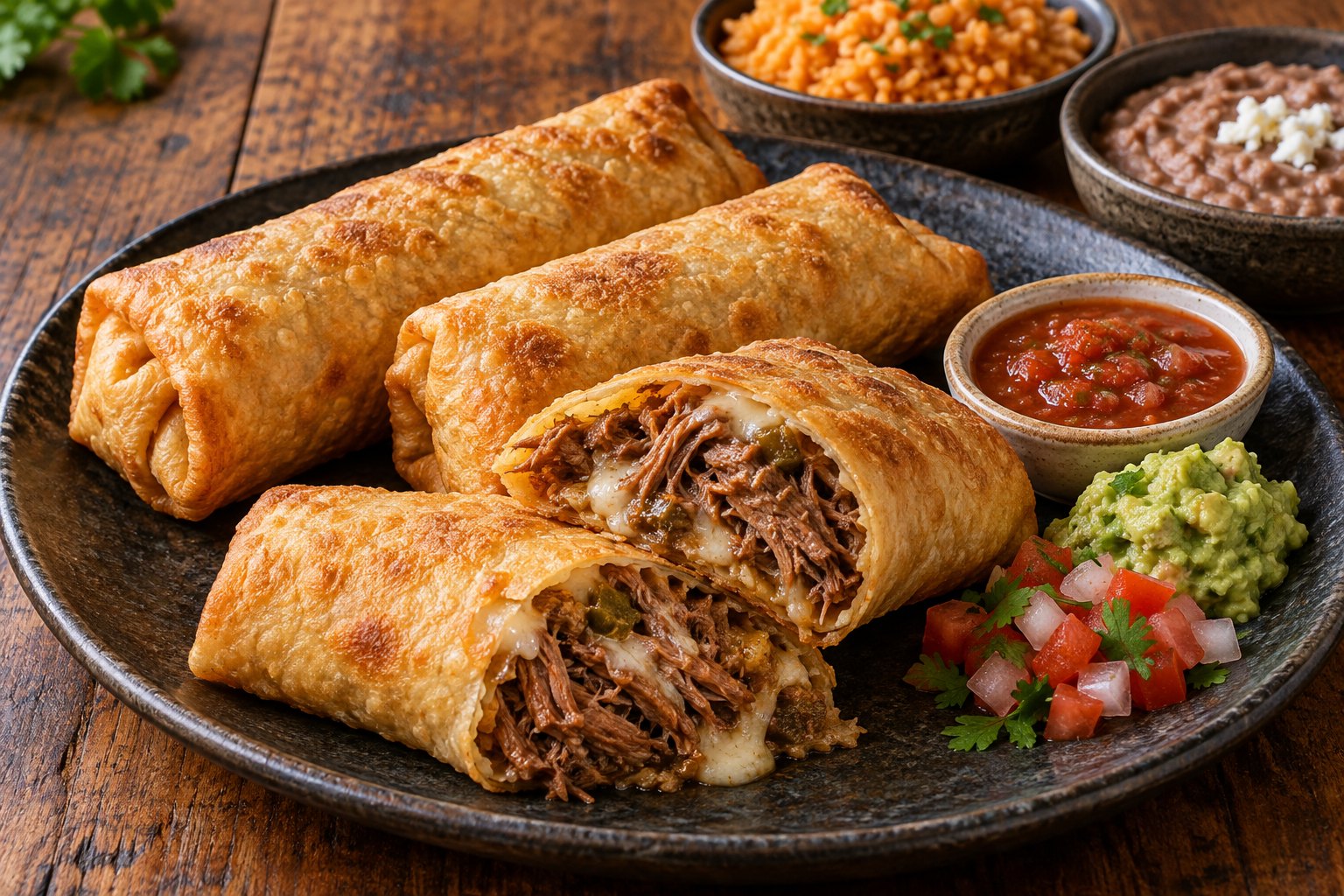
Cook Chimichangas for the site's shredded-beef version. Its complete method explains the cooked filling, supple tortilla, closed ends, and crisp finish. Make Homemade Flour Tortillas if you want to prepare the wrapper, and read the chuck-roast guide for that cut.
The pinto-bean profile and chiltepin entry open further ingredient paths. For another regional use of a flour-tortilla packet, continue to Santa Fe & New Mexico and its Breakfast Burrito story.
Follow the wheat into the Flour Tortilla story, then choose the butter-rich Homemade Flour Tortillas or the owner's shortening recipe. The story keeps the recorded Sonoran methods distinct from these two home doughs.
Follow the flour tortilla into a quesadilla
Read the Flour Tortilla story and the Quesadilla story for the wheat tradition and the range of corn, flour, and fresh-masa preparations. Our folded flour-tortilla cheese recipe connects this reading to a home meal. The corn, mushroom, and chipotle recipe offers a comparison of grains and construction; it is not presented as a documented Sonoran specialty.
Sources for this place
- Arizona-Sonora Desert Museum — geographic scope and habitats.
- NPS, Weather and Climate and Cultivated Landscapes — water and farming.
- San Xavier Cooperative Farm — its own mission and continuing food work.
- National Archives, Gadsden Purchase Treaty — the boundary agreement.
- Secretaría de Cultura, Sonora and Sonora tourism department — named regional foods.
- Tucson City of Gastronomy — heritage products and makers.
Cook Chimichangas · Read its story · Browse the atlas · Suggest a correction