Food Stories · Corn, wheat & regional tables
Quesadillas: Corn, Flour, and Regional Traditions
Follow a familiar name through changing meanings, tortillas, and cooking methods, then choose the cheese quesadilla you want to make.
Start with our folded flour-tortilla cheese quesadillas or the white-corn version with mushrooms, sweet corn, and chipotle. Both put melting cheese at the center. Their different tortillas and construction offer two ways into a much wider Mexican food tradition.
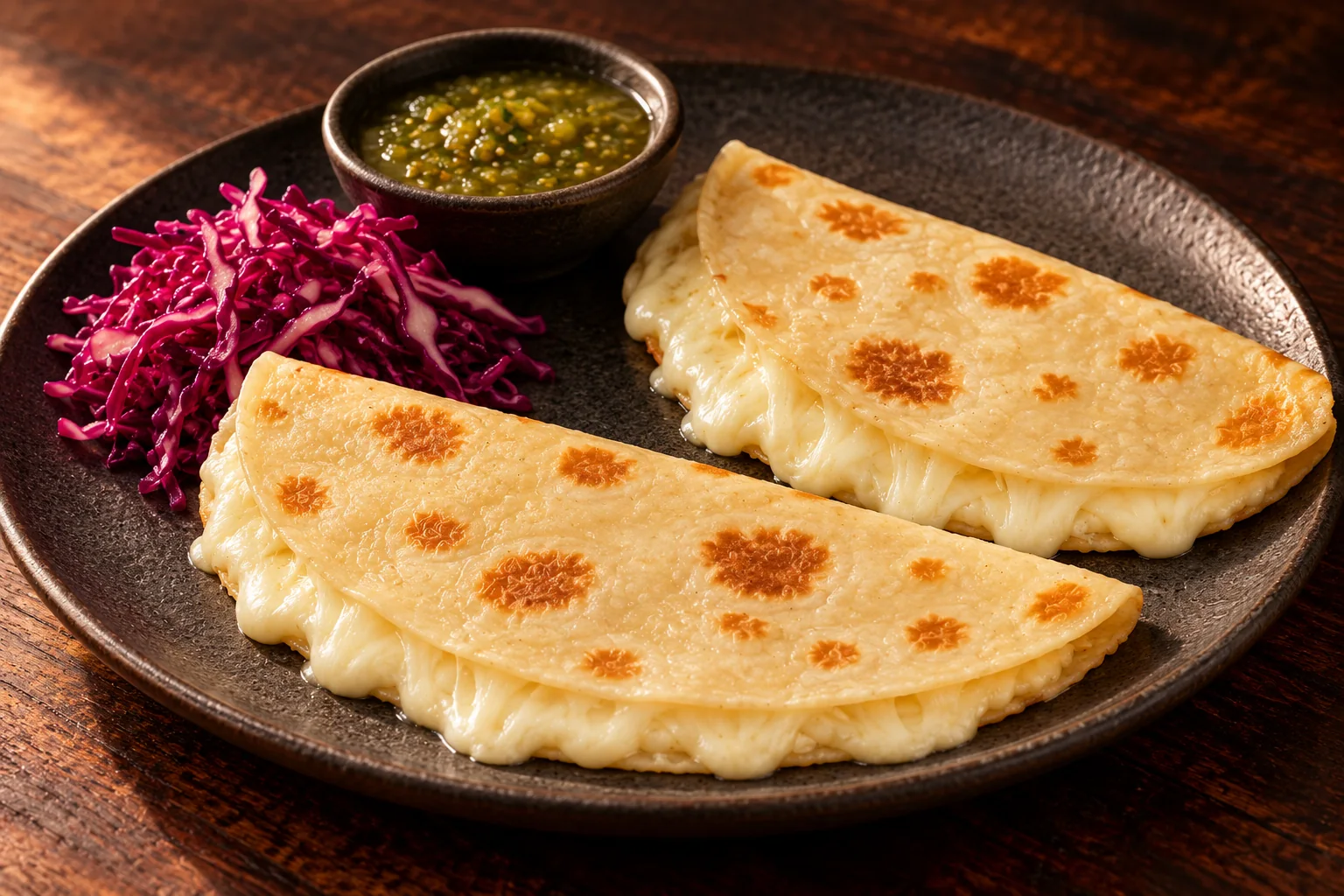
Larousse’s culinary dictionary describes a Mexican antojito made with corn masa or a wheat-flour tortilla, folded around cheese or another filling and cooked on a comal or fried. An antojito is the kind of savory small dish that includes quesadillas. The definition leaves room for several kitchens: the grain, filling, and cooking surface all help explain the food in front of you.
An old name with changing meanings
In an essay published by the Academia Mexicana de la Lengua, linguist José G. Moreno de Alba compares older dictionary descriptions with Mexican usage. He notes that the entries of Santamaría and Ramos y Duarte describe a corn preparation containing cheese and sugar, cooked on a comal or fried. His comparison traces the disappearance of that sweet element from the savory tortilla preparation and a further change in Mexico City, where the name also covers fillings without cheese.
That is a history of usage: a familiar word has described foods whose ingredients and forms changed. The RAE and ASALE dictionary now records both pastry meanings and the Mexican corn- or wheat-tortilla preparation, whose filling may be cheese or something else. These entries help explain the range of the name; they do not date a first Mexican quesadilla or identify its inventor.
For a visitor, the useful question is what the cook puts inside. A Mexico City order may need you to specify cheese as well as the other filling. On our two recipe pages, “Cheese Quesadillas” means exactly that: both contain cheese, with their tortilla and other ingredients described beneath the title.
Masa and the comal create another kind of quesadilla
A quesadilla can begin before there is a fully cooked tortilla. In Alicia Gironella’s comal technique for Larousse, fresh corn masa is pressed, briefly cooked on both sides, filled, and folded. Cooking continues until the dough and filling are ready. That sequence gives the cook a different task from warming and filling a ready-made tortilla.
Corn tortillas also make familiar folded quesadillas. Pati Jinich’s published Oaxacan mushroom-and-cheese version uses warmed corn tortillas, a cooked mushroom filling, and Oaxaca cheese. Onion, chile, garlic, and optional epazote season the filling. The tortillas are folded and cooked on a comal or skillet until the cheese melts. It is a useful documented comparison with our mushroom recipe, which uses two tortillas, sweet corn, and chipotle.
These working methods show how much a simple name can hold. Fresh masa needs time to cook through; a cooked tortilla needs warming and browning around its filling. Our Quesadilla guide helps you choose between the two recipes here, and the corn-tortilla guide follows the grain behind the corn version.
The northern flour tortilla has a history of its own
Flour-tortilla quesadillas belong within the wider story of wheat in northern Mexican cooking. At Tumacácori, in what is now southern Arizona, the National Park Service’s account of cultivated landscapes describes an O’odham farming tradition in which corn was already a staple. Wheat joined the regional diet after Spanish contact. It could grow through winter and be harvested before the next corn crop, and its flour was used for bread and large, flexible tortillas.
This agricultural record explains a setting in which corn and wheat could both matter to a table. It does not establish the birthplace of the quesadilla. Chef Rick Bayless also identifies flour tortillas with northern Mexico in his own tortilla recipe. Our Flour Tortilla story follows the dough, regional examples, and Texas connections in more detail.
Continue to the Arizona–Sonora atlas for the landscape, Indigenous food knowledge, farming seasons, and later border that surround this wheat tradition. It supplies regional context for the flour tortilla. The corn-and-mushroom recipe offers a comparison between grains and methods; its ingredients alone do not establish a Sonoran origin.
Two cheese quesadillas, two ways to build the meal
Folded flour tortillas with a bright slaw
Our flour-tortilla recipe folds a thin tortilla around asadero, Chihuahua, or Monterey Jack cheese. Its red-cabbage slaw stays alongside, as does the optional green chile salsa. The tortilla gets a lightly crisp edge while the cheese melts inside. This is the simpler choice when you want the tortilla and cheese to lead.
The page identifies its source as Cheryl Alters Jamison and Bill Jamison’s The Border Cookbook (1995), pages 151–152. Follow that recipe for its ingredients, quantities, and cooking steps. The historical connections here explain the surrounding food culture.
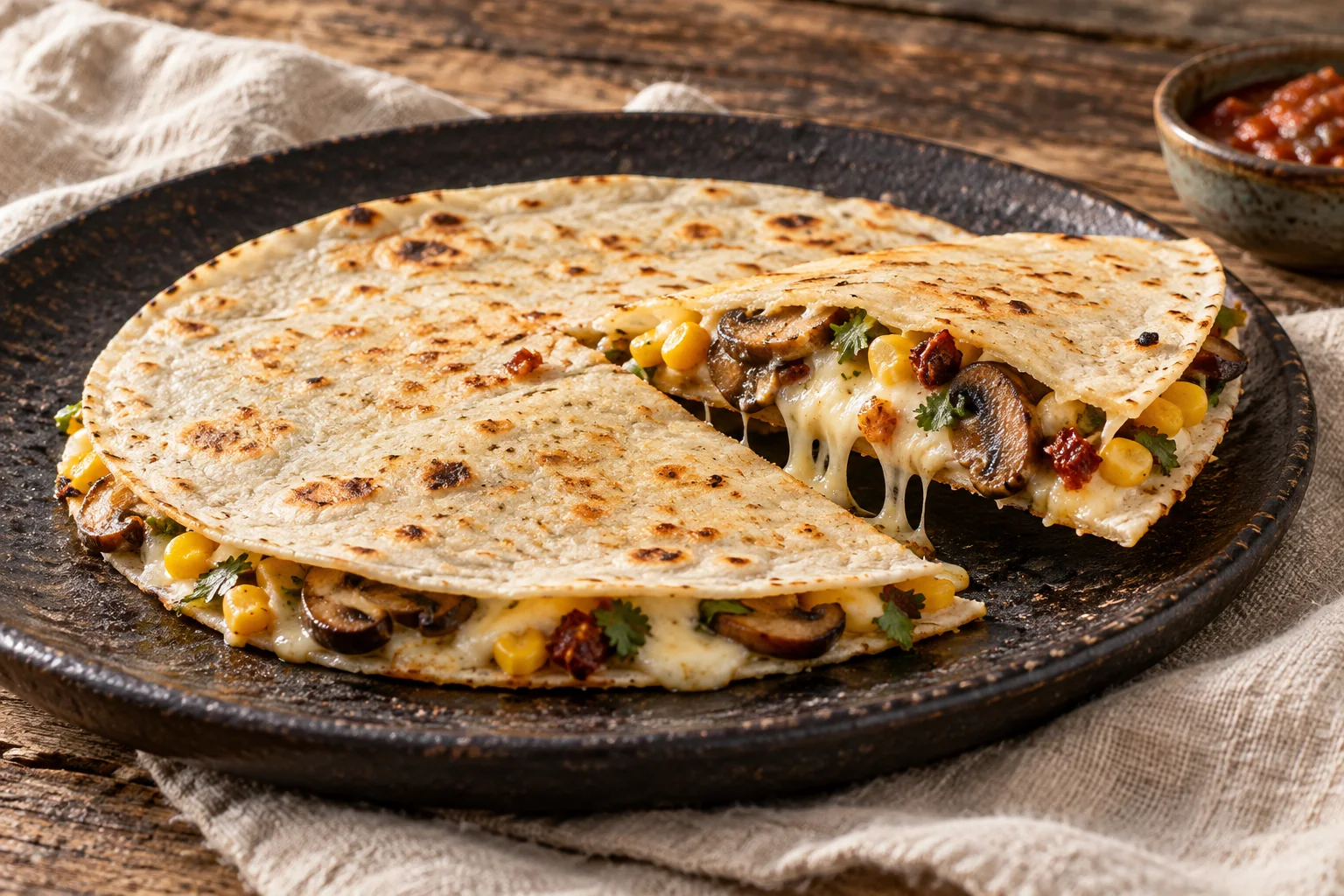
White-corn tortillas with mushrooms, sweet corn, and chipotle
Our second recipe makes a sandwich from two thin white-corn tortillas. Its cooked mushroom-and-corn filling brings a different texture, with chipotle and adobo for smoke and heat. Cheese and cilantro join the filling before the sandwiches go into the skillet. You cut the finished quesadillas into wedges.
That page identifies pages 152–153 of the same book as its source. Its construction is worth noticing: it is neither the folded flour version nor Jinich’s folded Oaxacan example. Reading each method alongside its ingredients gives you a clearer expectation of the finished meal than the shared name alone.
Let the tortilla and filling guide the serving
Both recipes ask for medium skillet heat, which gives the cheese time to melt as the tortilla colors. In the corn version, cooking the mushrooms first reduces the liquid that would otherwise soften the tortillas. These are choices already built into the recipes. Salsa offered alongside lets each person decide how much moisture and heat to add.
Begin with the dish guide if you are still choosing. Follow the Flour Tortilla story when the dough interests you, or the Arizona–Sonora atlas when you want to understand the place. Then return to the recipe that suits your table.
Read the sources, then choose your recipe
- Larousse, “Quesadilla” — the culinary dictionary’s range of tortillas, fillings, and cooking methods.
- José G. Moreno de Alba, “quesadilla,” Academia Mexicana de la Lengua — the comparison of older definitions and changing Mexican usage.
- RAE–ASALE, “quesadilla” — the dictionary’s pastry and Mexican tortilla meanings.
- Alicia Gironella, “Quesadilla asada en el comal,” Larousse — a fresh-masa method.
- Pati Jinich, Oaxacan Mushroom and Cheese Quesadillas — a named cook’s folded corn-tortilla preparation.
- National Park Service, Cultivated Landscapes — O’odham corn farming and the later addition of wheat at Tumacácori.
- Rick Bayless, Flour Tortillas — northern Mexican flour-tortilla context.
For the two preparations published here, see the source notes on the flour-tortilla recipe and corn, mushroom, and chipotle recipe.