Research Edition · Jalisco roots
Birria de Res
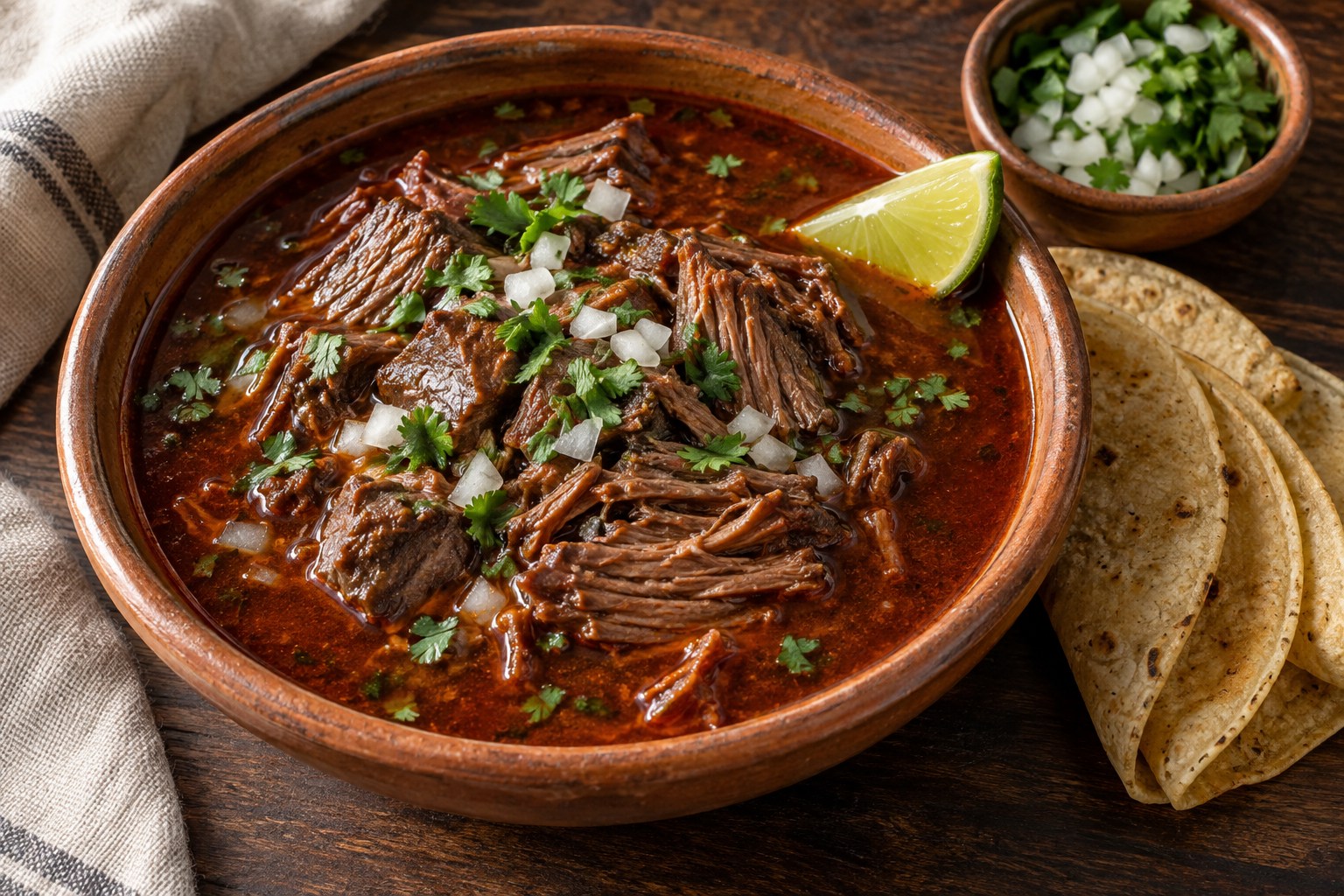
Tender beef in a smooth, brick-red guajillo-ancho consommé, with adjustable chile heat and a Dutch-oven method that explains every important cue.
Method
- Season the beef. Pat the chuck dry. Season it on all sides with the kosher salt and black pepper, then let it stand while you prepare the chiles.
- Wake up the chiles. Heat a large dry Dutch oven over medium heat. Toast the guajillo, ancho, and any chile de árbol for 10 to 15 seconds per side, only until fragrant and pliable; do not let them blacken. Put them in a heatproof bowl, cover with just-boiled water, and soak for 20 minutes.
- Sear the beef. Heat the oven to 325°F. Add the oil to the Dutch oven over medium-high heat. Sear the beef in batches, leaving space between the pieces, until deeply browned on two or three sides, about 3 to 4 minutes per side. Transfer the beef to a plate.
- Brown the vegetables. Lower the heat to medium. Add the tomatoes and quartered onion, cut sides down, and cook until browned in spots, 5 to 7 minutes. Add the garlic for the final minute.
- Blend and strain the adobo. Drain the softened chiles. Blend them with the browned tomatoes, onion, garlic, vinegar, oregano, cumin, clove, and 2 cups of the broth until completely smooth, starting on low and venting the lid safely. Press the mixture through a fine-mesh strainer into the Dutch oven. Do not blend the cinnamon or bay leaves.
- Braise until tender. Stir in the remaining 2 cups broth. Return the beef and any juices to the pot, then add the cinnamon and bay leaves. Bring to a gentle simmer, cover, and braise in the oven for 3 to 3 1/2 hours, until a fork twists easily in the meat. Check after 2 1/2 hours and add hot water if the beef is no longer mostly submerged.
- Shred and finish the consommé. Discard the bay leaves and cinnamon. Move the beef to a tray and pull it into generous bite-size shreds, discarding large pieces of gristle. Let the broth settle for several minutes, skim only the excess surface fat, and return the beef to the pot. Add hot broth or water if the consommé is too concentrated. Taste and adjust with salt and, if it needs brightness, a small splash of vinegar or squeeze of lime.
- Serve. Ladle the beef and brick-red consommé into warm bowls. Finish with diced white onion and cilantro, and serve with lime wedges and warm corn tortillas.
Before you start
Protect the chiles from scorching. Toasting should make them fragrant and flexible, not dark or smoky. A blackened chile can make the entire pot bitter.
Keep the whole spices whole. The cinnamon and bay leaves perfume the braise, then come out cleanly. Blending them can make the sauce woody, gritty, or overpowering.
Rescue and common mistakes
If the meat is firm, it needs more time—not higher heat. Cover and continue braising in 20-minute intervals. If the consommé is too thick, loosen it with hot broth or water. If it tastes flat, add salt first, then a small splash of vinegar or lime. If it tastes bitter from over-toasted chiles, extra broth, a little reserved fat, and correct seasoning may soften the edge, but sugar will not repair a badly burned chile.
Make-ahead, storage, and leftovers
Birria is excellent made a day ahead. Cool it promptly in shallow containers and refrigerate within 2 hours. Once chilled, lift off excess hardened fat, saving some if you plan to make birria tacos later. Refrigerated cooked leftovers keep 3 to 4 days; reheat to 165°F. Freeze the meat in its consommé for up to 3 months for best quality.
Understand it
Why the broth tastes deep without becoming heavy
Guajillo supplies red-fruit character and color; ancho brings raisin-like depth; chile de árbol controls the sharp heat. Slow covered cooking turns the chuck’s connective tissue into gelatin, giving the consommé body while the meat becomes tender. Straining the blended adobo removes tough chile skin and seeds, leaving a smoother broth.
Know it
One beef expression of a larger Jalisco tradition
Birria is strongly associated with Jalisco, where goat remains historically important, but official and practitioner sources also document variation in meat, chile mixtures, vessels, and service. This beef version reflects a widely cooked contemporary path; it should not be used to erase goat birria or to claim one universal formula.
About this edition
This original Research Edition was developed by comparing a high-volume, highly rated contemporary beef-birria recipe with another established practitioner version, then checking its cultural framing against official Jalisco and Mexican cultural sources. The technique and safety guidance were independently rewritten and reconciled for one coherent Dutch-oven method. It is ready to cook, but the exact revision has not yet been tested in The Border Table kitchen and does not inherit another publisher’s user rating.
Sources
Where this edition comes from
- Isabel Eats: Birria Recipe — a highly rated practitioner recipe used to compare beef, chile, braising, and consommé technique.
- Muy Bueno: Birria de Res — practitioner comparison for beef cuts, slow cooking, and serving paths.
- Secretaría de Cultura: Jalisco route and birria recipe — institutional context for Jalisco ingredients and service.
- Sistema de Información Cultural: Recetario de la cuachala y la birria — official record of a regional recipe collection.
- USDA FSIS: Leftovers and Food Safety — cooling, refrigerated storage, and reheating guidance.