Source Edition · Houston Tex-Mex
Citrus-Sherry Skirt Steak Fajitas
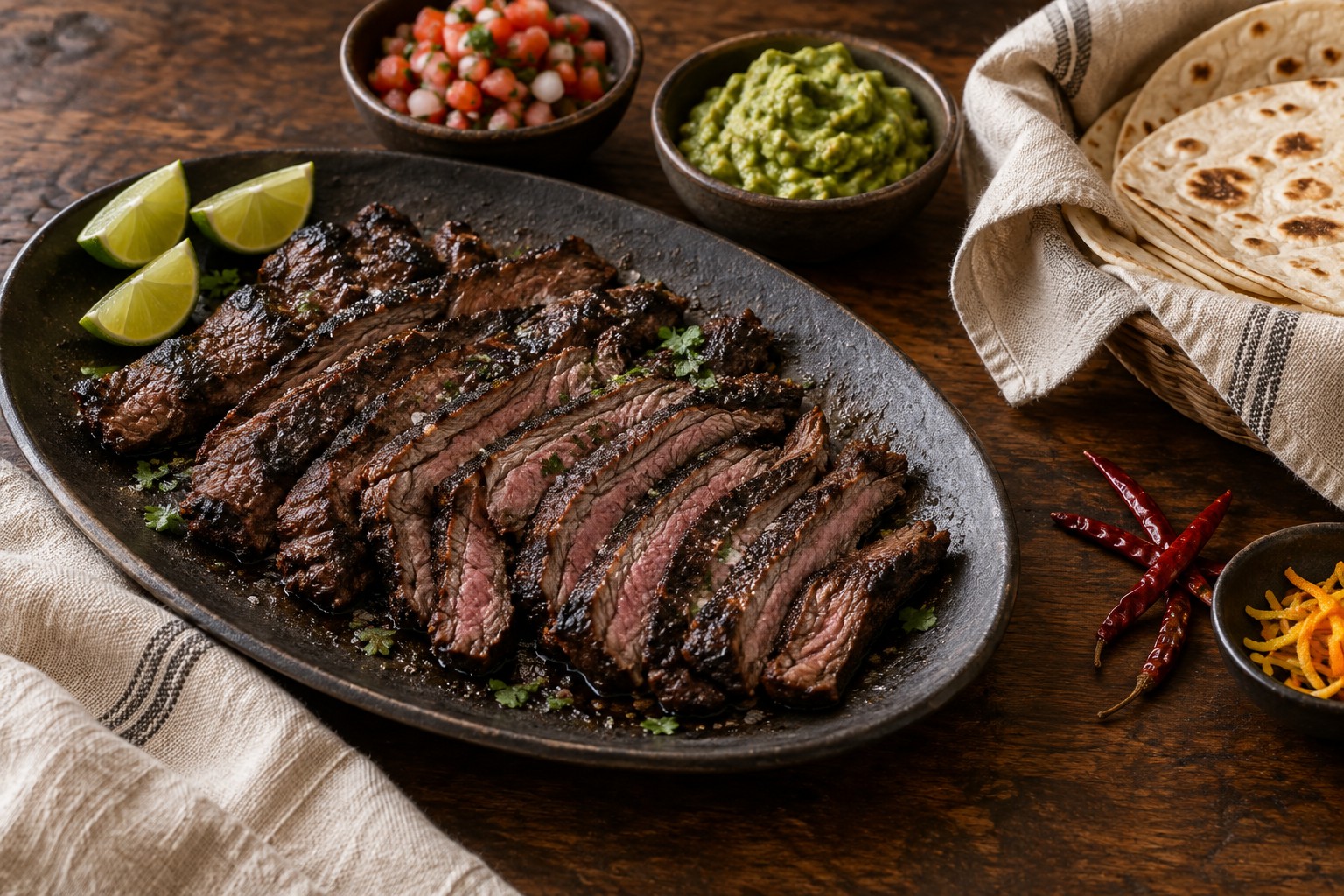
Charred skirt steak with bright citrus, dry sherry, soy, garlic, and chile de árbol—an attributed Houston variation rewritten for a modern home grill.
Method
- Build the marinade. In a nonreactive bowl, whisk the orange zest, lemon zest and juice, pineapple juice, water, sherry, soy sauce, garlic, black pepper, crushed chiles, and oil.
- Prepare the steak. Remove surface membrane and tough silver skin. If one area is thicker than 3/4 inch, butterfly only that thick section so the steak cooks evenly. Cut very long steaks into grill-manageable pieces while keeping track of the grain direction.
- Marinate under refrigeration. Put the steak and marinade in a covered nonreactive dish or food-safe bag. Refrigerate for 2 to 4 hours, turning once. Do not marinate on the counter.
- Heat and prepare the grill. Heat a charcoal or gas grill for high direct heat. Clean and oil the grates. Remove the steak from the marinade, discard the used marinade, and pat the meat thoroughly dry so it sears instead of steaming.
- Grill over high heat. Grill until deeply browned with dark char at the edges, about 3 to 5 minutes per side depending on thickness and grill intensity. For the USDA minimum for whole cuts of beef, check the thickest section from the side for 145°F, then rest the steak at least 3 minutes.
- Finish and slice correctly. Brush the rested steak lightly with melted clarified butter. Find the visible grain, rotate the meat, and cut thinly across that grain. If the steak is long, first divide it into shorter sections, then slice each section across the fibers.
- Serve. Arrange the steak on a warm platter and serve immediately with warm flour tortillas and the condiments you choose.
Before you start
Choose the cut deliberately. Outside skirt is broader and often more tender than inside skirt, but either can work if tough membrane is removed. The marinade is assertive: dry sherry keeps it savory, while citrus and pineapple provide the bright profile that distinguishes this variation.
Keep the marination short and cold. Two to four refrigerated hours gives the flavor time to move over the thin steak without leaving fresh pineapple and citrus against the meat all day.
Rescue and common mistakes
If the steak looks gray rather than browned, the surface was probably too wet or the grill not fully heated. Pat the next piece dry and let the grates recover their heat. If the meat seems chewy, confirm that the slices run across—not alongside—the long muscle fibers. Cut those slices thinner before serving.
Storage and reheating
Refrigerate cooked steak within 2 hours, or within 1 hour when the surrounding temperature is above 90°F. Store covered for 3 to 4 days. Reheat only the portion you need; USDA guidance calls for leftovers to reach 165°F. Keep raw-meat tools and platters away from cooked food.
Understand it
Why this marinade tastes different
Soy supplies salt and savoriness; citrus zest carries aromatic oils without adding only sourness; pineapple and lemon add acidity and fruit; sherry contributes a dry, nutty layer; and chile de árbol brings direct heat. High grill heat then creates the browned exterior that the liquid marinade cannot provide by itself.
Know it
A published home-cook variation, not an origin claim
This Source Edition begins with “Ninfa’s Showcase Fajitas,” published by Robb Walsh in The Tex-Mex Cookbook. Walsh characterizes that late-1980s publicity recipe as more elaborate than the restaurant method. Ninfa Laurenzo and her Houston restaurant are widely credited with helping popularize tacos al carbón and fajitas, but this page does not claim that one restaurant invented the broader South Texas tradition.
About this edition
Bright citrus, dry sherry, soy, garlic, and chile de árbol give this fajita variation its distinctive character. We adapted the documented recipe for a modern home grill, with cold marination, a dry surface for better searing, and clarified butter brushed on at the finish. This is a Source Edition: carefully researched and ready to cook, but not yet tested in The Border Table kitchen.
Sources
Where this edition comes from
- Robb Walsh, The Tex-Mex Cookbook: A History in Recipes and Photos (Ten Speed Press, 2004), p. 218, “Ninfa’s Showcase Fajitas.” Owner-supplied scan reviewed September 21, 2026.
- Penguin Random House: The Tex-Mex Cookbook — publication and edition details.
- Handbook of Texas: María Ninfa Rodríguez Laurenzo — biographical and restaurant context.
- The Original Ninfa’s — the restaurant’s account of its tacos al carbón legacy.
- USDA FSIS: Steps to Keep Food Safe — refrigerated marination, temperatures, and leftovers.