Food Stories · The grill, the cut & the gathering
Carne Asada: The Grill, the Gathering, and Sonora
Grilled beef can fill a tortilla, anchor a platter, or bring people around a fire. Follow Sonora’s food landscape and four complete recipes, each with its own cut, seasoning, and way to serve.
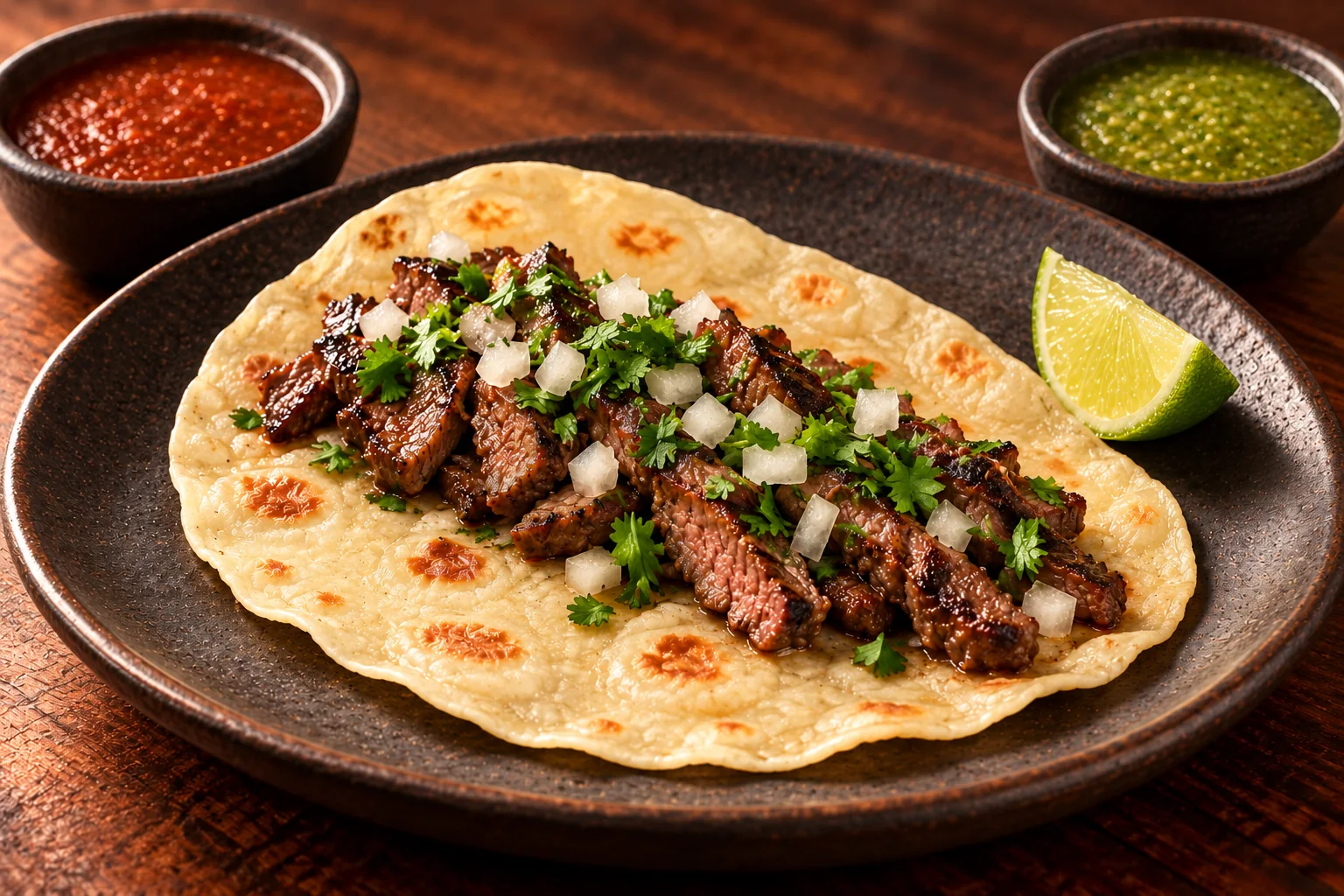
Choose the cut and the recipe before you light the fire
Four published pages offer useful ways into this story. Their differences begin with the beef, before the tortilla or salsa enters the picture.
- Carne Asada follows the owner’s 2021 sirloin-or-tenderloin card: very thin strips seasoned with garlic, pepper, cumin, and salt.
- Carne Asada Tacos grills sirloin steaks before cutting them for thin flour or white-corn tortillas, with onion, cilantro, lime, and prepared salsas served separately.
- Elemental Arracheras uses skirt steak with lime, pickled jalapeño, garlic, charcoal, and grilled onions. Its source calls for thick flour tortillas.
- Original Arracheras is the owner’s archived lime, pickled-jalapeño, and garlic preparation, with skirt steak, mesquite, onions, and flour tortillas.
The two arracheras are closely related preparations with separate source notes and measures. “Original” is the archived recipe’s title; it does not date the invention of grilled beef. Each complete page supplies the quantities, preparation sequence, and cooking guidance for that version.
A carne asada can also be the occasion
In her Sonora episode devoted to carne asada with the family, Pati Jinich presents the meal as a recurring family gathering. The beef is central, but the occasion includes the people around it and the accompaniments they share.
A 2010 CIAD study by Sergio A. Sandoval Godoy, Sandra Domínguez Ibáñez, and Anayeli Cabrera Murrieta discusses carne asada within Sonoran regional identity. Drawing on Ernesto Camou’s earlier analysis, it connects an informal gathering and relatively spare preparation with urban nostalgia for rural life. This is an interpretation of a social practice, rather than a record of one cook inventing a dish.
These accounts help explain why an invitation to a carne asada can mean more than an order for a taco. The gathering has its own place in the story, alongside the cook’s choice of cut, heat, and seasoning.
Cattle entered a landscape already worked for food
The National Park Service’s Tumacácori ranching history places cattle in the Spanish colonial economy and describes established Sonoran ranching before Kino’s mission expansion. It then follows herds through the Santa Cruz Valley, including Tucson, Tubac, and Tumacácori. That account gives beef a regional economic setting, without dating the first carne asada.
The park’s cultivated-landscape history begins much earlier, with O’odham floodplain farming and irrigation, corn and tepary beans, and gathered desert foods. Wheat later added a winter crop that could be harvested before the next corn crop. The flour tortilla belongs within that agricultural change, alongside a continuing corn tradition.
That food knowledge also has a present tense. San Xavier Cooperative Farm, run by members of the Tohono O’odham Nation, identifies traditional crops, community development, land, and water among its commitments. Follow the atlas’s food-knowledge section to keep this living context beside the ranching chapter.
A published Sonoran table shows one way to assemble the meal
Jinich’s Sonora Style Carne Asada Tacos uses top sirloin and chuck eye roll, seasons the beef with salt at the grill, and serves it in flour tortillas with beans, roasted salsa, and guacamole. It is a concrete example of a named preparation and its accompaniments.
For comparison, Rick Bayless’s published grilled skirt-steak tacos use an onion, garlic, lime, and cumin marinade and warm corn tortillas. Reading the two methods together makes the choices visible: beef cut, seasoning, wrapper, and salsa all deserve attention. One cook’s published method need not become a rule for every table.
Our Carne Asada Tacos keeps its own simpler sirloin seasoning and offers both tortilla choices. Its onion, cilantro, lime, and red-or-green salsa serving is described on the recipe page. The practitioner examples give that meal context; their full recipes remain with their authors.
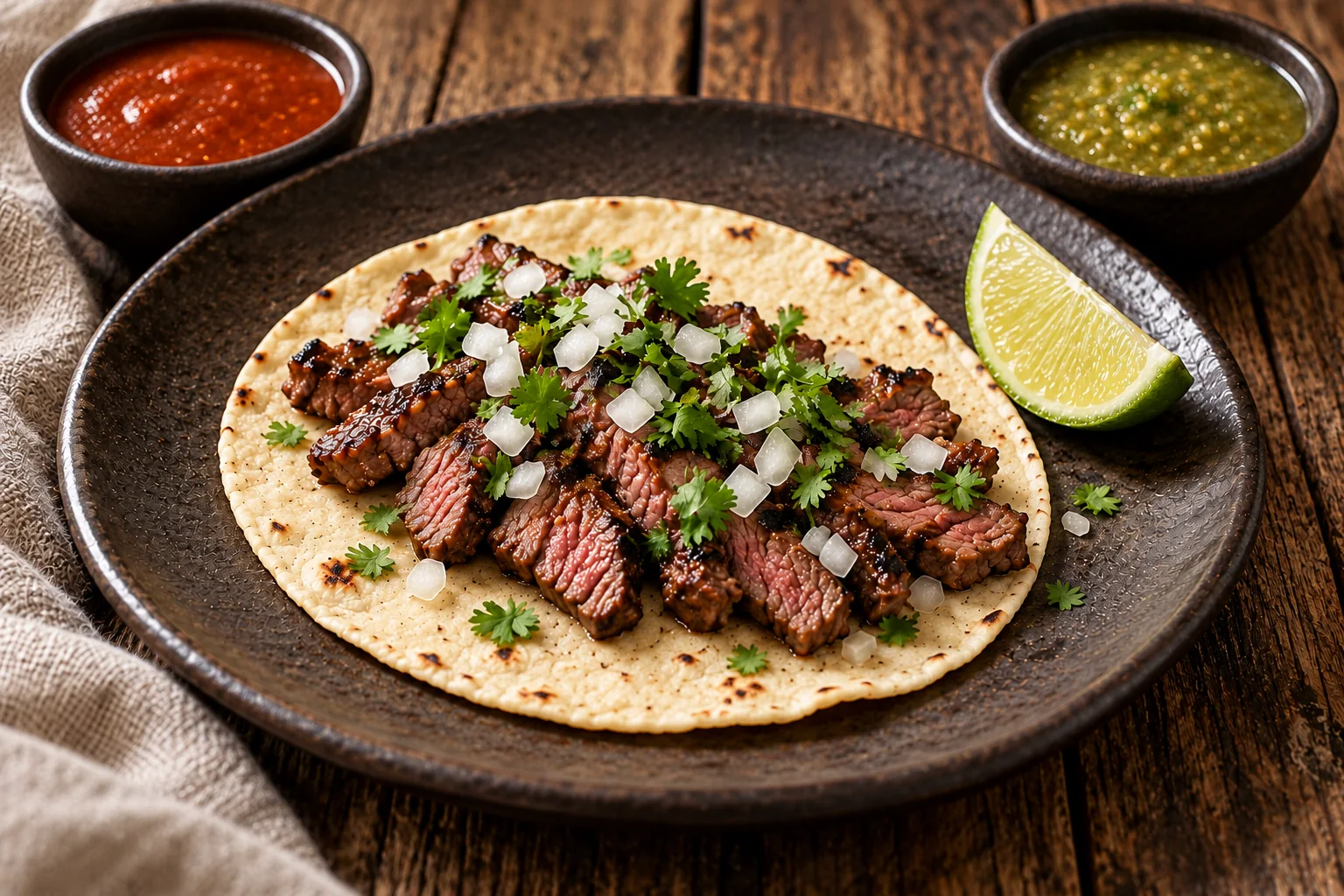
Arracheras and fajitas overlap through the cut
Skirt steak is the specified beef in our two arracheras. The skirt-steak guide explains the cut and the direction of the final slice. The sirloin and tenderloin choices in the other recipes should be read on their own terms.
Mary K. Sweeten and Homer Recio’s 1985 Texas Agricultural Extension Service publication, Fajitas South Texas Style, describes fajitas through beef skirt and a South Texas setting. It also describes corn and flour tortillas in the serving. This is a useful dated record for the neighboring fajita story and its particular emphasis on the cut.
Writer Marcela Fuentes adds a different kind of evidence in her Texas Highways essay: memories of her father’s family carne asadas in Del Rio, with fajitas and short ribs at the grill. Her remembered table shows the gathering in a specific Texas home. Continue to our Fajita story for the South Texas accounts, the founder’s separately attributed Round-Up memory, and Houston’s restaurant chapter.
The wrapper and the sides finish the choice
The taco recipe offers thin flour and white-corn tortillas for the same cooked steak. The arracheras pages have their own serving instructions, including the thicker flour tortilla named in Elemental Arracheras. Read the Flour Tortilla story for the grain’s regional context, then use the flour and corn tortilla guides for the two wrappers.
Keep the table flexible with Pico de Gallo, Classic Guacamole, and the published salsa collection. The taco recipe’s prepared red and green salsas stay in separate bowls. Choose the accompaniments you want and follow each complete recipe for its own ingredients.
Follow the grill into Arizona and Sonora
The expanded Arizona–Sonora atlas connects the Santa Cruz ranching corridor, the social gathering, and the four published beef preparations. Its wider article keeps Indigenous farming, winter wheat, border history, and contemporary food work in view.
Return to Carne Asada, Carne Asada Tacos, Elemental Arracheras, or Original Arracheras. Each is a complete cooking path through a larger food story.
Sources for the Carne Asada story
- NPS, Tumacácori: Ranching — the colonial livestock and Santa Cruz Valley account.
- NPS, Cultivated Landscapes — O’odham farming, gathered foods, and winter wheat.
- San Xavier Cooperative Farm — the community farm’s own mission and food work.
- Sandoval Godoy, Domínguez Ibáñez, and Cabrera Murrieta, “De golosos y tragones están llenos los panteones,” Estudios Sociales, January 2010, printed pp. 160–161 — discussion of regional identity and Camou’s interpretation. The PDF’s printed publication date is used here.
- Pati Jinich, episode 904: Carne Asada with La Familia — the episode description’s family-gathering context.
- Pati Jinich, Sonora Style Carne Asada Tacos — the published cut, seasoning, and serving choices.
- Rick Bayless, Grilled Skirt Steak Tacos with Salsa de Molcajete — a separately published skirt-steak and corn-tortilla example.
- Sweeten and Recio, Fajitas South Texas Style, 1985 — extension publication PDF, especially printed p. 1.
- Marcela Fuentes, Texas Highways, October 2023 — an attributed Del Rio family account.
The four recipe pages identify their own sources. These regional records do not establish a single inventor or authenticate one private formula as the original carne asada.
More Food Stories · Explore Arizona and Sonora · Suggest a correction