The Border Table · Source Edition
Carne Asada
Very thin beef strips with garlic, cumin and pepper, seared over high heat.
The 2021 ingredient card is preserved; the grilling step completes its unfinished method.
Cook it
The 2021 ingredient card is preserved; the grilling step completes its unfinished method.
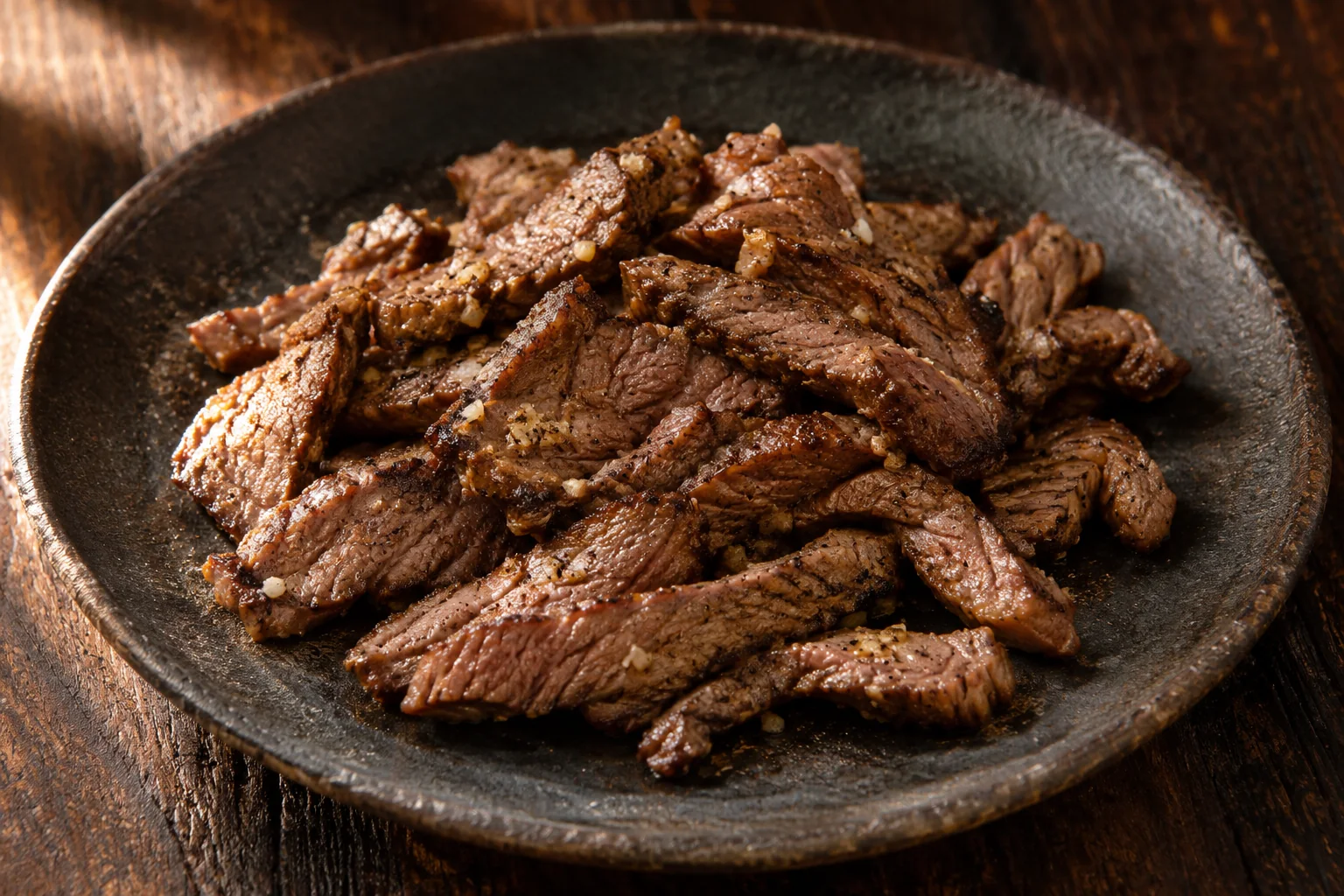
- Firm and slice. Put the beef in the freezer for 20 to 30 minutes, just until firm enough to cut neatly. Slice into strips about ⅛ inch thick.
- Season and chill. Toss the strips with garlic, black pepper, ground cumin seeds and salt. Cover and refrigerate for at least 1 hour. The old card specified room-temperature holding; chilling retains the seasoning interval more safely.
- Grill or sear — editorial completion. The archived instructions end before the meat reaches the heat. To complete the method, lift the strips from the dish and sear in a single layer on a very hot grill or heavy skillet, turning once, until browned and beef reaches at least 145°F by food thermometer. Work in batches so the pan stays hot.
- Rest and serve. Rest at least 3 minutes after cooking. Serve immediately with warm tortillas and any salsa you prefer.
Serve it
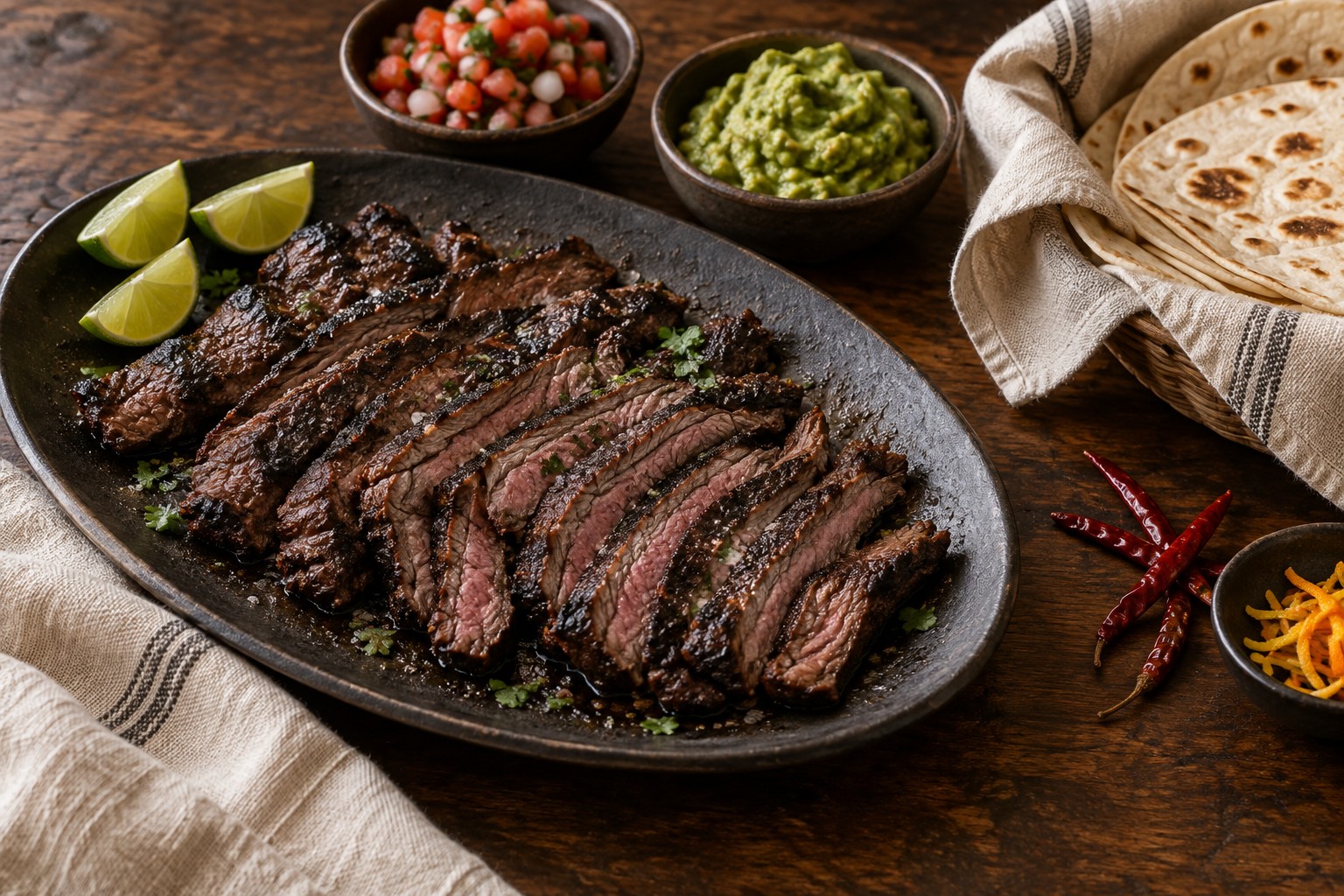
Fill warm tortillas lightly enough for the steak to remain the focus. Pico de gallo and lime can sit on the side.
Understand it
What makes this version work
The brief freezer rest is for cutting, not long-term freezing. Thin ⅛-inch strips cook quickly, so a reliable thermometer matters more than a fixed minute count. The original instructions stopped after seasoning and waiting; the sear and safe endpoint are a clearly identified editorial completion, not a recovered historical step. Top sirloin and tenderloin are the two cuts offered by the old card; do not substitute skirt steak in this particular version.
Know it
The recorded recipe and its place at the table
Carne asada broadly means grilled or roasted meat, and its preparations vary widely. The owner’s 2021 card is a simple sirloin-or-tenderloin and cumin treatment. It does not identify a named restaurant or the origin of carne asada. The Smithsonian describes the broader movement of Mexican food into American kitchens, but that background cannot tell us who first used this exact five-ingredient mixture.
Sources and method
About this version
The ingredient proportions and core method come from the owner’s 2021 Authentic Tex-Mex Recipes card. The Border Table has clarified the instructions for readers without claiming an undocumented inventor or origin for the exact formula. The external source gives broader culinary context; it does not authenticate the owner’s private recipe.
- Smithsonian National Museum of American History, The Tex-Mex Invasion.
- FoodSafety.gov, Four Steps to Food Safety — refrigeration and safe handling guidance where relevant.
See our corrections policy to suggest an update.