Dish story · South Texas to the restaurant table
Fajitas: Fire, Skirt Steak & the Sizzle
One name now covers many dishes. Start with skirt steak and a hot fire, then follow the route from ranch cooking to fairground tacos, border restaurants, Houston tables, and the modern platter.
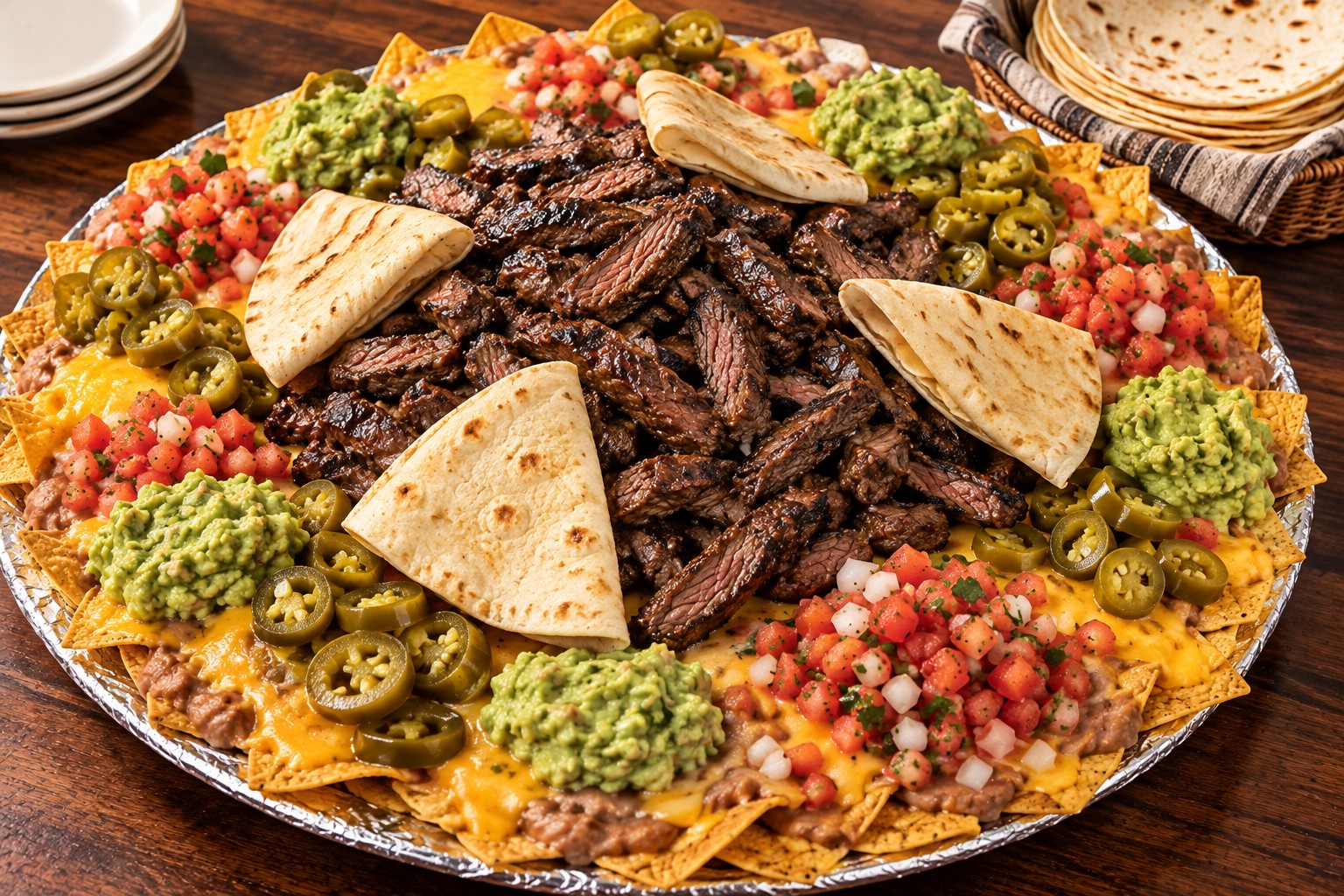
A memory from the Round-Up
For this publication, the story is personal.
The Border Table’s founder remembers going to the Round-Up Restaurant in Pharr with his grandfather. The fajita botana was a substantial shared platter for four: a high central pile of juicy skirt-steak fajitas, surrounded by composed nachos—not loose chips—with melted cheese and mashed pinto beans, plus guacamole, pickled jalapeños, and generous pico de gallo that was always part of the plate. Folded flour tortillas appeared on the platter, with more warm tortillas for the table. That lived memory does not settle who was “first.” It does preserve how one important border restaurant served the dish and how fajitas became part of a family table.
The foundation
Before fajitas became a spectacle
Texas A&M’s historical account places the South Texas practice by the late 1930s, when skirt and other less-valued cuts could be part of a ranch worker’s pay. The cut was thin, intensely flavored, and suited to a fast cook over mesquite. In northern Mexico, the related word arrachera still points directly to skirt steak.
The word
From a cut to a category
Fajita is a diminutive of faja, a belt or sash—a useful picture of the long strip-like cut. Once restaurants applied the name to chicken, shrimp, vegetables, and any sizzling platter, the word moved beyond anatomy into a style of service.
The route to the restaurant table
Late 1930s · South Texas
Ranch practice
Published agricultural history documents skirt steak and similar cuts in South Texas ranch foodways. This is a regional practice, not a single-person invention.
1969 · Kyle
Sonny Falcón
Falcón is widely credited with an early documented commercial fajita stand. His family’s remembered version was spare: grilled beef, tortilla, and salsa.
Around 1969 · Pharr
The Round-Up
Published histories credit Otilia Garza and the Round-Up with an early restaurant presentation, often connected to the sizzling platter. The founder’s family memory adds the substantial botana served at the table.
1973 · Houston
Ninfa’s
Ninfa Laurenzo’s tacos al carbón helped bring grilled skirt steak in flour tortillas to a much larger Houston audience and then beyond Texas.
1982 · Austin
The Hyatt sizzle
Chef George Weidmann’s hotel presentation made the arrival of fajitas theatrical and helped accelerate national restaurant adoption.
One family, several forms
Choose the fajita you mean
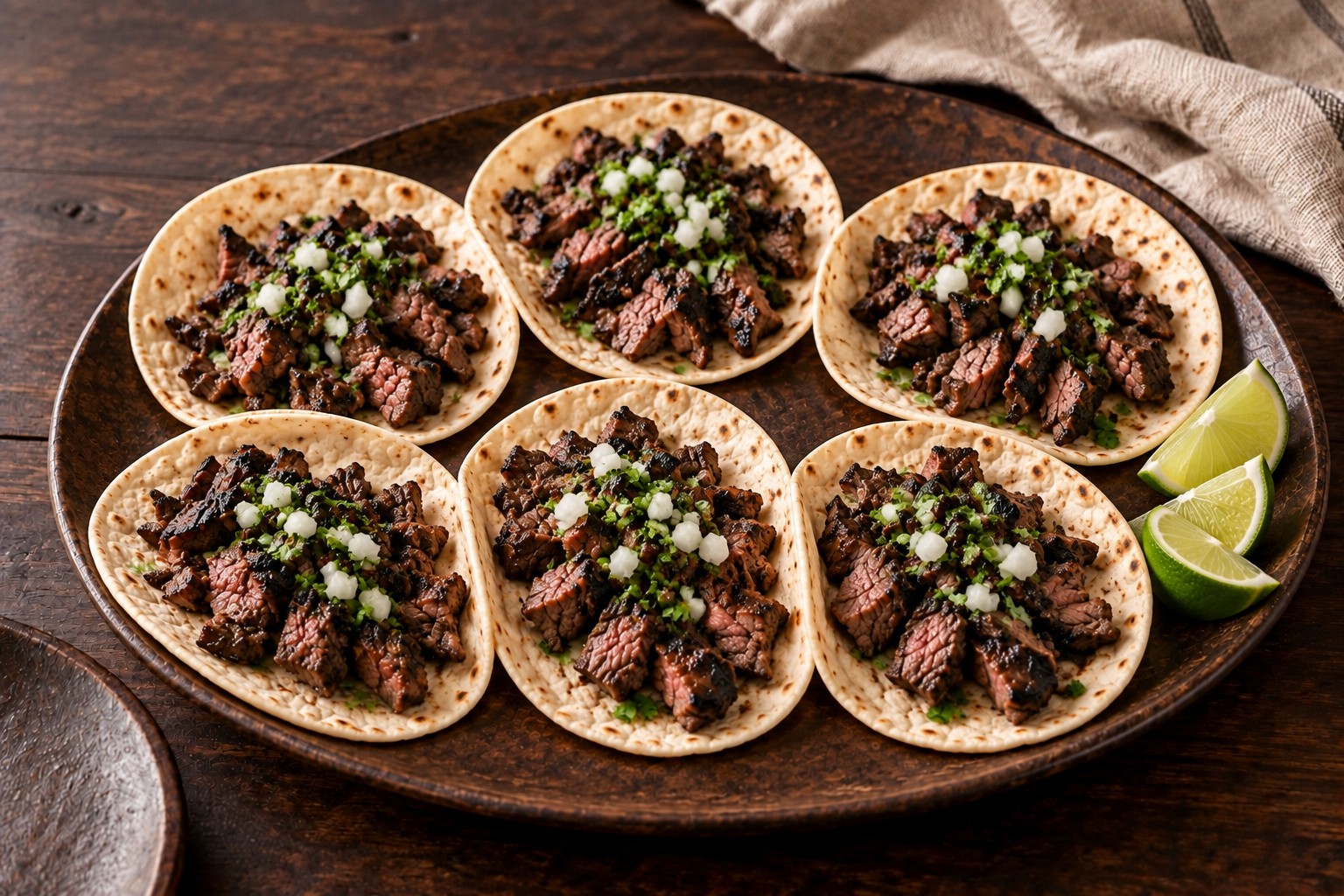 No marinade · Early commercial formSonny Falcón’s Fajita TacosCook this version
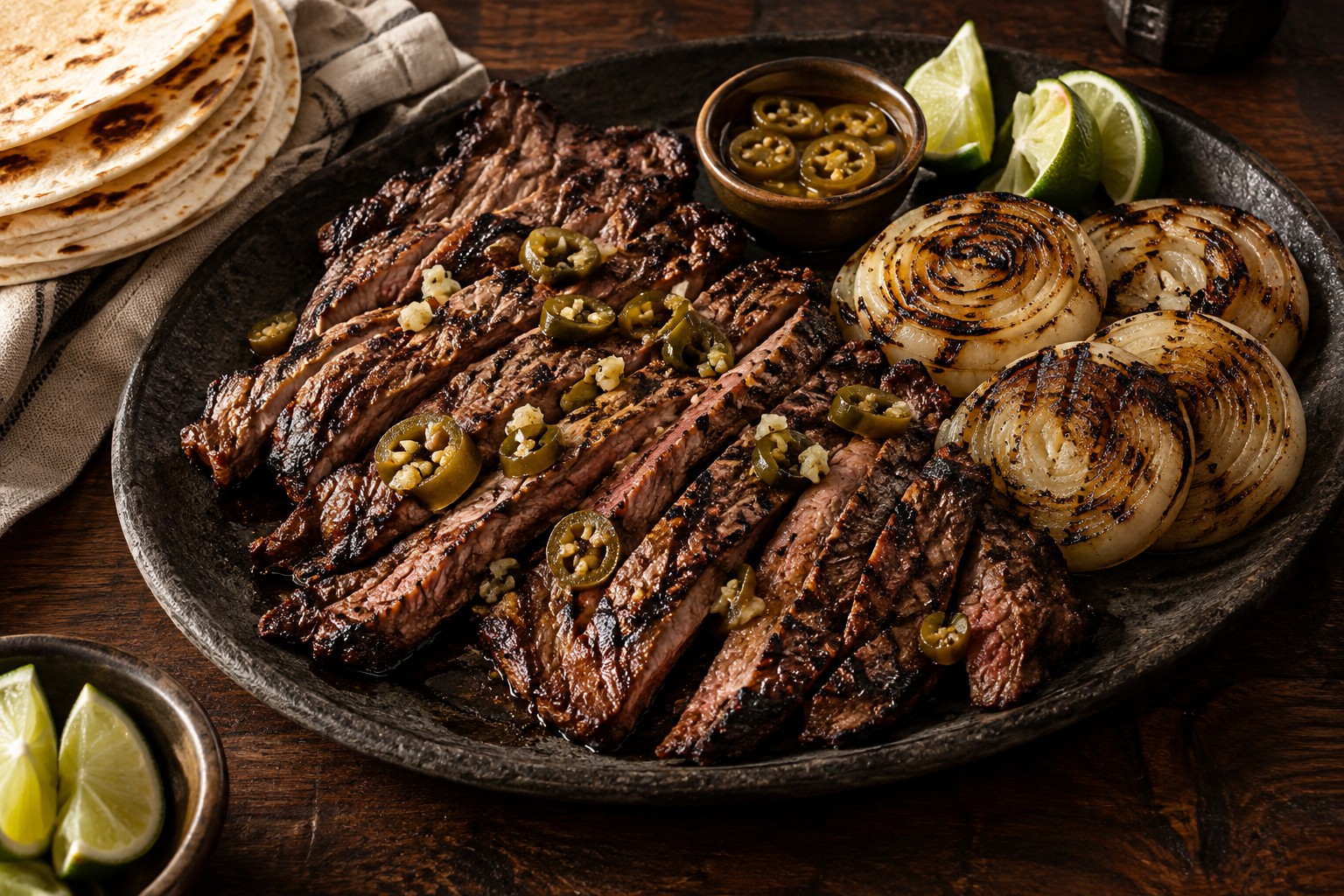 Lime · Jalapeño · GarlicElemental ArracherasCook this version
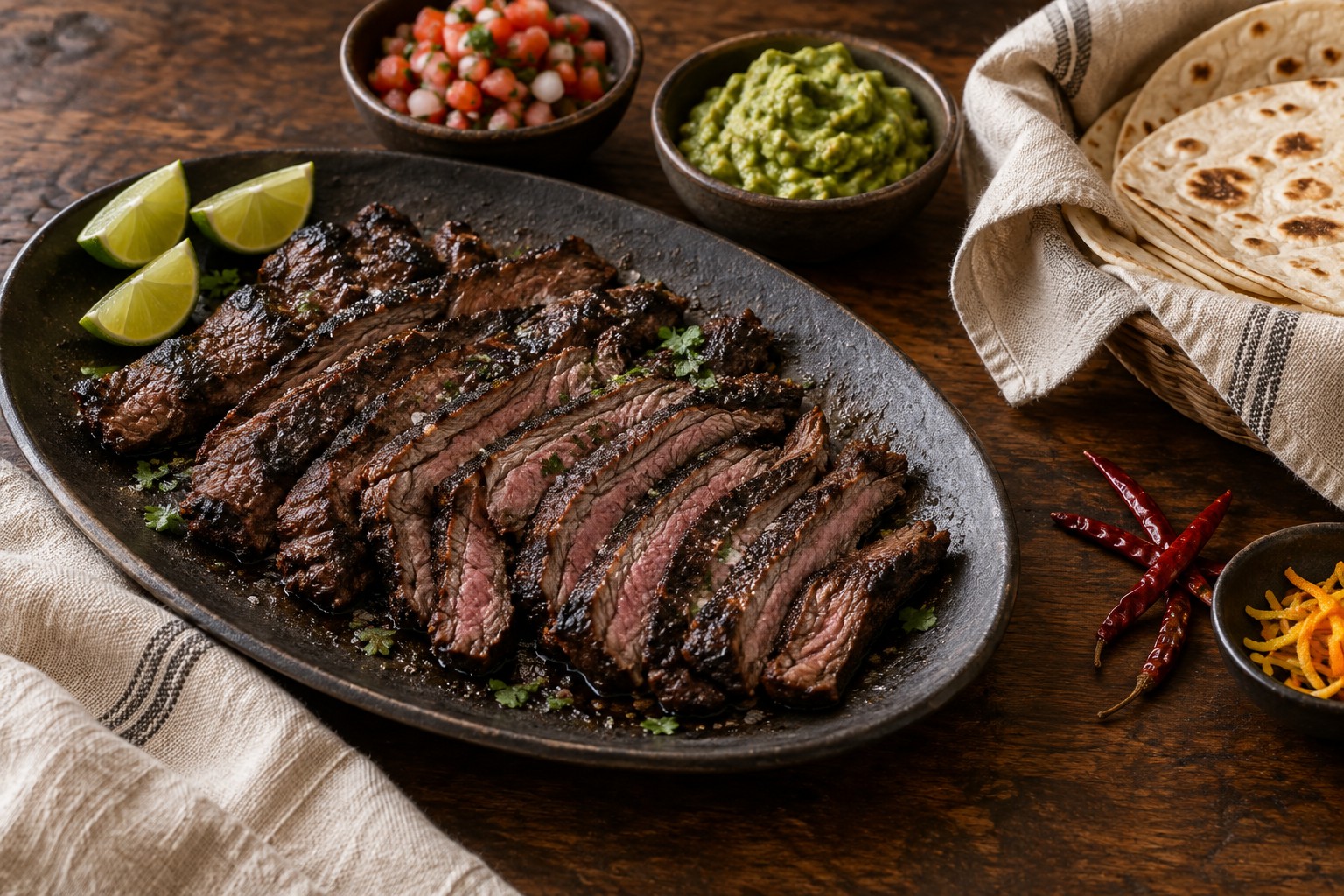 Houston · Elaborate source editionCitrus-Sherry Skirt Steak FajitasCook this version
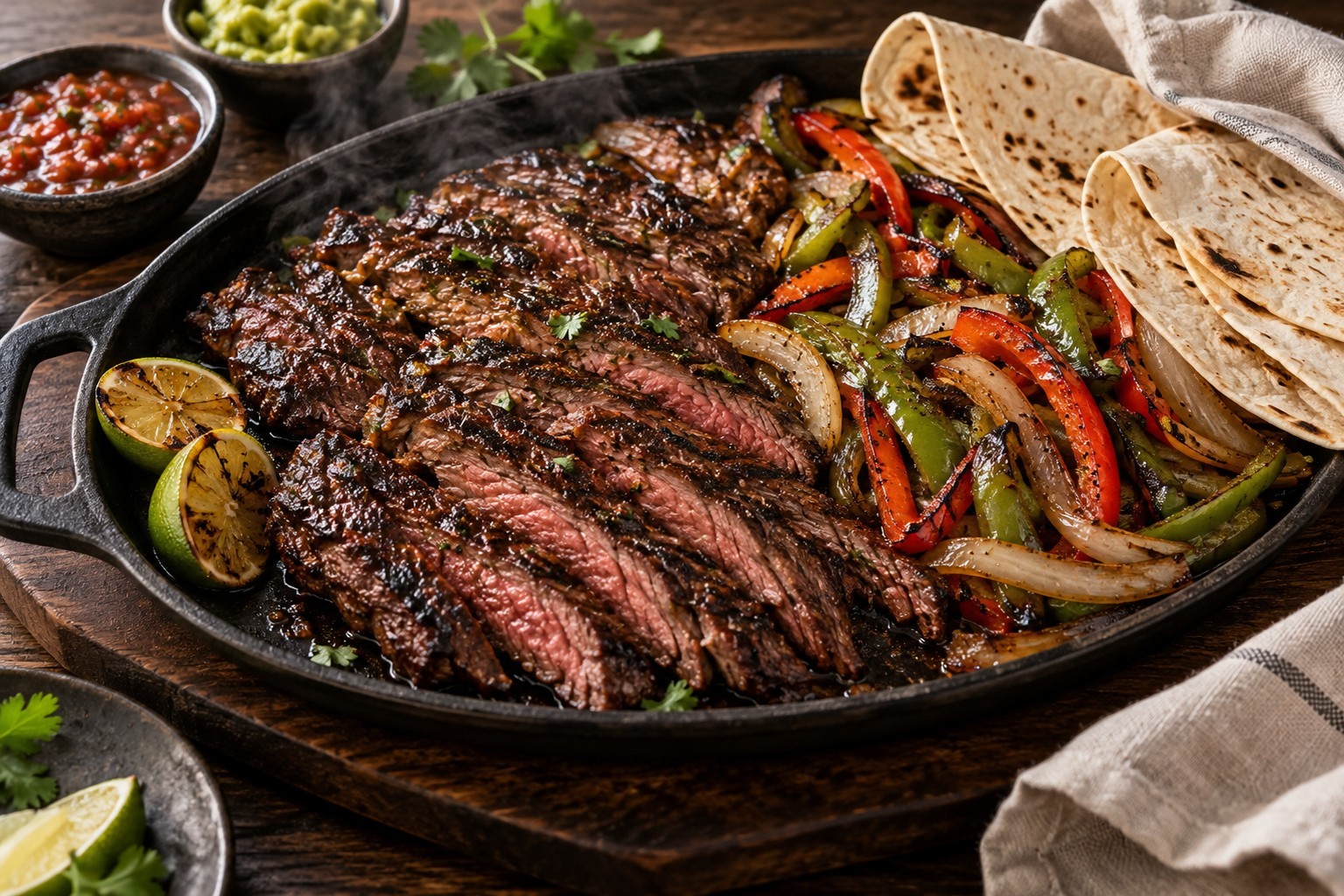 Modern home style · Peppers & onionsLime-Molasses Skirt Steak FajitasCook this version
Dish DNA
Five choices change the result
- Cut: skirt is the historical center; flap meat can behave similarly.
- Marinade: none, brief, or assertive—each creates a different dish.
- Fire: dry surface and high direct heat create browning.
- Slice: rest, find the grain, then cut across it.
- Service: taco, botana, or sizzling platter tells a different restaurant story.
Modern expansion
What about chicken and shrimp?
They belong to the modern fajita family because diners understand the format: hot protein or vegetables, tortillas, and table accompaniments. They are worth publishing—but they should be named as later variations rather than used to rewrite the skirt-steak origin of the word.
Sources & memory
How the story is supported
- Texas A&M: Fajitas South Texas Style — cut, name, and ranch context.
- Texas Highways: You’re Invited to the Carne Asada — Falcón, the Round-Up, Ninfa’s, and the Hyatt timeline.
- Handbook of Texas: Ninfa’s Mexican Restaurants — Houston popularization.
- Smithsonian: Tex-Mex Invasion — broader 1970s menu context.
- The Round-Up botana description is the founder’s firsthand family memory, recorded September 21, 2026. It is labeled as recollection rather than documentary proof.