The Border Table · Source Edition
Original Arracheras
Lime, pickled jalapeño and garlic sharpen grilled skirt steak without a thick sauce.
The owner’s lime-marinated arracheras with mesquite and grilled onions.
Cook it
The owner’s lime-marinated arracheras with mesquite and grilled onions.
- Marinate. Mix the juice of seven limes with the minced pickled jalapeños and garlic. Coat the trimmed skirt steak in the mixture in a covered dish or closed bag. Refrigerate for 6 to 8 hours, turning occasionally.
- Prepare the fire. Drain the steak and discard the used marinade. Salt the beef to taste. Allow a short preparation interval while a hot grill or mesquite fire comes ready; do not hold raw steak at room temperature longer than 2 hours in total. Slice the onions and coat lightly with vegetable oil.
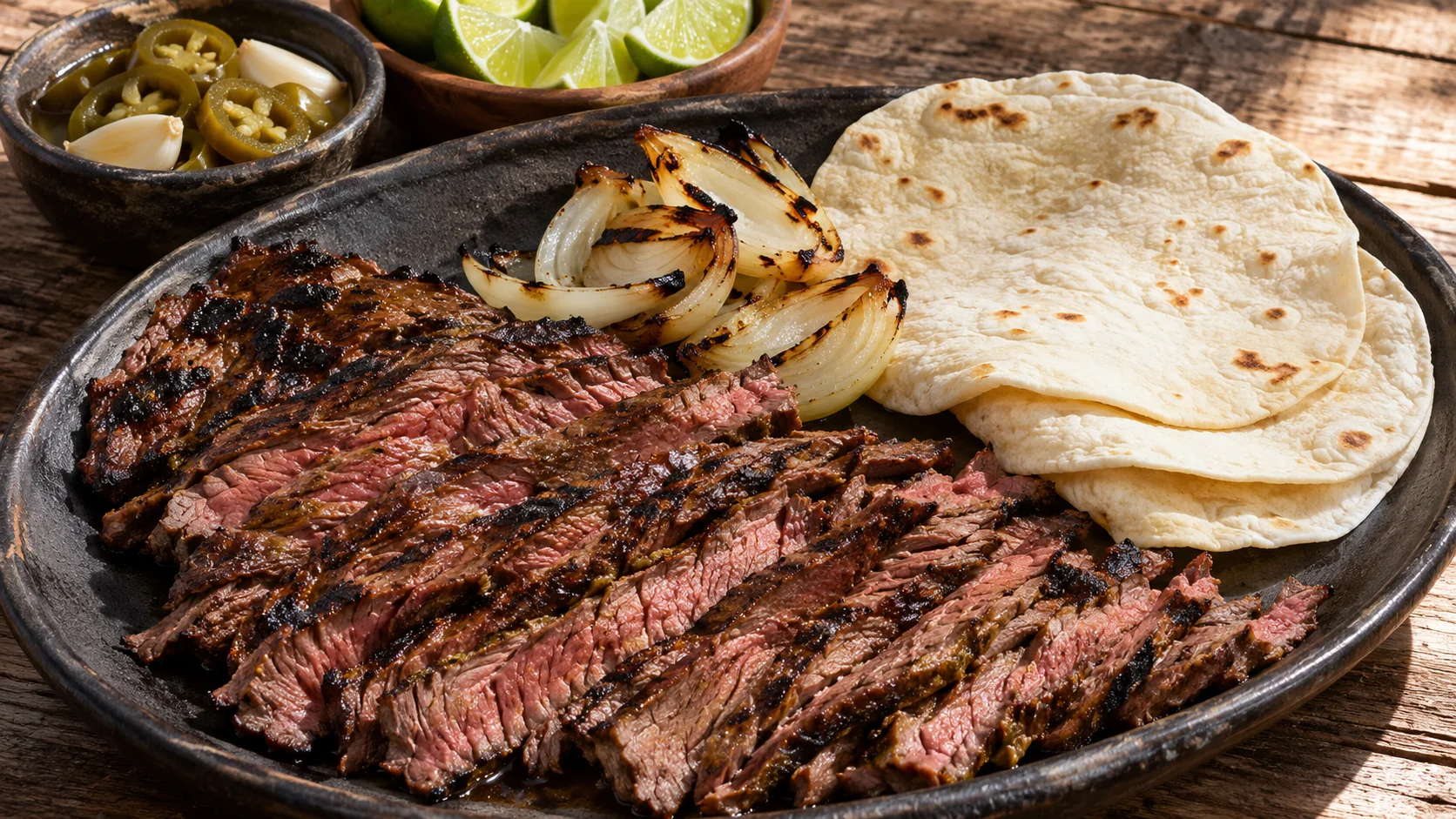
- Grill. Put the skirt directly over the hot fire and the onions at its cooler edge. Turn the steak once; the archived card suggests 5 to 6 minutes per side. Turn onions until soft with browned edges. Cook steak to at least 145°F by thermometer.
- Rest and cut. Rest the steak at least 3 minutes; the archive suggests 5. Cut thinly across the grain and serve with grilled onions and warm flour tortillas.
Serve it
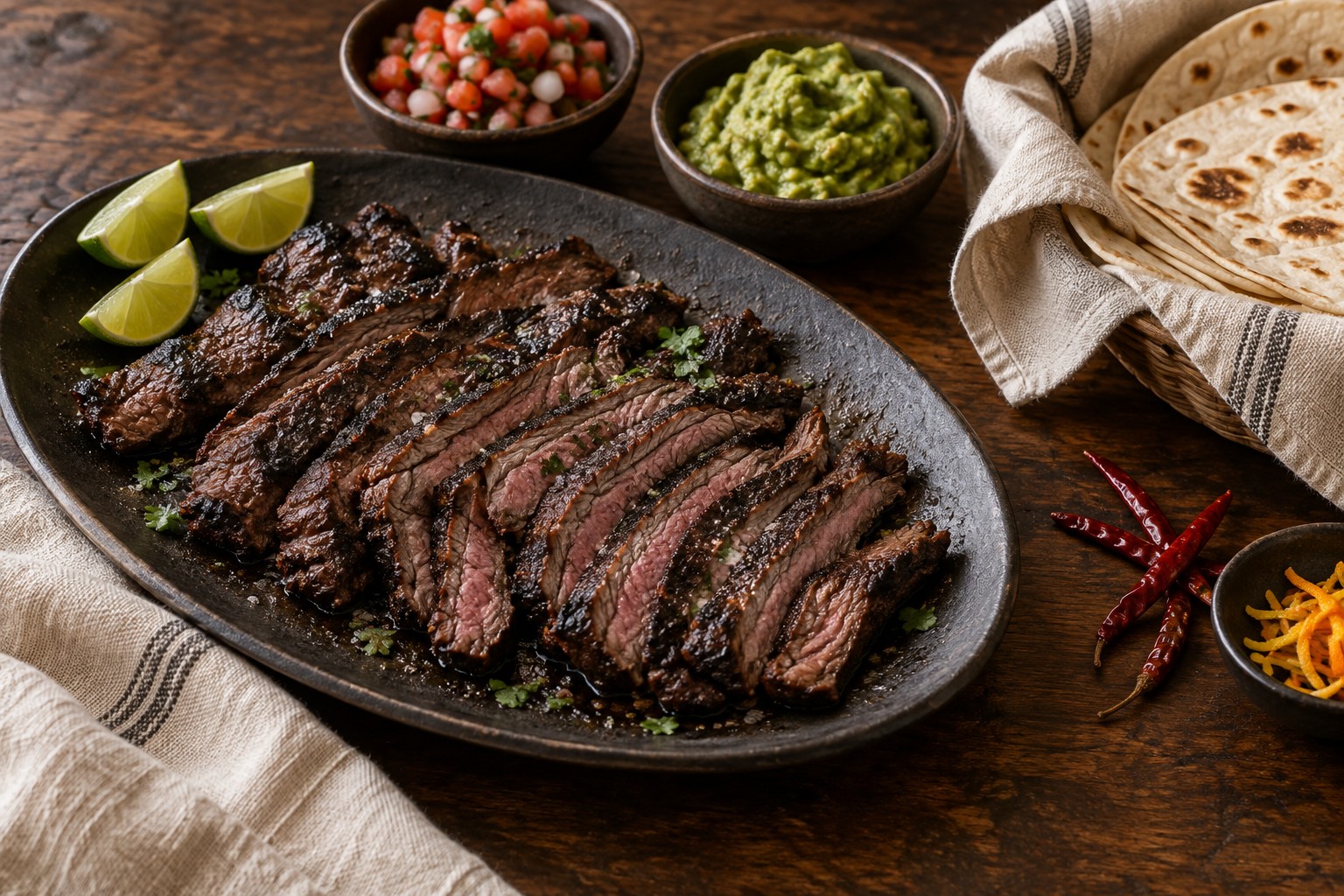
Pile the sliced steak and onions on a platter. Offer pico de gallo, refried beans, guacamole and warm tortillas separately.
Understand it
What makes this version work
The acid-forward marinade is deliberately strong: seven limes for 2½ pounds of meat. The pickled jalapeños bring brine as well as heat. Trim the skirt membrane, but do not assume inside and outside skirt are identical in thickness. The source’s five-to-six-minute grilling window is a guide, not a doneness guarantee. Mesquite gives smoke, while ordinary charcoal also works.
Know it
The recorded recipe and its place at the table
The 2021 card links arracheras to northern Mexican ranch cooking and the Texas border, but its broad claims about who invented fajitas and generations of vaqueros are not established by this specific recipe. The Smithsonian documents how Mexican food traditions were adapted and marketed in the United States. Here we preserve the owner’s actual lime, jalapeño and garlic preparation while keeping its historical attribution appropriately narrow.
Sources and method
About this version
The ingredient proportions and core method come from the owner’s 2021 Authentic Tex-Mex Recipes card. The Border Table has clarified the instructions for readers without claiming an undocumented inventor or origin for the exact formula. The external source gives broader culinary context; it does not authenticate the owner’s private recipe.
- Smithsonian National Museum of American History, The Tex-Mex Invasion.
- FoodSafety.gov, Four Steps to Food Safety — refrigeration and safe handling guidance where relevant.
See our corrections policy to suggest an update.