Texas · Source Edition
Texas Cheese Enchiladas with Red Chile Sauce
Roll the soft corn tortillas around cheese and onion for the familiar plate. Or use the very same recipe to make a West Texas–inspired three-layer stack.
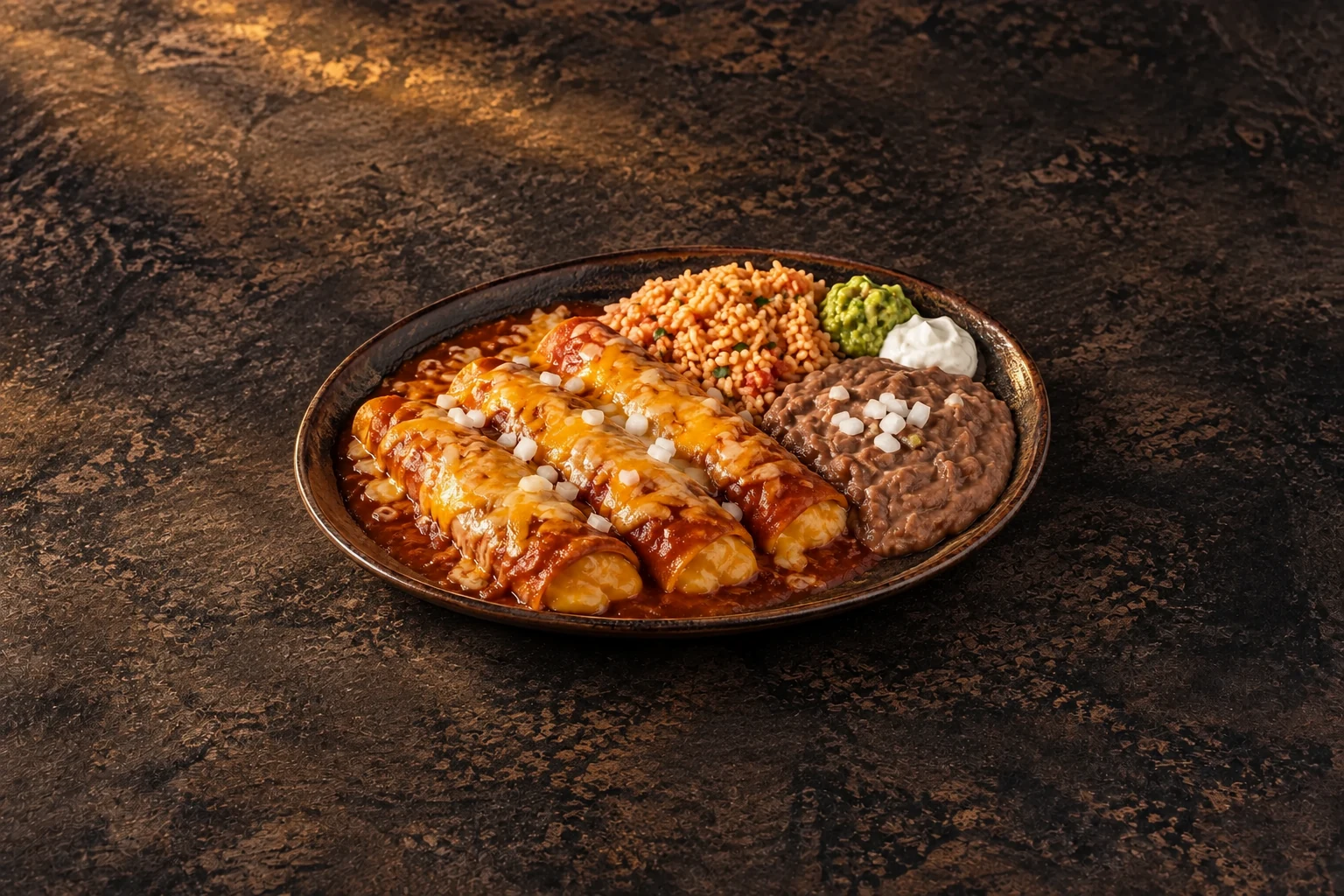
One recipe, two ways to serve it
The sauce and filling come from a published account of Old Borunda stacked red-chile enchiladas. The rolled plate below is our editorial adaptation of those ingredients. The optional flat stack follows the source presentation more closely. Neither version is claimed to be the exact historical café recipe or independently kitchen-tested here.
Cook it: the rolled plate
- Soften the chiles. Cover the stemmed, seeded chiles with water in a pot. Bring to a boil, reduce the heat, cover, and simmer for 15 to 20 minutes, until softened. Let them cool before blending.
- Make the chile puree. Blend the softened chiles with the half onion, garlic, and 3 cups water until smooth. The source allows about 5 minutes on high. Press through a fine sieve; keep the puree and discard the tough skins.
- Thicken the sauce. Heat 2 tablespoons oil in a large skillet over medium-high heat. Stir in the flour and cook for 2 to 3 minutes, until blond, not dark. Reduce the heat to medium-low. Stir in the strained chile puree, salt, oregano, and pepper until the sauce thickens enough to coat a tortilla.
- Soften the tortillas. Heat the remaining 3 tablespoons oil in a small skillet. With tongs, warm each tortilla in the oil for about 30 seconds, just until pliable and lightly browned, not crisp. Drain on absorbent paper until cool enough to handle. Heat the oven to 450°F.
- Roll the enchiladas. Spread a thin layer of sauce in a large baking dish. Put about 2 tablespoons cheese and 1 tablespoon chopped onion in each tortilla. Roll and place seam-side down in a single layer; use two dishes if needed. Cover all 12 rolls with sauce and scatter on the remaining cheese and onion.
- Bake and serve. Bake for about 10 minutes, until the sauce bubbles and the cheese melts. Serve three rolled enchiladas per person. Rice and beans, if desired, are separately prepared sides.
Make it stacked instead
Use the same batch of sauce, 12 softened tortillas, cheese, and onion. In four ovenproof serving dishes, build one flat, three-tortilla stack per person. Spoon sauce, cheese, and onion between the layers and over the top, dividing the total ingredients among all four servings. Bake at 450°F for about 10 minutes, until the sauce bubbles and cheese melts. Walsh’s published version finishes each stack with an egg and remaining sauce. The egg is optional; it is not part of the rolled plate.
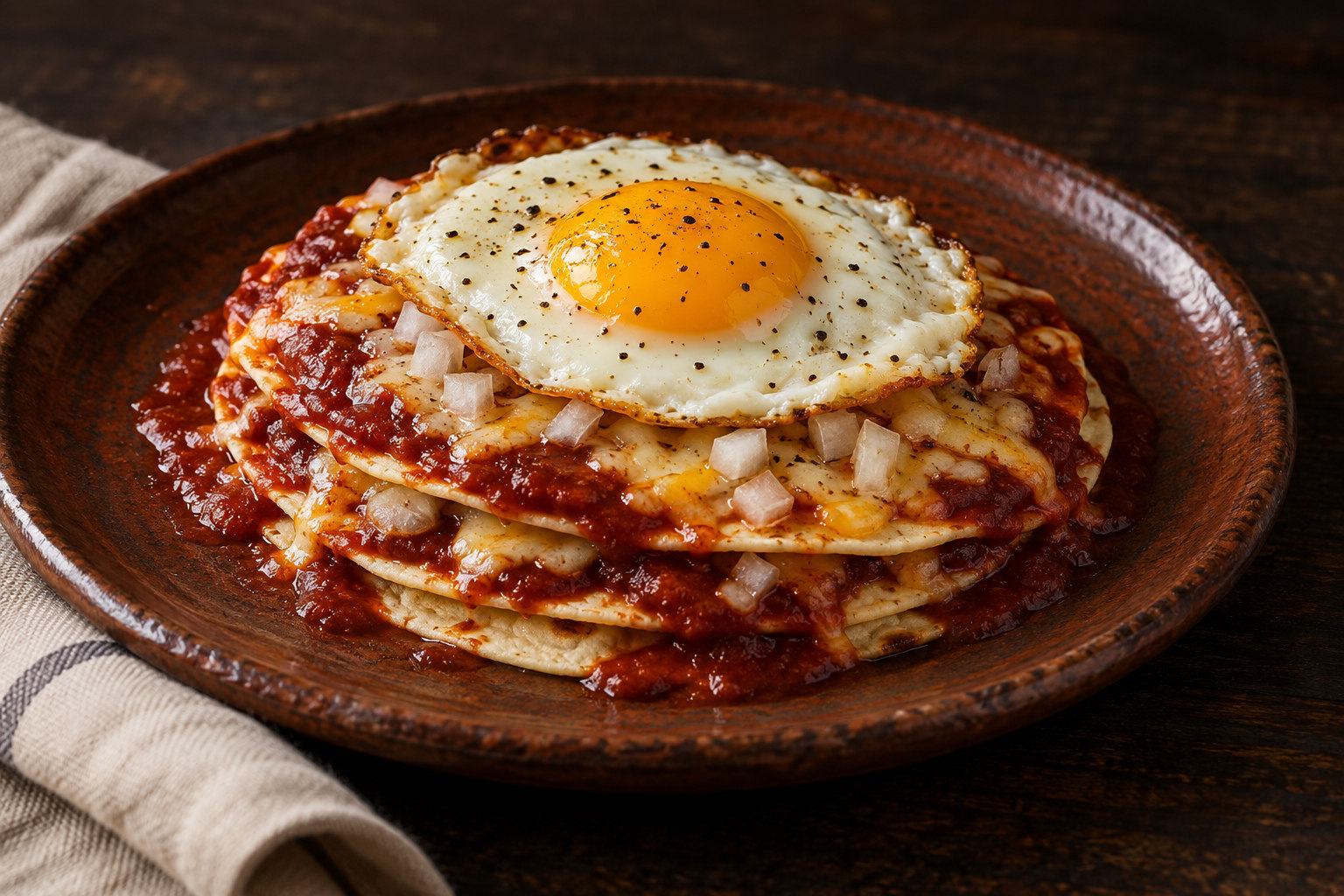
Egg safety: choose pasteurized eggs for a runny yolk, or cook both white and yolk firm. USDA egg guidance.
What to watch for
Tortillas: warm them only until they bend. A crisp tortilla will crack when rolled. Sauce: strain out stubborn chile skins and keep the flour-and-oil base blond. If the sauce becomes too thick to coat the tortillas, loosen it a spoonful of water at a time. Oven: this is a brief finish; take the dish out once the sauce bubbles and the cheese melts.
Leftovers
Refrigerate leftovers in shallow containers within 2 hours. Use within 3 to 4 days and reheat to 165°F. If you are making the egg-topped stack, prepare the egg fresh when serving. USDA food-safety guidance.
Understand it
Why the short oil dip matters
It makes the corn tortilla flexible enough to roll or layer without splitting. Straining keeps the sauce smooth, and a blond roux gives the chile puree body without turning it into a dark gravy.
Know it
The record behind the stack
Robb Walsh published this sauce-and-stack formula after an oral description attributed to Pancho Borunda; Walsh notes that the café recipe had not been written down. The rolled assembly is ours. The separate stack recalls the published account but cannot verify an exact historic plate.
Choosing the chiles
The published formula specifies 12 “red chiles” but no cultivar, weight, or fixed heat level. Its softening method indicates dried chiles. Dried New Mexico red chile pods are a practical editorial choice, not a claim about the café’s exact chile. Choose a heat level you know and taste the finished sauce; this edition does not claim a tested substitute or a predictable spice level. New Mexico’s tourism office documents dried red New Mexican pods in another red chile sauce.
About this edition: This Source Edition adapts an attributed published recipe. The Border Table has not independently cooked and tested this exact rolled or stacked revision, so use the visual cues as well as the source timings.
Sources
What the evidence supports
- Robb Walsh, The Tex-Mex Cookbook (Ten Speed Press, 2004), p. 106 — ingredient amounts, red-chile sauce, three-tortilla stack, short bake, and egg finish. Publisher’s book record.
- Lupe J. Lujan’s 1965 local-history study — independent historical record of the Old Borunda Café; not evidence for the exact formula.
- USDA FSIS egg guidance — pasteurized eggs for a runny-yolk serving.