Culinary Atlas · Mexico
Puebla
Mole, filled chiles, tinga and distinctive breads open several Puebla tables. Follow a colonial city, a named Tepeaca cook and the regional choices behind the food.
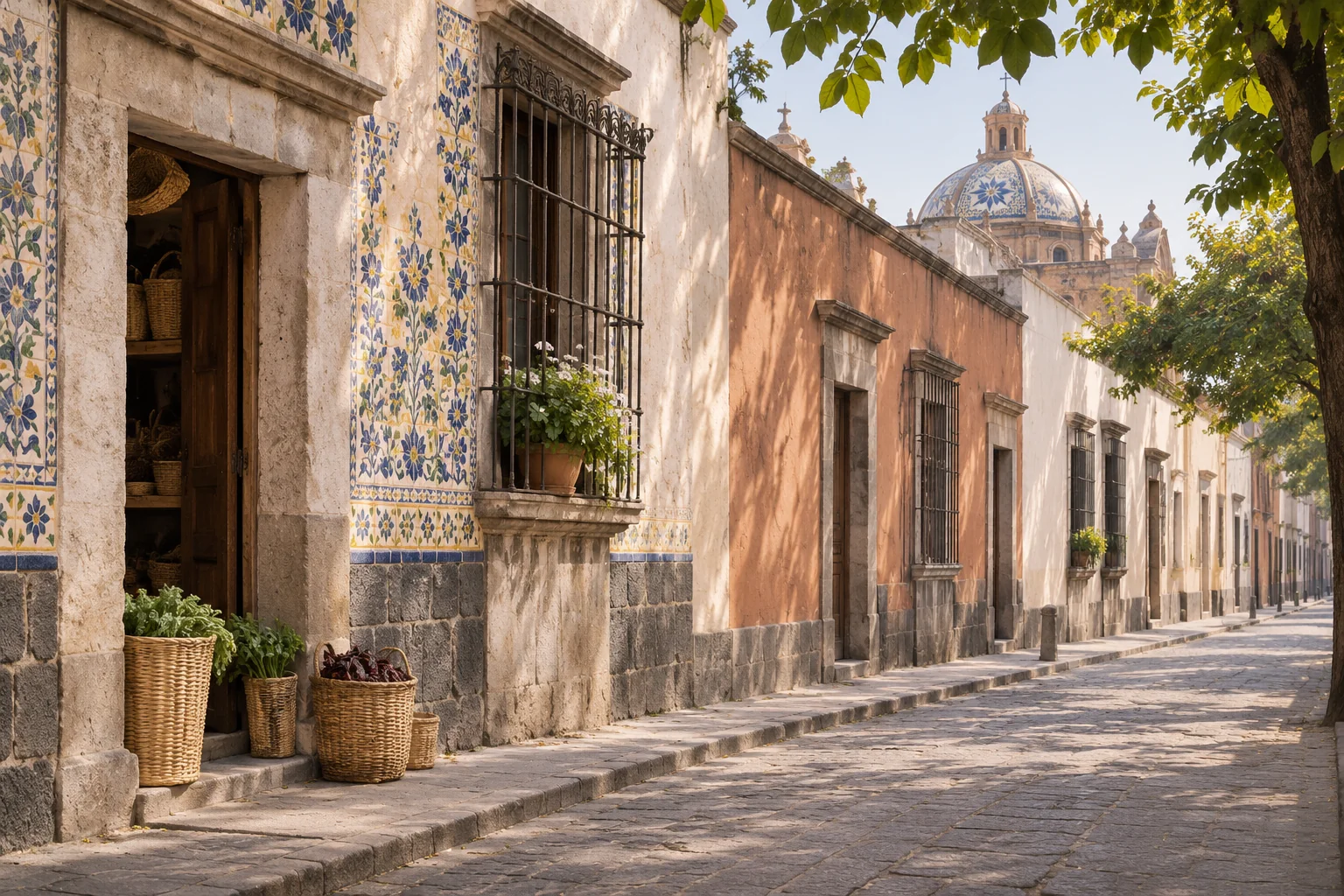
The city is one part of a wider state
UNESCO’s Historic Centre of Puebla account dates the colonial city’s foundation to 1531 and describes its religious buildings, houses and tile-covered architecture. The protected city is a specific place within the much larger state. Its colonial chronology is not the beginning of food or settlement throughout the surrounding region.
That difference matters when a dish carries the name poblano. The city’s institutions, markets and kitchens belong beside communities elsewhere in Puebla. Begin with a sauce or a bread, then look for the cook and locality behind the version you are reading.
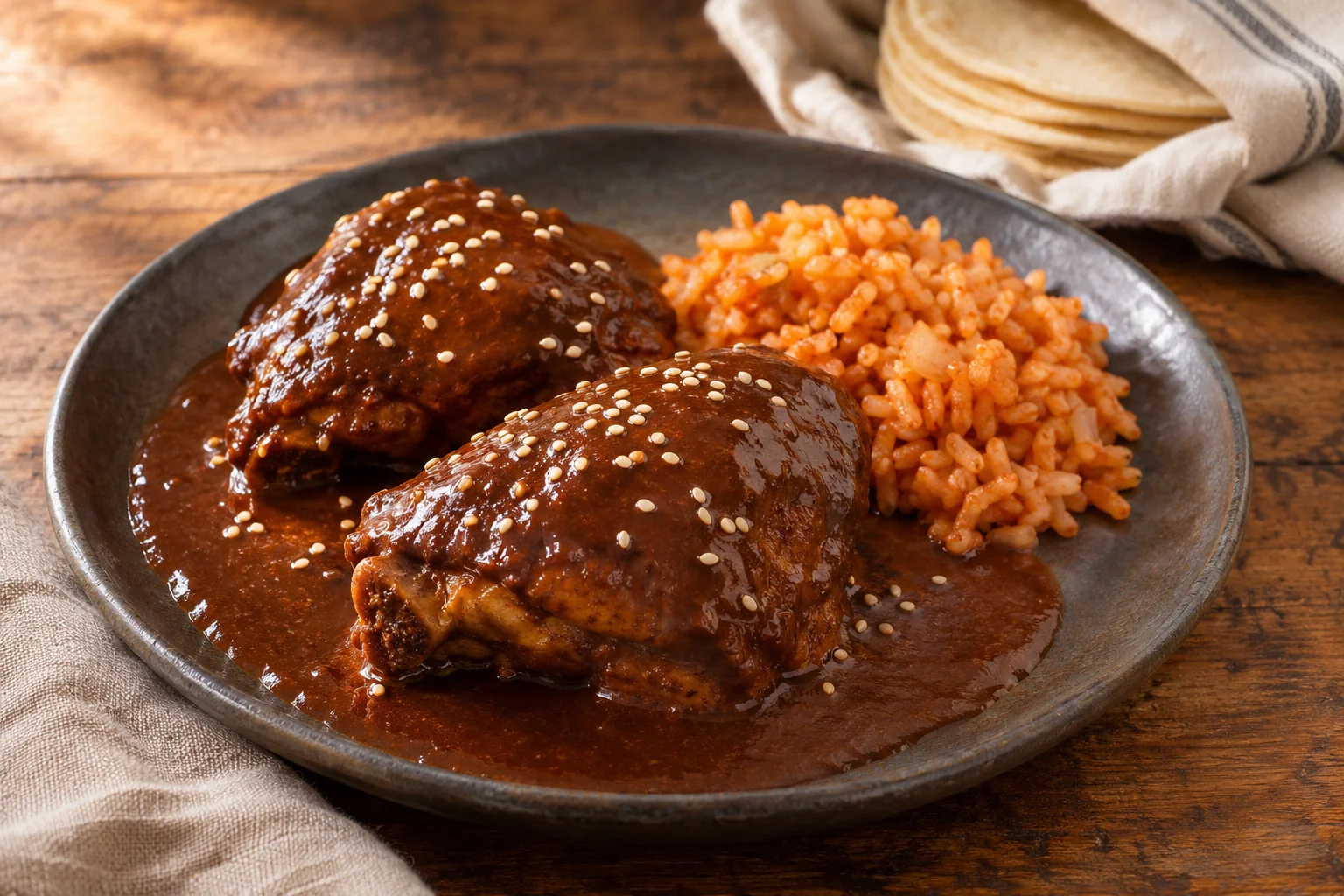
A mole made in San Nicolás Zoyapetlayoca
In an October 2020 Secretaría de Cultura account, Alejandra Gutiérrez Gárate describes making mole for celebrations in San Nicolás Zoyapetlayoca, Tepeaca. Her project, La receta de la bisabuela, follows ingredients and the work of toasting, frying, grinding and seasoning.
The report connects her knowledge with older community cooks and her mother and grandmother. It also records change: turkey broth in earlier family practice and chicken broth in her own preparation. A living tradition includes such choices, not only a fixed list repeated without a cook’s name.
Read the Mole Poblano story, then cook our separate smaller chicken recipe. It offers one measured home method rather than presenting Gutiérrez Gárate’s family formula as ours.
Recognize the filled chile
Larousse Cocina’s regional dictionary records Puebla’s cheese- and picadillo-filled poblanos and other stuffed dried chiles. A fresh poblano, a dried ancho and a filling of cheese or meat each lead to different handling and texture.
Our Chiles Rellenos choose Oaxaca cheese, egg coating and tomato caldillo. The accompanying story explains the pepper, filling and capeado. A separate preparation such as chiles en nogada needs its own recipe and seasonal ingredients; it is not a new name for this cheese-filled plate.
Tinga gives a cooked filling more than one destination
In his tinga dictionary entry, Ricardo Muñoz Zurita points to several preparations in La cocinera poblana of 1881 and describes later variations. The recorded examples broaden the name beyond today’s familiar shredded chicken.
Follow the Tinga story, then make Chicken Tinga Tacos. The recipe states its own meat and sauce. The Tostada story helps compare a crisp serving form without changing that filling’s ingredients.
The bread changes the meal
Agricultura’s cemita account places the bread-and-filling preparation within Puebla’s repertoire. The bread is part of its identity, alongside the additions inside. A roll should not become invisible when describing the meat.
Compare the Mexican Torta story and our ham-and-cheese bolillo recipe, which use a different roll. Continue to Jalisco for the torta ahogada, or to Tamaulipas for another regional food table.
Cook a meal, then follow its parts
Start with Mole Poblano or Chiles Rellenos, and choose Mexican Rice and corn tortillas as separate accompaniments. For a larger cooking project, explore Tamales Rojos and the tamale story; the corn-husk pork recipe is one preparation within a much wider family.
The ancho guide and cheese and crema guide help with shopping. A cold pitcher of Horchata can accompany the meal; its story keeps that rice-and-milk version distinct from other horchatas.
Continue to Mexico City for markets, maize communities and other ways the ingredients reach the table. Geography becomes useful when it helps you recognize a preparation and choose the next thing to cook.
Sources and further reading
- UNESCO: Historic Centre of Puebla — Colonial-city chronology and protected architecture.
- Secretaría de Cultura: La receta de la bisabuela, 2020 — Alejandra Gutiérrez Gárate’s Tepeaca account.
- Larousse Cocina: Chiles rellenos — Regional pepper and filling forms.
- Larousse Cocina: Tinga — Attributed cookbook comparison and later variations.
- Secretaría de Agricultura: Cemitas poblanas — A distinct Puebla bread-and-filling preparation.
Have a source or cooking detail to add? Send a correction.