Food Stories · The Border Table
Chiles Rellenos: The Pepper, the Filling, and the Capeado
A stuffed chile changes when the pepper, filling or coating changes. Start with a cheese-filled poblano, then follow the wider regional family.
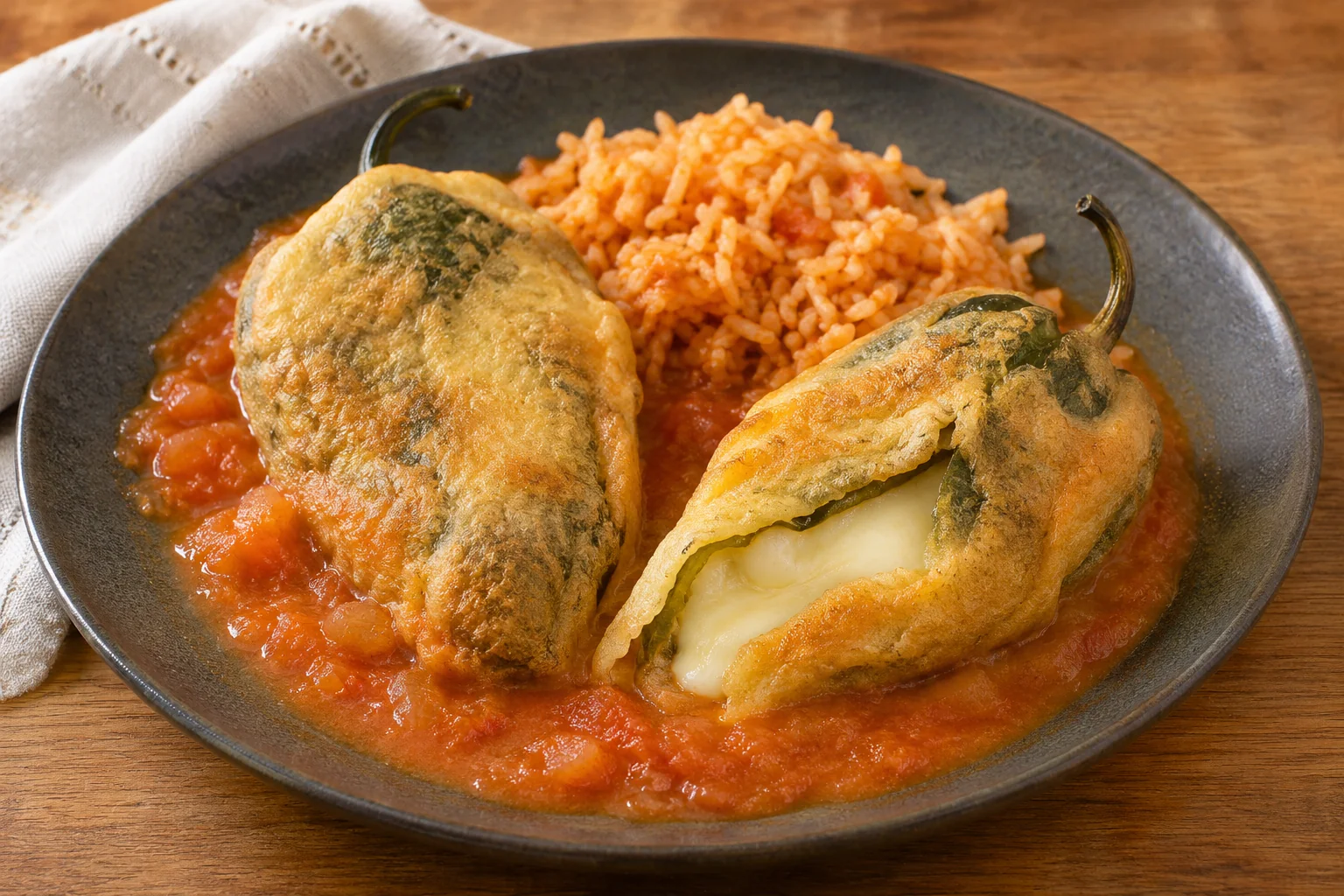
Let the chile name the preparation
Larousse Cocina’s regional account records much more than one stuffed poblano. It describes cheese and picadillo fillings, different peppers, preparations served with or without egg coating, and both hot and cool service. In Puebla, poblanos and dried chiles have their own filled forms.
Our Chiles Rellenos choose a roasted poblano, Oaxaca cheese, a light egg coating and tomato caldillo. Those choices identify the version you are cooking. A walnut sauce and fruit-and-meat filling would lead to another preparation, not an unnoticed garnish change.
The pepper must survive the handling
Roasting makes the skin easier to remove, but the flesh still has work to do as a wrapper. A careful slit and a dry surface help it hold cheese and carry its coating into the pan. An overfilled or torn pepper is harder to handle without losing the filling.
The poblano entry helps identify the fresh chile. The cheese guide explains choices at the dairy counter. Follow the cheese specified in the recipe before experimenting with a different moisture level or melting behavior.
Capeado is a separate piece of work
Capeado is the egg coating. In this method, beaten whites are folded with yolks just before frying. Flour on the pepper provides a surface for the egg to cling to. Jauja Cocina Mexicana’s cheese-filled preparation offers another Mexican cook’s view of the handling.
The coating is at its most delicate soon after frying. Warm sauce belongs around the chile at serving, rather than becoming a long holding bath if you want to preserve more of that contrast. The full recipe puts the caldillo and filling ahead of the last-minute egg work.
Explore the place and return to the plate
Read the Puebla atlas for regional dishes and living cooks beyond any one origin legend. Continue to Mexico City for a different market and household setting.
Cook the four-chile recipe with Mexican Rice or Refried Beans. The links help assemble a meal; they do not turn those separate recipes into a claim about every regional chile relleno.
Sources and further reading
- Ricardo Muñoz Zurita / Larousse Cocina: Chiles rellenos — Regional chile, filling, batter and sauce distinctions.
- Jauja Cocina Mexicana: Chiles Rellenos de Queso — Mexican practitioner comparison for cheese-filled capeado chiles; the amounts here form a separate home recipe.
- FoodSafety.gov: Safe Minimum Internal Temperatures — Egg and leftover reheating endpoints.
Have a source or cooking detail to add? Send a correction.