Food Stories · The Border Table
Mole Poblano: The Cooks Behind the Celebrated Sauce
Chiles, seeds, nuts and careful cooking make the sauce tangible. A documented Tepeaca cook gives the story a living voice beyond the familiar convent legends.
Begin with a named community cook
In an October 2020 Secretaría de Cultura account, Alejandra Gutiérrez Gárate describes making mole in San Nicolás Zoyapetlayoca, in Tepeaca, Puebla. The report follows her five-part video project, La receta de la bisabuela, and the knowledge shared through her mother, grandmother and older community cooks.
She describes a preparation that has changed with ingredients, including a move from turkey broth to chicken broth in her own work. This is a particular cook’s account, with a place and date attached. Our Mole Poblano recipe is a separate, smaller chicken preparation, not her family formula.
Recognize a sauce with several kinds of body
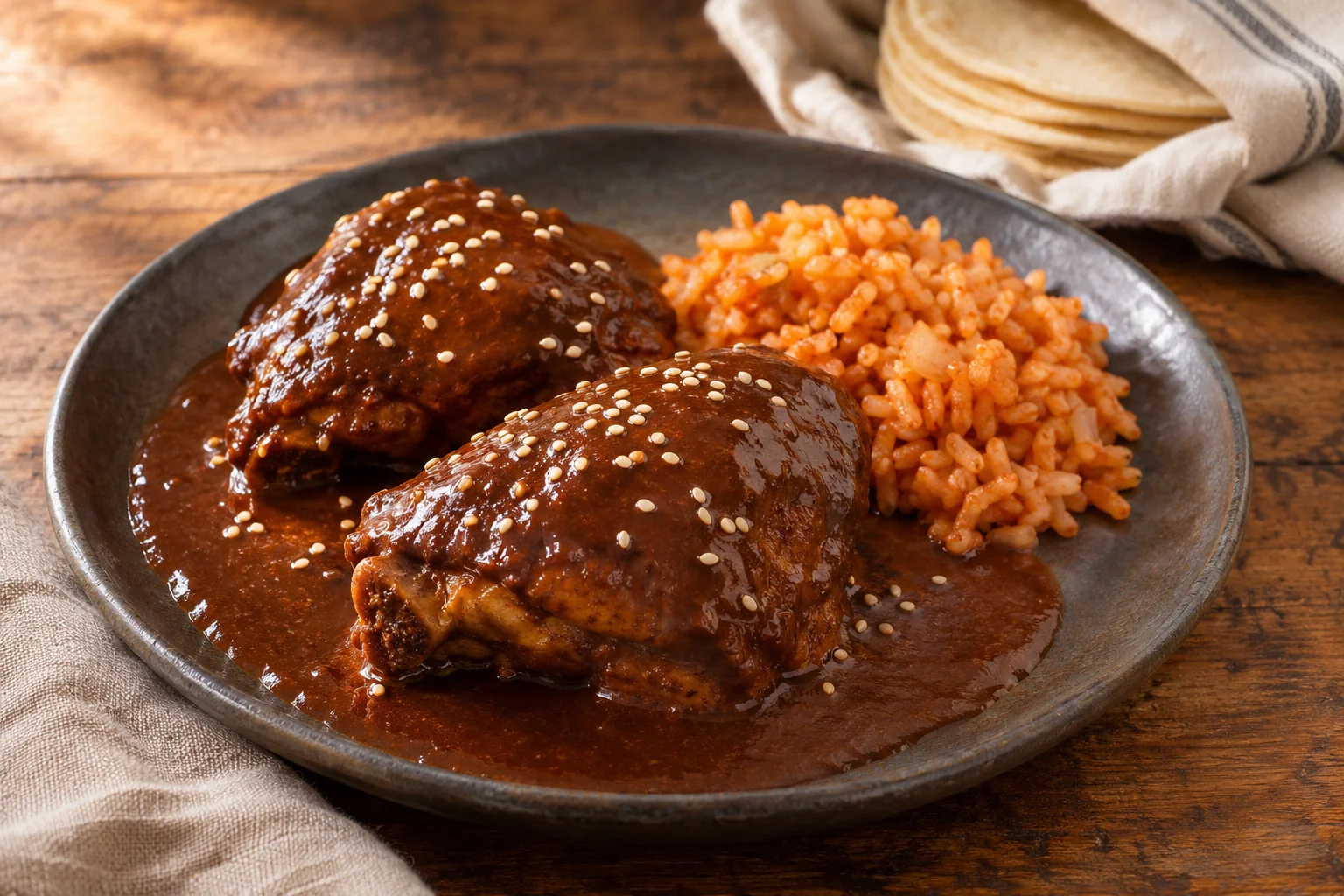
The Sistema de Información Cultural entry records dried chiles alongside seeds, nuts, fruit, spices, chocolate and tortillas. The ingredients do different work. They contribute aroma and flavor, while ground seeds and starches also help make a sauce that coats food.
Read the ancho guide and compare actual mulato and pasilla chiles when shopping. The name mole does not mean that every regional preparation contains the same chiles, nuts or chocolate. The recipe gives one precise list so those decisions stay coherent at home.
Keep legends beside evidence
Agricultura’s Puebla account identifies the Santa Rosa kitchen story as a legend. A celebrated building can help explain how a dish is remembered without proving the exact moment of invention.
Explore the Puebla atlas for the city and the communities beyond it. Living cooks, local celebrations and different regional dishes deserve room beside an origin tale. The detailed account of one community preparation is more useful for understanding real cooking than repeating a single dramatic invention story as settled fact.
Bring the method back to your kitchen
Set out the ingredients, cook them in manageable groups, blend with enough liquid and give the finished sauce time at a gentle simmer. A scorched ingredient cannot be made unburnt by adding chocolate. The Mexican embassy’s published mole preparation makes the many-stage method visible.
Cook our chicken and mole with Mexican Rice and corn tortillas. Continue through Mexico City to explore another food-producing and market landscape.
Sources and further reading
- Embassy of Mexico in Uruguay: Prueba México, pp. 10–12 — A published Mexican comparison for the chile, nut, fruit and starch components and staged preparation; our smaller chicken recipe has its own proportions.
- Secretaría de Cultura, SIC: Mole Poblano — Ingredient range and Puebla association.
- Secretaría de Cultura: La receta de la bisabuela — Alejandra Gutiérrez Gárate’s named community and family account, October 22, 2020.
- FoodSafety.gov: Safe Minimum Internal Temperatures — Chicken and reheating endpoint.
- Secretaría de Agricultura: Mole poblano, uno de los orgullos de Puebla — Identifies the Santa Rosa story as a legend.
Have a source or cooking detail to add? Send a correction.