Food Stories · The Border Table
Tamales Rojos: Masa, a Wrapper, and a Shared Batch
Corn husks, red chile and pork make one familiar tamal. The wider story reaches through Mesoamerican maize cooking to the hands that prepare a steamer for a shared meal.
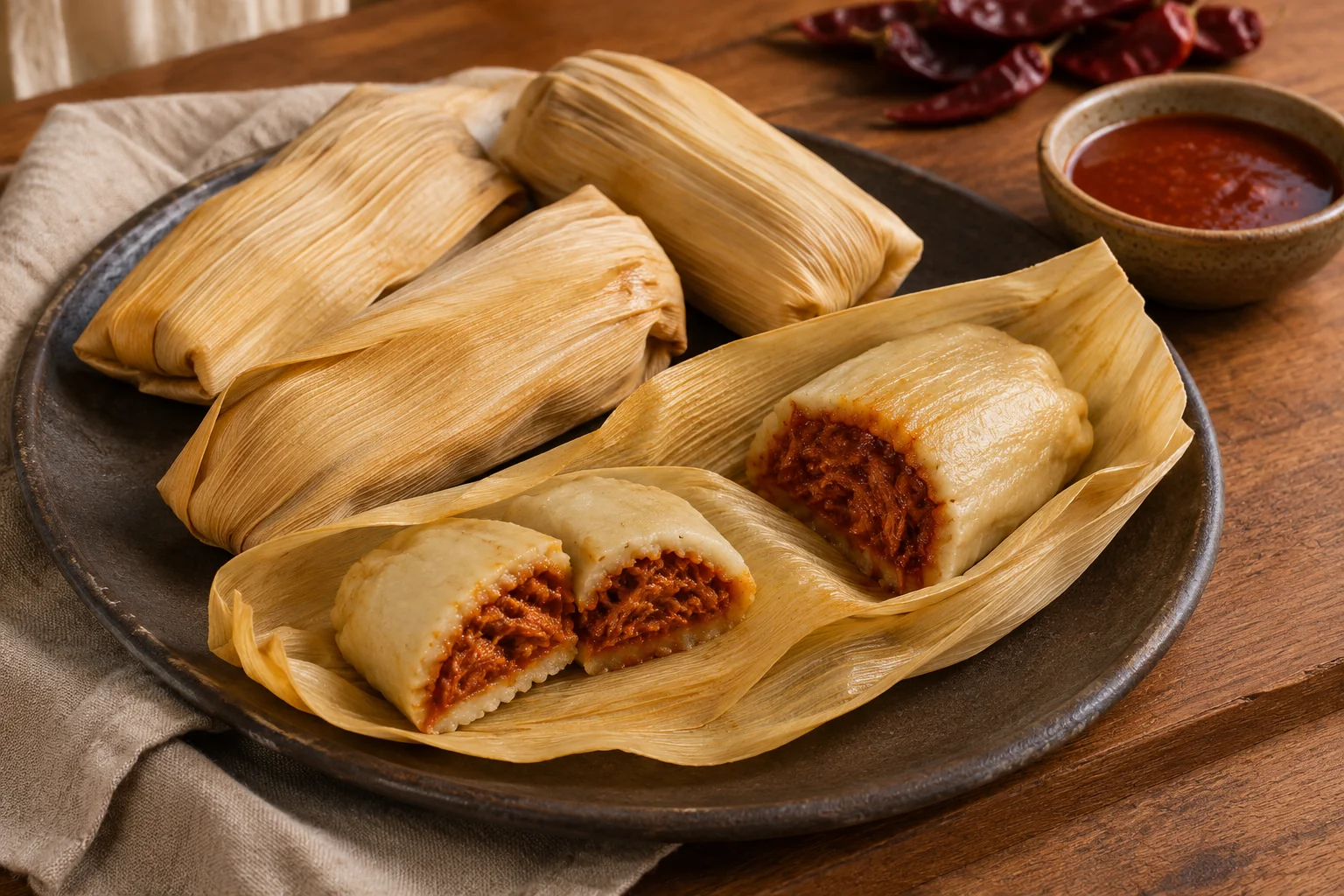
A form older than this pork filling
UNAM’s Pan de Indias account describes tamales and tortillas within Mesoamerican food preparation. It records fillings ranging from beans and greens to different meats and fish. The wrapper and masa connect many preparations without making them one fixed recipe.
Our Tamales Rojos use pork shoulder, lard, red chile and dried corn husks. Read that combination as a particular preparation within the family, rather than projecting all of its ingredients unchanged into the distant past.
Name the wrapper and the grain
A corn husk helps contain a portion while steam cooks its masa. A banana leaf gives another shape and handling method. The Michoacán atlas introduces regional maize preparations such as corundas and uchepos, which should not be collapsed into the same dough and filling as this red tamal.
The masa harina guide helps identify nixtamalized flour. The package matters: a flour intended for tamales can have a different grind from one sold for thin tortillas. Follow the water adjustment in your recipe rather than using a volume measure alone to decide the dough’s condition.
The filling must be ready before the wrapping
Published Mexican cooks show different combinations of chiles, meats and masa. Jauja Cocina Mexicana’s red-pork preparation and Larousse’s pork-and-green-salsa example provide useful comparisons. Our red filling keeps guajillo and ancho together, with quantities stated in the recipe.
The pork is cooked and the sauce reduced before assembly. This lets the steamer’s work concentrate on cooking the dough around a filling that is already tender. Opening one rested sample is more informative than relying only on the clock.
A batch gives people different jobs
Cooking, soaking husks, mixing masa, spreading, filling and arranging the steamer are separate tasks. They can be shared, or completed in stages by one cook. Keep the filling and dough covered and refrigerated when a pause becomes a long wait.
Explore San Antonio and Mexico City for different food-selling and household settings. Continue through Puebla for another regional table, then return to the 24-tamal recipe for its own complete method.
Sources and further reading
- UNAM Noticonquista: Pan de Indias, tamales y tortillas — Historical maize processing and varied tamal fillings.
- Jauja Cocina Mexicana: Tamales Rojos Bien Esponjados — Mexican practitioner comparison for masa and red pork filling; proportions and instructions here are developed separately.
- Larousse Cocina: Tamales de rajas y verdes — Corn-husk masa assembly and a different pork-salsa preparation.
- FoodSafety.gov: Safe Minimum Internal Temperatures — Reheating endpoint.
Have a source or cooking detail to add? Send a correction.