Kitchen Essentials · Chiles
Ancho chiles
A broad, dark dried poblano with mild heat and dried-fruit character. Choose it for the role it plays in a sauce, then prepare it according to that recipe.
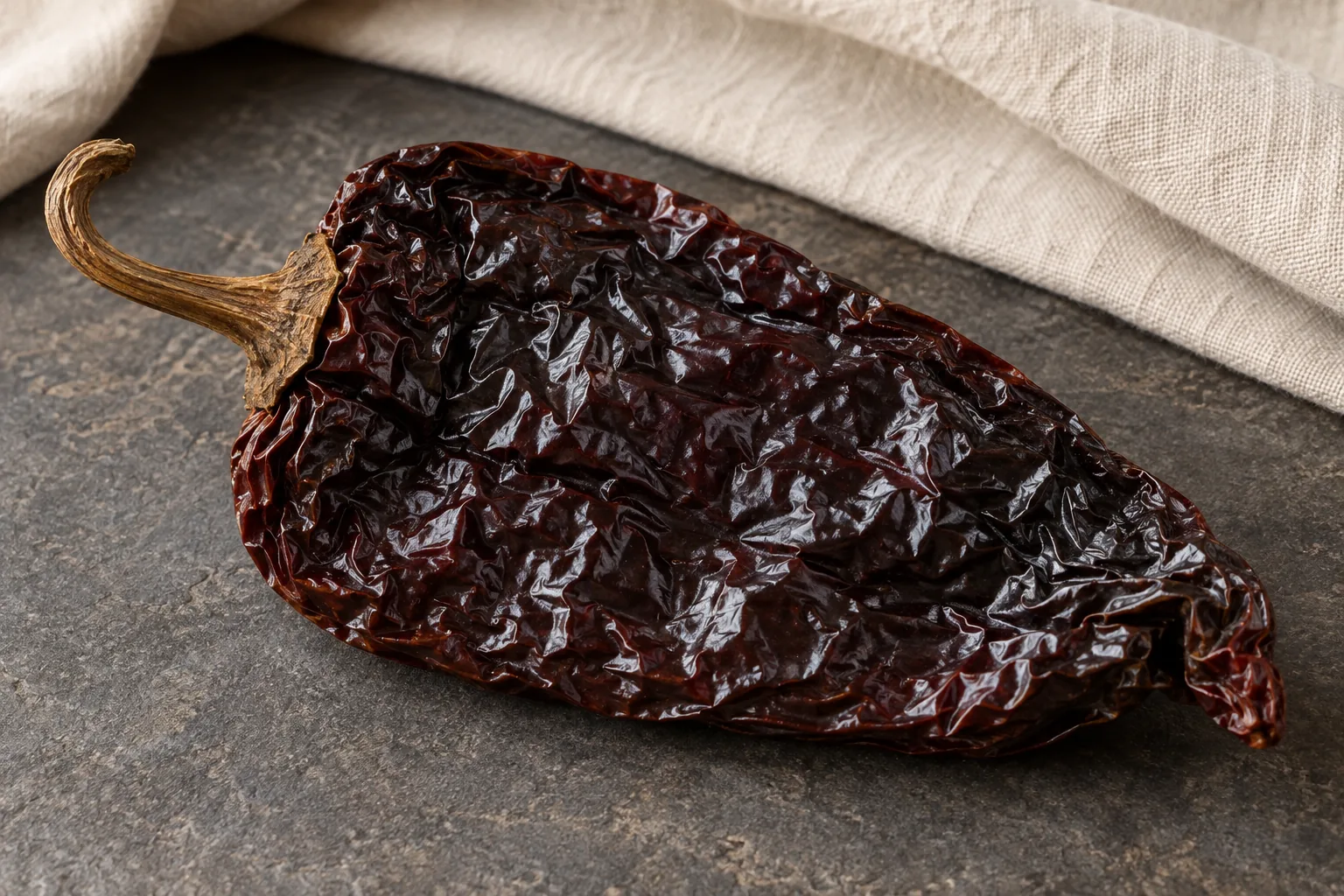
A poblano with another kitchen identity
Ancho is dried poblano. New Mexico State University’s Chile Pepper Institute describes dark, wrinkled skin, mild heat, and sweet, dried-fruit flavors. Those qualities explain why a cook may choose ancho for flavor and body rather than for the hottest possible sauce.
Compare the broad dark pod with guajillo. A package labeled simply “chile powder” does not tell you whether it contains the whole-chile flavor a particular recipe names. Check the contents and the required form before buying.
Soften for blending; strain for smoothness
Our Birria de Res briefly toasts the dried chiles without blackening them, soaks them, and strains the blended mixture. Dark ancho skin is part of the ingredient’s appearance; it is not a signal to toast the pod until it burns. Follow the recipe’s short heating cue and keep watching the pan.
The Chicken Enchiladas page has its own sauce sequence. Open that complete method before starting, especially when you need to have cooked chicken ready for assembly.
Choose sound pods
Look for whole dried chiles without mold or a musty smell. Read the actual variety on the package rather than judging every dark pod by color alone.
Store away from damp
Seal dried chiles and keep them away from light, heat, and moisture. Discard moldy or musty pods. See Utah State Extension’s chile guidance for handling and storage context.
Keep heat in proportion
Mild describes a general profile, not a promise about every pod. Follow the chosen recipe’s chile blend and tasting guidance before adding another variety for more heat.
Read the blend before making a swap
In the published birria recipe, ancho accompanies guajillo, while optional árbol chiles adjust the sharper heat. Removing one ingredient and doubling another makes a different blend. Start with the specified chiles if you want to cook the recipe as written.
Find the right red sauce
Not every red enchilada sauce is an ancho sauce. Our Texas Cheese Enchiladas use the source’s broader description, “red chiles,” with a separate note on choosing dried New Mexico pods. Read that note instead of assuming the dark sauce must call for ancho.
Sources
The Chile Pepper Institute supports the identification and flavor description; Utah State Extension provides chile handling guidance. The cooking comparisons refer to the linked recipes and preserve their individual ingredient lists.