Culinary Atlas · Water, chile, and the breakfast table
Santa Fe & New Mexico
A breakfast burrito opens a wider story of Pueblo food knowledge, shared irrigation, trading routes, and the chile choices that shape a New Mexican meal.
This article begins in Santa Fe and follows connections into northern New Mexico and the wider state. A chile-smothered breakfast is one way into that landscape. It sits beside older food traditions and the continuing work of growing, saving, sharing, and cooking food.
The plaza is a chapter in a longer place history
The National Park Service's plaza history records Pedro de Peralta's layout of the Spanish colonial city around a plaza in 1610. It also names the place as one already known to local Tewa residents. The colonial date belongs to that city plan, rather than the beginning of human life or food knowledge in the region.
The same account describes the plaza's role in the 1680 Pueblo Revolt and the expulsion of Spanish colonists for twelve years. Conflict and changes in power belong in the history alongside trade and exchange. A present-day restaurant table is connected to a place with several histories, not one uninterrupted founding story.
Corn, beans, squash, and living seed knowledge
The Indian Pueblo Cultural Center's harvest feature discusses corn, beans, and squash, the crops often called the Three Sisters. It explains that many Indigenous communities grow varieties of them and that their stories differ. The feature also connects seed keeping with the Española Healing Foods Seed Library and community learning.
This is a useful starting point for reading about food in New Mexico: crops belong to people, knowledge, and continuing work. A list of ingredients cannot stand in for all Pueblo traditions, and a restaurant's breakfast burrito cannot represent them all. The Cultural Center's own writing leads toward named communities and their voices.
An acequia carries water and shared responsibility
An acequia is an irrigation ditch, but its history also concerns the people who maintain and share it. The New Mexico Museum of Art's account of water describes colonial communities allocating irrigation water and regulating its distribution through a mayordomo, or ditch manager. Its Santa Fe example links land and water allocation to the municipal instructions of 1610.
The Historic Santa Fe Foundation's account of the Acequia de la Muralla follows the city's paired ditches and the responsibility of neighbors along them. The upstream section affects those downstream. That practical dependence gives farming history a social dimension: keeping water moving is collective work.
When a food article names a growing region, that water history helps explain what the name leaves out. A harvest depends on fields, weather, access, and maintenance as well as on a seed variety.
Santa Fe was a trading hub with routes in more than one direction
The National Park Service's history of New Mexican traders explains the expansion of commerce after Mexican independence in 1821. Santa Fe connected traffic from Missouri with routes south along El Camino Real into Mexican markets. New Mexican merchants participated actively in that network.
The account also follows the railway's advance and the completion of a Santa Fe branch line in February 1880. These are changes in how people and goods moved. They help place a city kitchen within wider exchanges without pretending that a trade route proves the invention date of a particular dish.
For another river corridor in the atlas, El Paso & Paso del Norte follows its own geography and history. Each place has a distinct role in the larger map.
Red and green are also questions of maturity and preparation
In his 1994 paper The Wonders of New Mexico Chile, NMSU horticulturist P. W. Bosland explains green and red as developmental stages of New Mexican chile fruit. Green pods are commonly roasted and peeled; mature red pods commonly enter dried preparations. This helps explain two different kitchen ingredients, while leaving room for differences in cultivar and flavor.
The New Mexico Tourism Department's Chile 101 makes roasting and handling a practical part of its regional cooking guide. Our Hatch and Chimayó entries provide ingredient paths within this site. Read the named pepper and the sauce method rather than judging heat from color alone.
A Santa Fe restaurant account brings the story to breakfast
In a 2023 interview, Tia Sophia's owner Nick Maryol distinguished his family's menu claim from the older practice of eating breakfast foods in tortillas. The Breakfast Burrito story follows that account and its limits in detail.
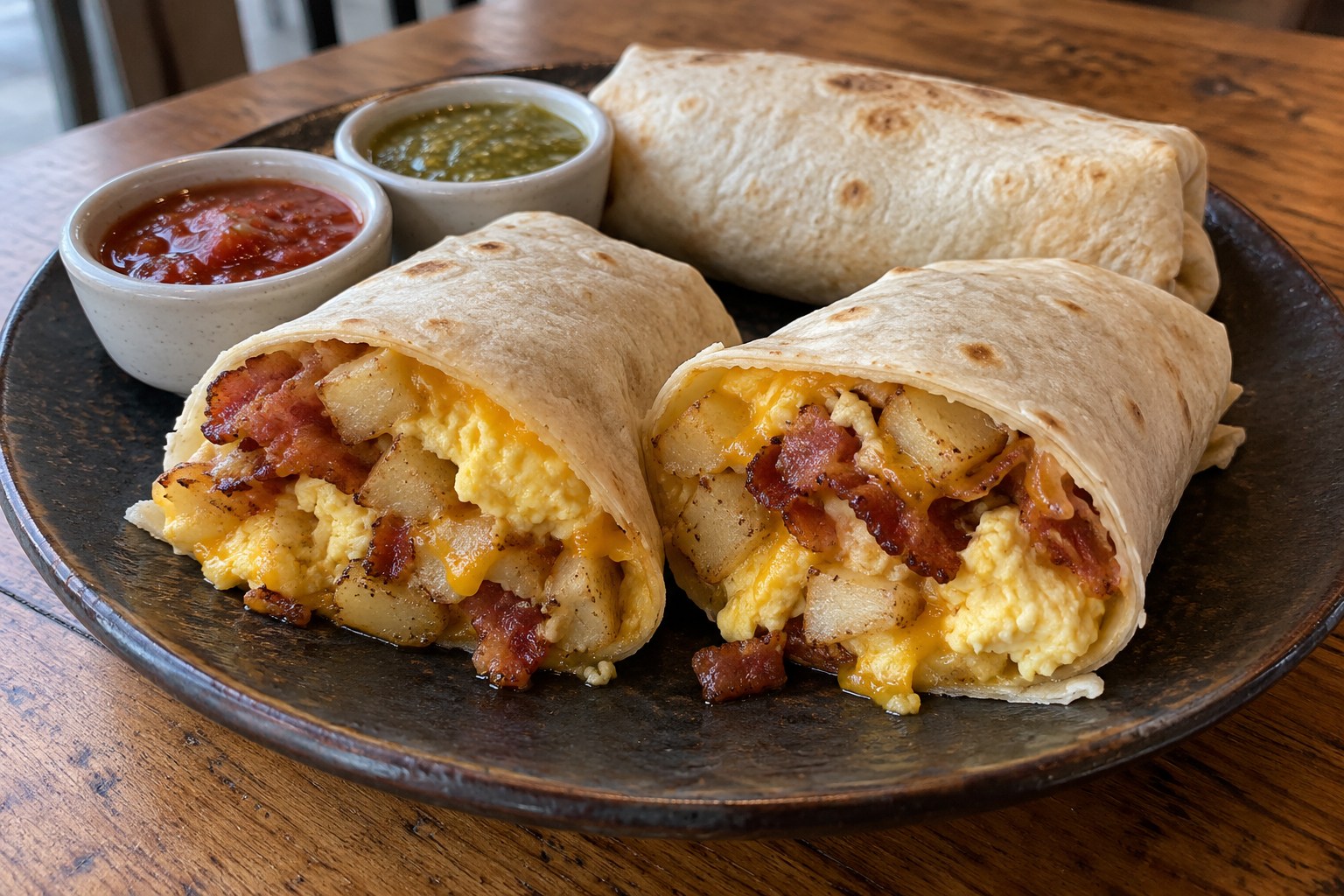
The restaurant's menu offers red, green, or Christmas chile with its burrito; Christmas combines both. The state tourism recipe likewise shows a chile-smothered plate. Those are specific examples of service, while this site's bacon, egg, potato, and cheddar recipe keeps sauces alongside a handheld burrito.
Return to a complete recipe
The Breakfast Burrito recipe gives the measured filling, separate potato and egg cooking, folding, storage, and reheating directions. The Homemade Flour Tortillas recipe and tortilla guide explain the wrapper. For its existing bean variation, follow Refried Beans as a separate preparation.
Continue to Arizona & Sonora and the Chimichanga story for another regional use of a filled flour tortilla. The connection is a useful cooking comparison; each place and dish keeps its own history.
Sources for this place
- National Park Service, Santa Fe Plaza — the city plan and later conflict.
- Indian Pueblo Cultural Center, The Three Sisters — crops and living seed knowledge.
- New Mexico Museum of Art, The Politics of Water and Historic Santa Fe Foundation — irrigation and community responsibilities.
- NPS, New Mexican Traders on the Santa Fe Trail — commerce and changing transport.
- P. W. Bosland, The Wonders of New Mexico Chile, 1994 and New Mexico Tourism, Chile 101 — chile maturity and preparation.
- Santa Fe Reporter, September 14, 2023, Tia Sophia's menu, and New Mexico Tourism's burrito recipe — named breakfast accounts.
Cook the Breakfast Burrito · Read its story · Browse the atlas · Suggest a correction