Food Stories · Chili powder, pantry blends, and the grill
Texas Dry Rub: Chili Powder and the Seasoned Steak
Four measured seasonings lead into a wider story of dried chiles, commercial blends, and teaching cooks through print. Follow the San Antonio records, then return to the founder’s steak seasoning.
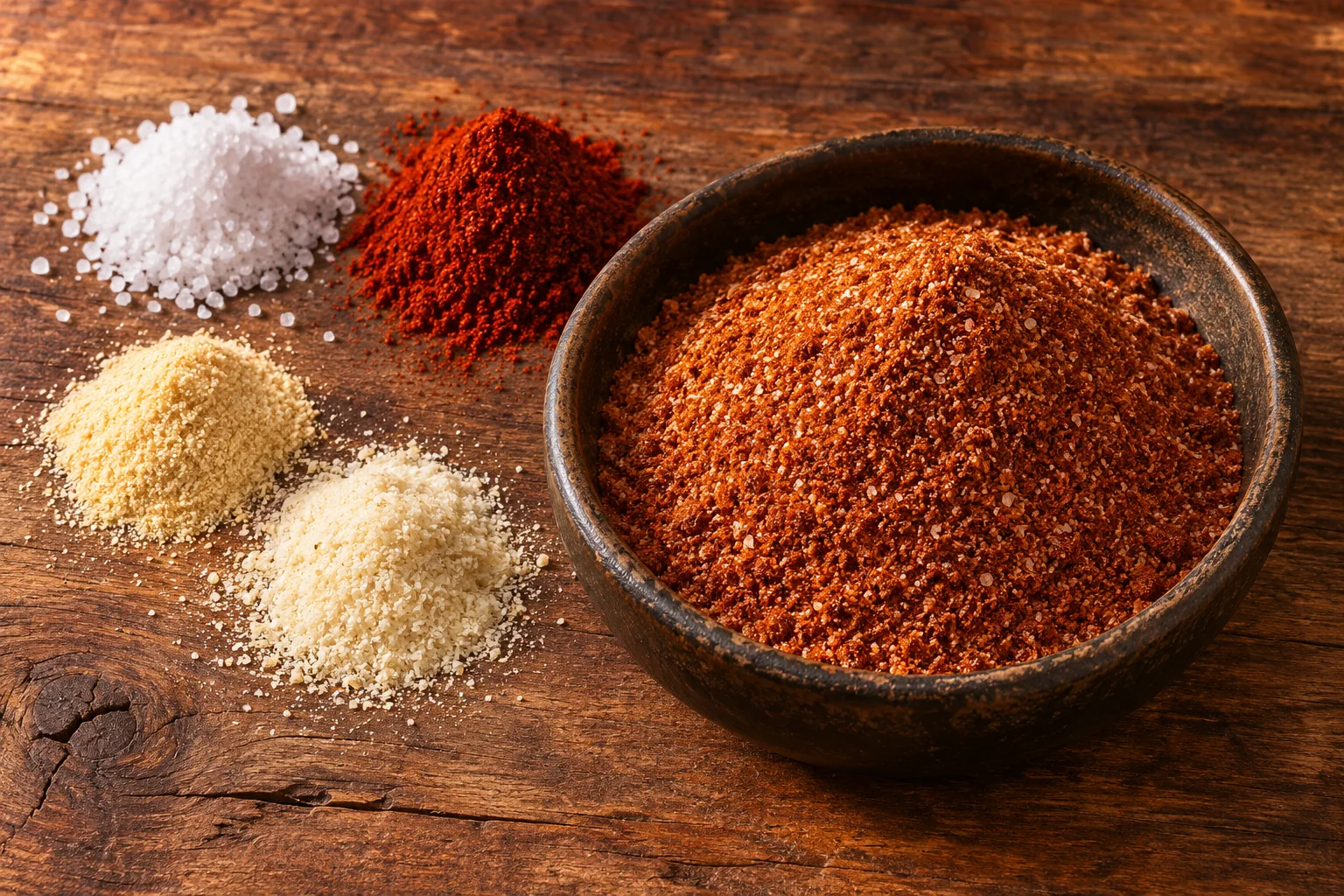
Four pantry ingredients, measured for one preparation
The founder’s Texas Dry Rub combines salt, chili powder, garlic powder, and onion powder. Its 2021 record gives both the mixture and a small application to each side of a steak. The complete recipe keeps those two measurements together: making the jar and seasoning the meat are different tasks.
The title names a seasoning in this collection. Its record does not establish one universal Texas formula or document an inventor for this particular ratio. The useful historical question is how dried chile and prepared seasonings reached the pantry, and how printed directions helped cooks use them.
Read the ingredient list behind “chili powder”
A jar labelled chili powder can contain a blend. As one present-day example, McCormick’s published ingredient list includes chili pepper, other spices, salt, garlic, and a free-flowing agent. It is a manufacturer’s description of its own product; the founder’s recipe does not specify that brand.
The distinction matters when you measure a second blend around the powder. A single dried chile, a prepared chili powder, and the finished Texas Dry Rub each describe a different ingredient or preparation. Explore the ancho guide for one named dried pepper and the herbs-and-spices collection for other pantry seasonings. Check the actual jar rather than expecting every powder to have the same ingredients.
A company archive gives the seasoning trade a place
UTSA Libraries’ Gebhardt exhibit records the Eagle Brand Chili Powder trademark in 1896 and a San Antonio manufacturing operation. Its account follows imported Mexican ancho peppers, grinding, and storage, then the cookbooks that accompanied the products. It dates Mexican Cooking to around 1908.
The archive also brings workers into view. Employees recalled hand work including rolling tamales, applying labels, and stacking cans. The seasoning jar was part of a larger business involving ingredients, manufacturing, packaging, and instructions for the customer. These records describe a commercial chapter in Tex-Mex food history, rather than the invention of seasoning meat.
Follow the San Antonio atlas chapter on chili powder for that city setting beside the separate history of plaza food sellers and Market Square. Each record reveals a different kind of food work.
Printed instructions helped sell a way to cook
A promotional column on page 13 of the March 8, 1911 Alabama Baptist, digitized by Samford University, promotes Gebhardt’s powder for meat, soups, stews, and gravies. It includes a chili-con-carne method and offers readers a recipe booklet and samples. The column shows the company explaining how to use the seasoning while selling it beyond Texas.
Its promises are advertising evidence. They tell us how the product was presented to readers, not what every household cooked. The method printed there makes a pot of chili; it is a different preparation from the small dry mixture applied to steak in our recipe.
Hagley Museum and Library’s presentation of Mexican Cookery for American Homes supplies a later example: a 1949 company pamphlet whose recipes promoted the products. Read beside the 1911 column, it shows recipe publishing as a continuing way of bringing a commercial seasoning into home kitchens.
The amount on the steak is part of the recipe
Our blend contains three tablespoons of salt alongside a quarter cup of chili powder. The archived application is about half a teaspoon of the finished mixture on each side of a steak. Keep that measured use in view when looking at the bowl in the recipe image: the entire batch is stored seasoning, not the amount for one piece of meat.
Garlic and onion enter this mixture as powders. Stirring them through the dry ingredients is the preparation’s mixing step; the meat still needs its complete cooking method. The cooking page explains application and keeping unused seasoning separate from anything that has touched raw meat.
Salt content in a purchased chili powder is another reason to read its label. The ingredient list above is one documented example. It does not establish the composition of the powder in the founder’s 2021 kitchen or make a brand substitution part of the recorded formula.
Choose the seasoning and the cooking method together
Return to Texas Dry Rub for all four quantities and its application instructions. The Carne Asada story and Fajita story offer wider reading on grilled beef and return to distinct, complete preparations. Our Classic Beef Fajitas retains its own lime, salt, and pepper seasoning.
For another way pantry spices enter a meal, follow Pollo a la Naranja into a covered orange braise. The Meat, Poultry & Cuts guide returns the choice to the cut, and Food Stories opens the rest of the collection.
Sources and further reading
- The Border Table, Texas Dry Rub — the founder’s 2021 mixture and application directions.
- UTSA Libraries, Gebhardt Mexican Foods Company exhibit — company records, seasoning manufacture, workers, and promotional cookbooks.
- Samford University Library, Alabama Baptist, March 8, 1911, p. 13 — the original promotional column and recipe offer.
- Hagley Museum and Library, Mexican Cookery for American Homes — its October 9, 2023 presentation of the 1949 company pamphlet.
- McCormick, Chili Powder — a present-day manufacturer’s ingredient list, consulted November 10, 2026.
Make the seasoning · Explore San Antonio · Send a correction