Food Stories · Flour, cornmeal & the sweet griddle
Crispy Sugar Tortillas: A Sweet Turn on the Griddle
Sugar in the dough, a little yellow cornmeal, and a hot griddle give these small rounds their own identity. Follow one recorded recipe beside a published Sonoran comparison, then return to the kitchen.
Begin with the small sweet rounds
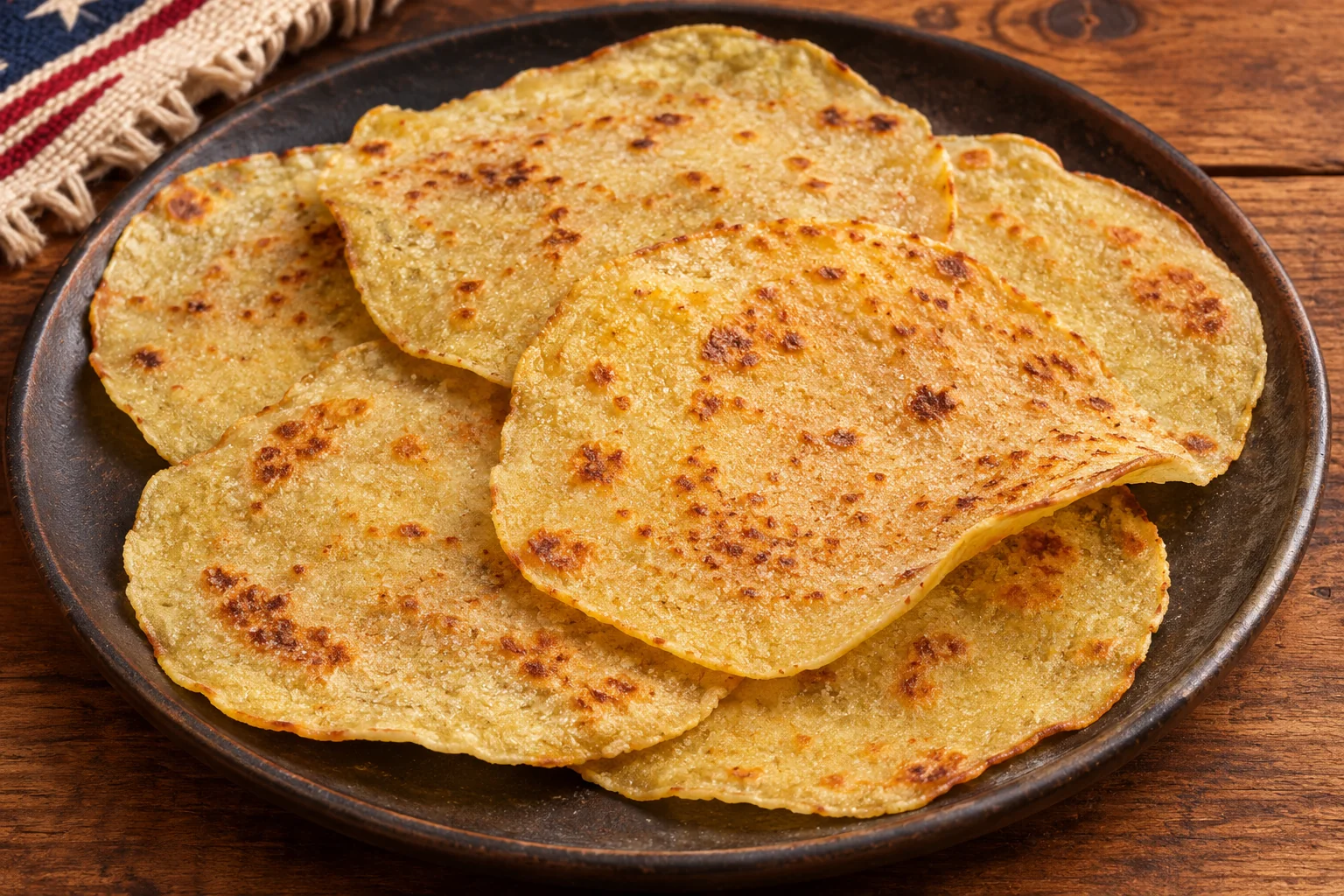
The Crispy Sugar Tortillas recipe comes from the founder’s 2021 collection. It combines all-purpose flour with a smaller amount of yellow cornmeal, mixes sugar into the dough, and uses butter-flavored shortening or margarine. Hot water brings the dough together. The portions rest for fifteen minutes before being rolled thin and cooked on a griddle.
That sequence is the starting point for understanding the dish. The dough itself is sweet, the cornmeal is part of its texture, and direct contact with the cooking surface develops the light golden spots. The recorded yield is thirty small tortillas. Keep the complete recipe open for its quantities and steps; the comparisons here explain the preparation without changing it.
The archived card gives a name and a method but no named town, bakery, holiday, or inventor. Its value is the particular preparation it preserves. A broader history can help you recognize related cooking, while the exact lineage of this dough remains undocumented.
A published sweet tortilla offers a comparison
Cocina sonorense, published by the Instituto Sonorense de Cultura in its fifth edition in 2007, includes “Tortillas de Dulce” on printed page 293. That recipe uses flour, milk, fat, and sugar, rests the portions for twenty minutes, and cooks the rounds on a comal. Its specified half-centimeter thickness differs from the thin rounds here. Read the published Sonoran recipe (PDF, p. 293).
The comparison documents a sweet tortilla in a regional cookbook. It does not establish that the founder’s flour-and-cornmeal recipe came from that book or that Sonora invented every sweet griddle round. Notice the liquid, grain combination, thickness, and rest in each preparation before treating them as the same food. A shared name can point toward a useful comparison while leaving the differences intact.
Read the grain as carefully as the name
This recipe specifies yellow cornmeal alongside wheat flour. The term “corn” alone does not tell you which product a recipe needs. In Masienda’s ingredient guide, cornmeal is distinguished from masa harina: the latter is made from corn treated through nixtamalization, then ground and dried. Cornstarch is another product again. Those distinctions matter when comparing a cornmeal dough with a corn-tortilla preparation.
For this batch, follow the named yellow cornmeal and all-purpose flour. The corn-tortilla guide explains a different foundation built around masa. Our Homemade Flour Tortillas supplies a separate savory wheat preparation. Comparing them helps you see how a grain, its processing, and the rest of a formula work together.
The cooking surface is part of the method
A comal or flat griddle puts the thin dough in direct contact with heat. The recipe asks you to turn each round once or twice and watch for light golden spots. It gives no fixed surface temperature or number of seconds per side. Use those stated visual cues instead of borrowing an oven temperature or a frying time from another sweet bread.
The teaspoon of baking powder also places this dough within a pantry of chemical leavening. The American Chemical Society’s history of baking powder explains the nineteenth-century development of acid-and-bicarbonate mixtures that release carbon dioxide in moistened dough. That is a history of an ingredient, not a date for this tortilla recipe.
Portioning, resting, and rolling remain distinct jobs in the written method. The small portions need to be thin enough to cook through before the surfaces become hard or scorched. The complete recipe’s instructions connect those steps; the word “crispy” in its title does not call for deep-frying or adding a cinnamon coating.
Follow wheat tortillas into their wider setting
At Tumacácori, the National Park Service’s tortilla-making account places wheat tortillas in northern Mexico and southern Arizona’s Santa Cruz Valley. Its demonstration describes a flour, water, salt, and fat preparation. That provides a regional setting for a savory tortilla tradition, rather than an origin account for this sweet variation.
The Flour Tortilla story follows that wider history through different records and methods. Continue to the Arizona & Sonora atlas for farming, wheat, and living food traditions. Each makes room for named people and places instead of treating every flat round of dough as one unchanging recipe.
Keep the serving simple
Serve these small tortillas warm, as the recipe directs. Coffee alongside them is a serving choice; no filling is required in the recorded formula. The granulated sugar entry helps place the sweetener within the dessert kitchen. The Jalapeño Corn Muffin story offers another use of wheat flour and cornmeal, this time in an oven-baked batter with eggs and sour cream.
For another small sweet from the collection, read the Pan de Polvo story or the Pineapple Empanada story. Their own recipes and source records explain their different doughs, shapes, and methods.
Sources and further reading
- The founder’s 2021 card, presented in the complete Crispy Sugar Tortillas recipe, supplies this preparation and its name.
- Ernesto Camou Healy and Alicia Hinojosa, Cocina sonorense, fifth edition, Instituto Sonorense de Cultura, 2007, p. 293 — a separate published sweet-tortilla comparison.
- Masienda, “A Guide to Masa Harina” — corn-product distinctions.
- American Chemical Society, “Development of Baking Powder” — chemical-leavening history.
- National Park Service, “Tortillas de harina” — Tumacácori’s regional context and demonstration.
Cook the sugar tortillas · Browse Food Stories · Send a correction or historical source