Food Stories · Fruit, pastry & the border
Pineapple Empanadas: Fruit, Fold, and the Bakery Table
A folded pastry makes a small space for a sweet filling. Pineapple empanadas connect the home baking tray to bakery counters and remembered journeys through South Texas and northern Mexico.
Cook The Border Table’s Pineapple Empanadas for the owner’s preserves-filled version. This story follows specific published records and memories around the food, while keeping that recipe distinct from other bakers’ doughs and fillings.
The filling does not tell you the whole dough
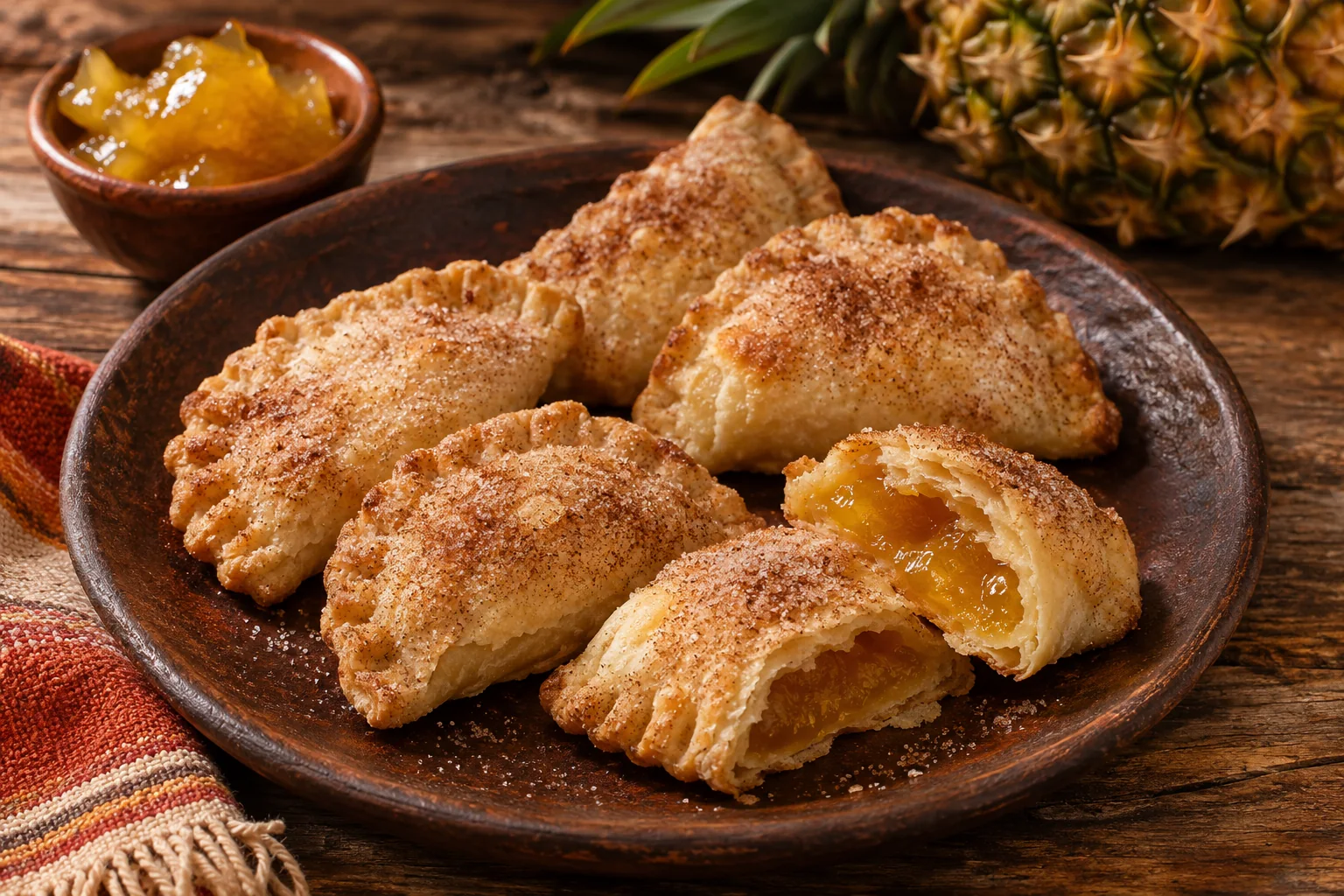
On this site, pineapple empanadas are small baked turnovers finished with cinnamon sugar. The owner’s recipe folds a flour-and-shortening pastry around pineapple preserves. Its egg, white vinegar, and water belong to that particular dough.
Larousse Cocina publishes a different pineapple empanada in Panes mexicanos: a wheat-flour and vegetable-shortening dough mixed with beer, a separate pineapple filling, an egg wash, and a cinnamon-sugar finish. It provides a documented comparison within Mexican baking. It does not turn beer into a missing ingredient in the recipe here. See the Larousse pineapple empanada.
That difference matters when choosing a recipe. A fruit-filled crescent can look familiar while the pastry has been made differently. Follow one complete formula from dough through finish, rather than borrowing its liquid, filling measure, or baking time from another version.
A remembered panadería in Nuevo Laredo
In her 2015 Texas Highways essay, Barbara Rodriguez recalls childhood visits to a favorite panadería after crossing into Nuevo Laredo. Pineapple and sweet-potato empanadas were among the pastries she remembered. Later, Mi Tierra’s bakery counter in San Antonio brought back those childhood associations. This is Rodriguez’s account of eating and remembering, rather than an origin claim for pineapple empanadas. Read Pan Dulce Dreams.
Nuevo Laredo is in Tamaulipas. It is a different city from Reynosa, and the essay’s family journey should not be reassigned to the Rio Grande Valley. The Reynosa and Tamaulipas atlas makes room for distinct places within the state; the San Antonio atlas follows the later bakery-counter connection.
Mi Tierra’s own bakery guide lists empanadas with assorted fillings and describes a pastry selection that changes daily. It supports the broader San Antonio bakery setting, but does not identify the owner’s preserves dough or guarantee a particular empanada flavor on any visit. Explore Mi Tierra’s bakery guide.
Harlingen gives the story a Valley connection
Eileen Mattei’s Harlingen report, from the December 2014 issue of Texas Highways, describes La Reyna Bakery’s pan dulce cases and names pineapple, cheese, and pumpkin empanadas. That is a dated published account of the food in Harlingen, not a claim that the dish began there or that the selection remains unchanged. Read Happy in Harlingen.
UTRGV’s Traditional Mexican American Folklore food collection separately catalogs an Empanadas folder dated 1979–1993. The title does not specify pineapple. It is a record of the wider pastry category, not evidence that the owner’s exact pineapple recipe appears there. Explore the Empanadas catalog record.
Together, the Harlingen account and university catalog give readers two different ways into the Rio Grande Valley atlas: a named bakery in reporting and a food collection held by the university. The first describes a specific filling; the second preserves a broader category. Neither supplies a single birthplace or inventor.
The preserves version on this site
The owner’s recovered 2021 card records the pastry, a brief chill, pineapple preserves, the folded seal, and a cinnamon-sugar finish. It yields 36 small empanadas as recorded. Its filling measure is about half a teaspoon per piece, not a large bakery-style mound. That small measure is part of the recipe you will cook here.
The sugar has two jobs in separate ingredient groups: a teaspoon goes into the dough, while the larger sugar measure is mixed with cinnamon for the coating. The preserves supply the filling. Putting all that sugar into the pastry, or replacing the preserves with an unmeasured fresh-fruit mixture, would change the formula.
Read the folded edge as part of the pastry’s structure. The card calls for firmly pinching it closed before baking, then coating the warm finished turnovers. Follow its chilling and baking instructions on the recipe page. The cookie-and-pastry section in Kitchen Foundations connects that method with a different preparation, pan de polvo, while Kitchen Essentials’ sugar entry distinguishes dough sugar from a finishing coat.
For sharing, the current recipe advises letting the pieces cool before arranging them together. This version contains wheat and egg; check the packaged shortening and preserves for the ingredients relevant to your table. The story adds context, while the recipe page remains the place for the complete quantities and method.
Choose the next path through the bakery table
Follow the Rio Grande Valley atlas for Harlingen and the university records. Read the Tamaulipas atlas for a wider state context that keeps Nuevo Laredo and Reynosa distinct. The San Antonio atlas continues the bakery-counter reading.
The Pan de Polvo story follows a small cut cookie through named South Texas accounts. Make its pecan-and-egg recipe if you want that separate bake. A shared cinnamon-sugar finish connects the two preparations at the table without making them the same pastry.
Sources and further reading
- Larousse Cocina, Empanada de piña — a published beer-dough comparison.
- Barbara Rodriguez, Pan Dulce Dreams, 15 December 2015 — attributed Nuevo Laredo and San Antonio memories.
- Eileen Mattei, Happy in Harlingen, December 2014 — a reported bakery selection.
- UTRGV, Empanadas folder, 1979–1993 — category-level catalog evidence.
- Mi Tierra’s bakery guide — the restaurant’s own description.
The linked recipe preserves the owner’s 2021 formula. Research reviewed 9 November 2026. Suggest a correction · Browse Food Stories.