Food Stories · Cornmeal, chile & the oven
Jalapeño Corn Muffins: Cornmeal, Chile, and the Table
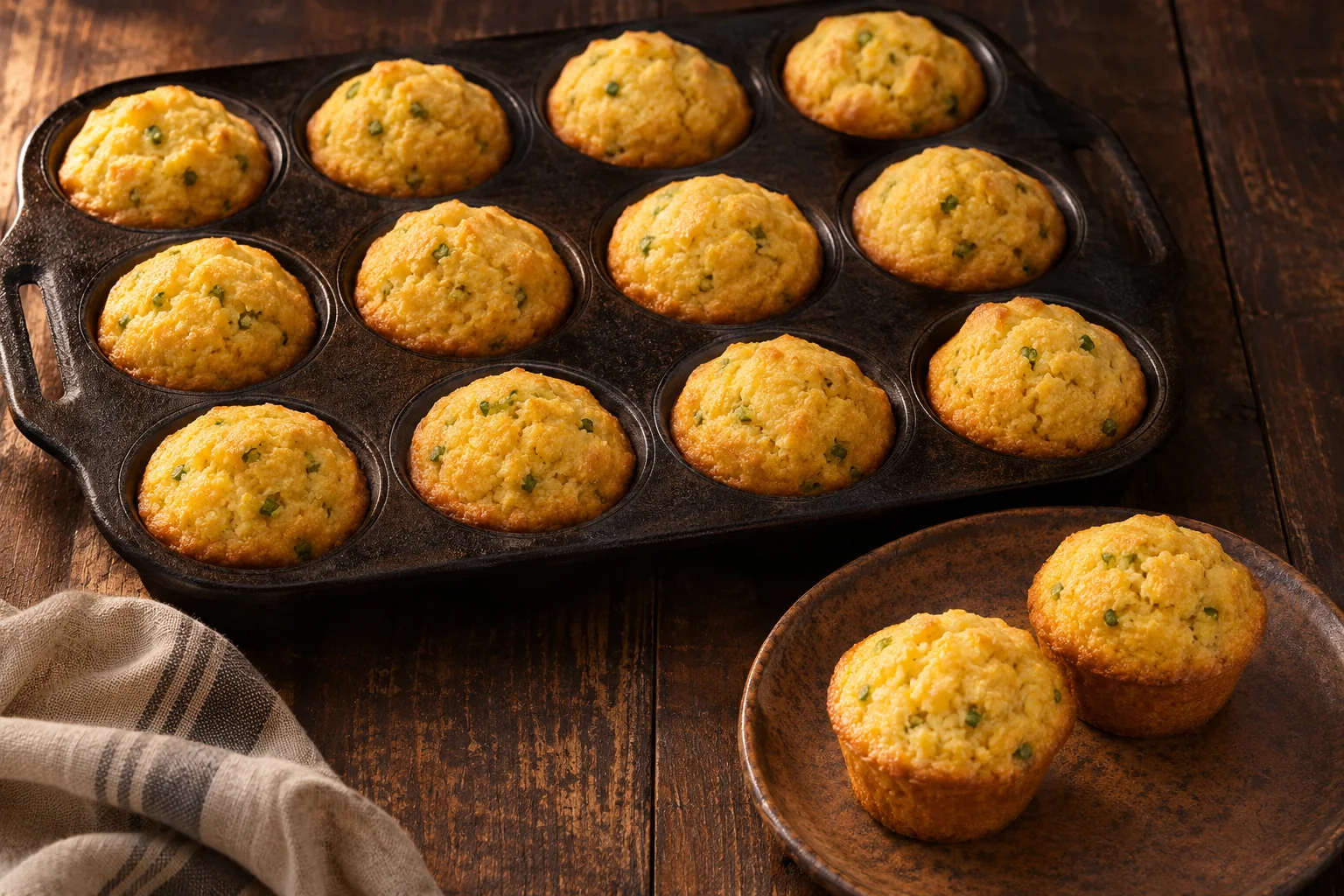
Cornmeal, sour cream, and a small measure of minced jalapeño define these muffins. Follow older written recipes, the grain and pepper, and the batter in this collection’s twelve-muffin version.
Start with the sour-cream batter
The Jalapeño Corn Muffins recipe preserves a preparation from the founder’s 2021 collection. Yellow cornmeal makes up the larger share of the dry grains, with all-purpose flour alongside it. Eggs and sour cream supply the wet mixture. The recipe calls for one to one-and-a-half teaspoons of finely minced, seeded jalapeño across twelve muffins, with fresh or canned chile already offered in the original card.
The small measure of chile matters when reading the name. This is a cornmeal muffin with jalapeño in the batter, not a direction to fill each cup with large pepper pieces. There is no cheese, corn-kernel addition, or separate pour of milk in this formula. Keep its complete ingredient list and method together when baking it.
The card supplies no named bakery, inventor, or Texas town. Its written proportions can be preserved while its wider ingredients and baking method are researched. The story of cornmeal is much older and larger than the record of this particular muffin.
Begin before the muffin tin
The Indian Pueblo Cultural Center’s “The Three Sisters” describes corn, beans, and squash grown by many Indigenous communities, with different stories among those communities. Its discussion of seeds connects growing food with memory, learning, and continuing community work. That is a useful reminder to begin a grain’s history with people and cultivation, rather than with the later baking pan.
It does not make this sour-cream-and-baking-powder muffin a Pueblo recipe. The Santa Fe & New Mexico atlas follows named food-knowledge and water sources within that regional setting. Read those traditions on their own terms, alongside the distinct written examples below.
When shopping, keep cornmeal separate in your mind from masa harina. Masienda’s guide explains the nixtamalized corn behind masa harina and distinguishes it from ground cornmeal. Our recipe names yellow cornmeal and all-purpose flour. The corn-tortilla guide offers a separate path into masa-based cooking.
Written examples show more than one corn muffin
Indiana Humanities’ 2010 survey of cornbread records reproduces a corn-muffin formula from Ediblilia, an Indianapolis church cookbook published in 1873. That example combines cornmeal, buttermilk, eggs, soda, and butter, without a listed sweetener. The same survey transcribes a 1909 Fowler Presbyterian church cookbook’s corn-meal muffins, which include wheat flour, milk, baking powder, sugar, and butter.
These are comparisons consulted through the institution’s transcriptions. They document different written combinations; they do not identify the first corn muffin or trace the founder’s recipe to either Indiana book. The change from one formula to another also cautions against reducing every corn bread to a fixed rule about sweetness, dairy, or flour.
A Mexican regional comparison appears in the Instituto Sonorense de Cultura’s Cocina sonorense (2007), p. 291. Its “Pan de Maíz” combines corn and wheat flours with sugar, baking powder, milk, egg, and fat. It is a separate baked preparation, not this jalapeño muffin or proof of its origin.
Baking powder belongs to a later pantry
The American Chemical Society’s landmark history follows nineteenth-century chemical leavening, including acid-and-bicarbonate combinations and Eben Horsford’s work. The gas released in moistened mixtures helps lift quick-baked foods. That ingredient history is one reason to distinguish a modern baking-powder muffin from older corn preparations made by other methods.
Our recipe specifies baking powder. The presence of sour cream does not turn that instruction into a call for baking soda. Use the named leavener and amount when following the complete recipe; the historical examples are there to explain differences, not to create a combined formula.
The pepper has a variable heat of its own
New Mexico State University’s chile-growing guide describes jalapeños as thick-fleshed pods that change from green to red as they mature. It explains that pungency comes from capsaicinoids associated with glands around the placenta inside the fruit. Seeds are not where that pungency is produced. Growing conditions can also affect heat.
For the cook, the practical point is modest: one teaspoon of one jalapeño need not have precisely the same heat as a teaspoon from another. The written recipe already supplies a measured range and calls for seeding and fine mincing. Follow that preparation, and consult the jalapeño entry for the pepper as an ingredient. A muffin’s name alone cannot promise an identical heat level in every batch.
Fold the batter and keep the recipe’s cues
Mississippi State University Extension’s quick-bread guide explains chemical leaveners and the muffin method: combine wet and dry ingredients just enough to blend. Its examples also distinguish plain cornmeal and flour from self-rising products that already include leavening. These are general baking principles, while the recipe here supplies the exact ingredients and baking conditions.
The founder’s card specifically notes a very stiff batter. Beat the eggs and sour cream smooth before adding that mixture to the dry ingredients, then fold just until mixed. The complete recipe calls for 350°F, twenty to twenty-five minutes in a twelve-cup pan, a center without wet batter, and five minutes of cooling in the pan. Those are the cues for this version. A thinner batter or another cookbook’s hotter oven belongs to its own preparation.
Let the muffin be one part of the meal
The recipe suggests a warm muffin beside chile or beans. Keep it separate from a wet serving dish until eating so you can choose each bite. Refried Beans supplies one complete accompaniment; its food story follows the bean preparation beyond the muffin plate.
For a different cornmeal-and-wheat construction, read the Crispy Sugar Tortilla story and its griddle method. The San Antonio atlas opens a wider Tex-Mex food landscape through documented markets, cooks, and restaurants. It provides context for exploring the table, rather than a claim that this muffin was invented or served by any particular restaurant there.
Sources and further reading
- The founder’s 2021 card, presented in the complete Jalapeño Corn Muffins recipe, supplies the formula and cooking directions.
- Indian Pueblo Cultural Center, “The Three Sisters,” September 3, 2021 — grain, seeds, and continuing community knowledge.
- Indiana Humanities, “Cornbread History,” August 3, 2010 — transcriptions of the 1873 and 1909 cookbook examples discussed here.
- Cocina sonorense, fifth edition, Instituto Sonorense de Cultura, 2007, p. 291 — a separate baked corn-bread comparison.
- American Chemical Society, “Development of Baking Powder” — chemical-leavening history.
- Stephanie Walker and Paul Bosland, NMSU Guide H-240 — jalapeño characteristics and variable pungency.
- Mississippi State University Extension, “Fun with Quick Breads,” P1576 — mixing and ingredient distinctions.
- Masienda, “A Guide to Masa Harina” — corn-product distinctions.
Bake the muffins · Browse Food Stories · Send a correction or historical source