Food Stories · Michoacán & the Lower Valley table
Carnitas: Michoacán and the Lower Valley Table
Follow the pork, the cooking vessel, and the regional name, then return to our Lower Valley Carnitas: tender shoulder with browned edges and a little milk in the finish.
A good place to begin is the recipe you can cook here. It uses boneless pork shoulder, a covered cooking stage, and an uncovered milk finish. Its source calls it “Lower Valley Carnitas.” That particular identity matters when we set it beside the carnitas associated with Michoacán: the shared name opens a conversation between kitchens, while each method keeps its own details.
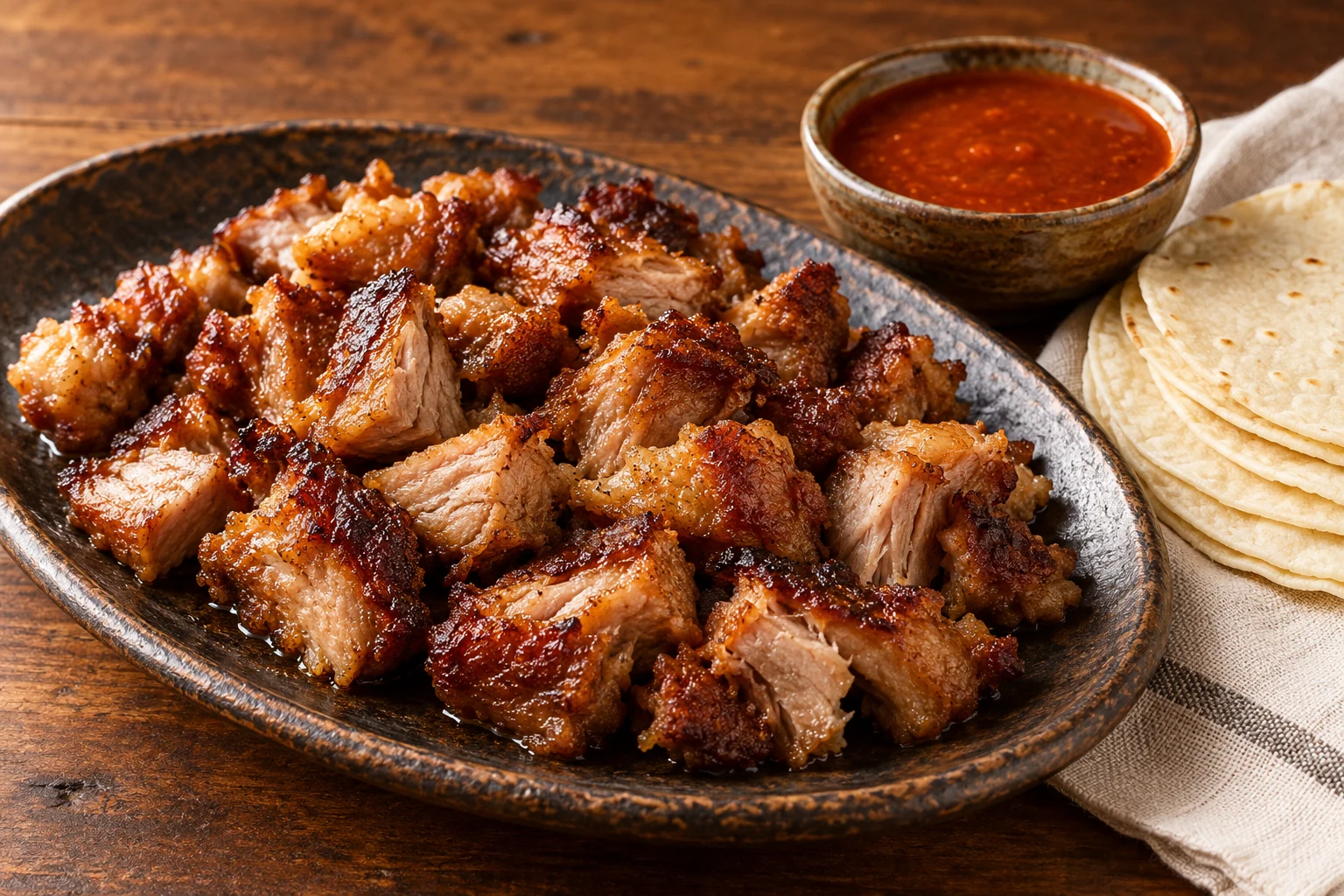
The name tells you less than the cut
Larousse’s culinary dictionary describes carnitas as pieces of pork fried in pork fat and explains that different parts of the animal can be used. Its entry uses maciza for boneless meat from the loin or leg, and surtida for a mixed order that may include ribs, skin, and other cuts. These words help a diner understand the choice at a carnitas counter.
Our recipe specifies shoulder. You do not need to turn it into an assortment of cuts to follow the tradition’s wider story. Naming the cut makes the home method useful: the directions are written for that meat, in bite-size pieces, with the cooking sequence stated on the recipe page. A photograph of a mixed order and a recipe for boneless shoulder answer different needs.
A regional identity with several centers
Michoacán has a strong, documented association with carnitas. The municipal profile of Quiroga includes them among its characteristic foods, alongside turkey barbacoa, charales, and corn preparations such as corundas. Read that list as a window into a local table: even a town closely associated with carnitas has more than one food story.
A 2025 report from Michoacán’s economic-development department names Quiroga, Tacámbaro, Huandacareo, Uruapan, and Morelia among the places associated with the preparation. It describes slow cooking in lard and allows for copper or stainless-steel cazos, or cooking pots. The contemporary record gives us several places and a shared cooking practice, rather than one vessel or one town standing for every cook.
These sources establish regional importance. They do not supply a dated record of a first cook or a first serving. The Michoacán atlas follows the wider setting through Lake Pátzcuaro, Purépecha history, corn foods, copper work, and community knowledge.
Compare the cooking sequence, not just the color
In his published Michoacán-style carnitas, Rick Bayless cooks large pieces of pork in a generous quantity of fat until tender, with a separate hotter finish available for more browning. The recipe is one documented approach. It helps explain why the tenderness stage and the browned exterior can be treated as distinct parts of the work.
A different recipe published by Larousse, labeled Tlaxcala, begins with pork, orange juice, and herbs in a saucepan. As the liquid evaporates, the meat browns in its fat. Each publication gives its own cooking sequence and seasoning.
For your own cooking, the useful question is where the tenderness develops and when browning happens. Read those stages in the recipe you have chosen. A darker surface alone does not tell you which cut, seasoning, or method produced it, and copying another cook’s final color is less helpful than following the cues for your pan.
Why our version is called Lower Valley Carnitas
The source identified on our Carnitas page is Cheryl Alters Jamison and Bill Jamison’s The Border Cookbook, page 228, “Lower Valley Carnitas,” supplied by the site owner. The published recipe credits the milk technique to a lower Rio Grande Valley preparation. That is the source of this version’s regional description.
Its seasoning combines garlic, toasted cumin, oregano, pepper, and dried chile. The pork first browns, then cooks gently under a cover. Milk enters near the end, when the cover comes off and the pan returns to a browning finish. The recipe offers lard or vegetable shortening and warm corn or flour tortillas for serving. Follow its quantities and instructions for the complete method.
Milk is a feature of this source; the published examples above show the variety of other finishes. The Rio Grande Valley atlas gives this border preparation a regional setting; the Michoacán article supplies a separate Mexican food landscape. The cookbook attribution does not document a specific journey between the two.
Give the pork a place at the table
Begin with the tortilla and sauce choices already offered in the recipe. Our corn-tortilla guide and Homemade Flour Tortillas explain two ways to bring the pork to the table. Choose a sauce through Restaurant-Style Salsas, and pass it separately so diners can add the heat they want.
If you are building a larger meal, Refried Beans and Mexican Rice are separate preparations you can plan alongside it. These are serving connections within our collection, rather than a claim that every Michoacán carnitas table includes those exact dishes.
There is also a useful comparison close to home. The site’s Beef-Cheek Barbacoa and its Valley story follow another cut and cooking tradition. Carnitas keeps the pork’s tender interior and browned edges in view; the barbacoa page follows the texture of cheek meat. Knowing which dish you want helps you choose the right recipe.
Sources and further reading
- Larousse, “Carnitas” dictionary entry — pork cuts and the terms maciza and surtida.
- Municipality of Quiroga — the town’s food and craft profile.
- Michoacán economic-development department, August 26, 2025 — regional centers, cooking vessels, and the preparation described in its report.
- Rick Bayless, “Michoacan-Style Pork Carnitas”, Mexico—One Plate at a Time, season 6 — a published cooking-method comparison.
- Larousse, “Carnitas” recipe, from Larousse de la cocina mexicana — the orange-juice preparation labeled Tlaxcala.
- Cheryl Alters Jamison and Bill Jamison, The Border Cookbook, p. 228 — the owner-supplied source identified on our Lower Valley recipe page.
Cook our Lower Valley Carnitas, explore Michoacán and the Rio Grande Valley, or send a correction with a source.