The Border Table
Carnitas
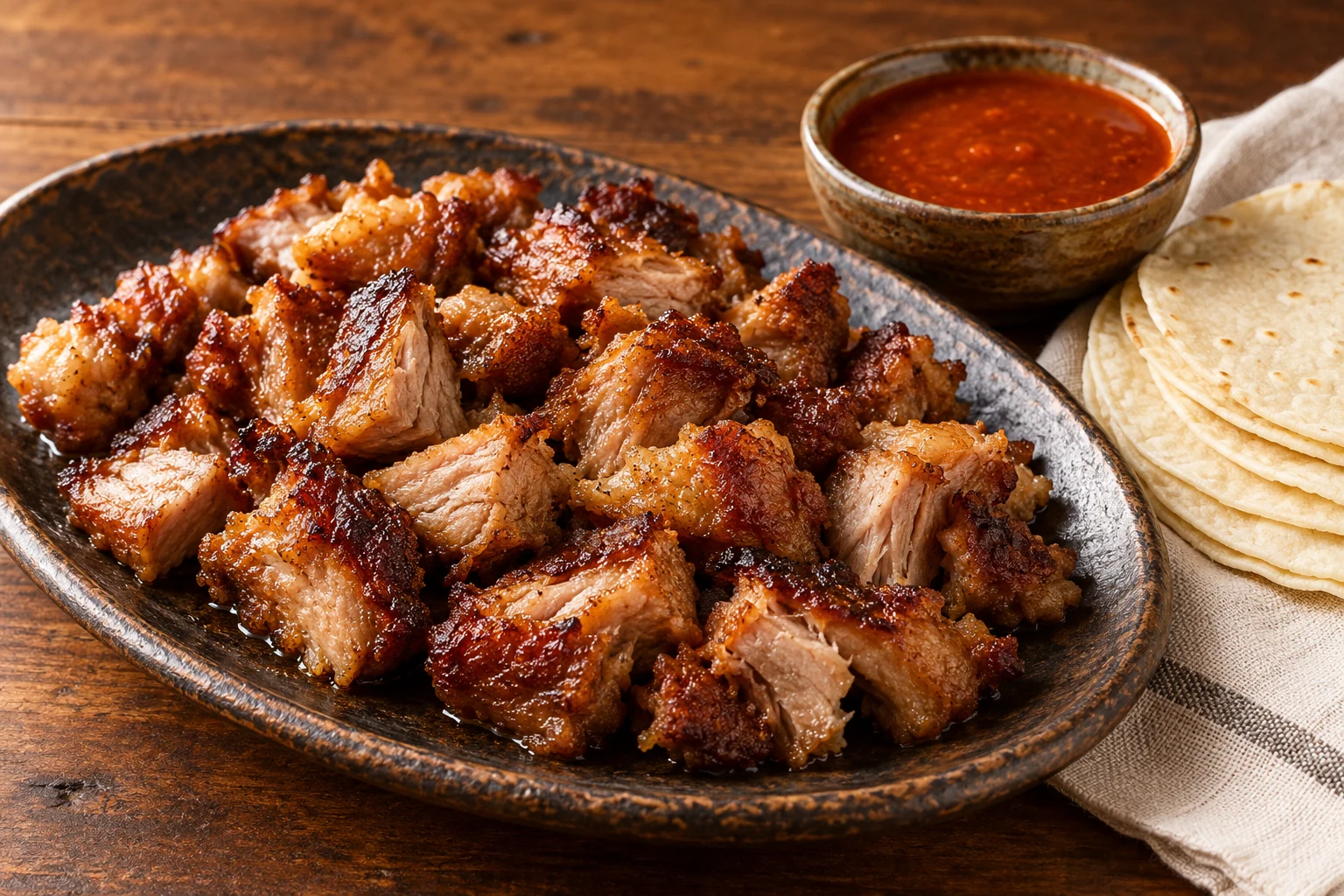
Tender pork shoulder with browned, lightly crisp edges, ready for warm tortillas and salsa.
Lower Valley Carnitas · Adapted from Cheryl Alters Jamison and Bill Jamison’s The Border Cookbook.
Make the carnitas
- Season the pork. Crush the garlic, toasted cumin, oregano, salt, pepper, and dried chiles together in a mortar or small food processor. Toss the seasoning thoroughly with the pork. Let stand for 20 to 30 minutes while you prepare the pan; do not leave raw pork out for an extended period.
- Brown the pieces. Melt the lard in a heavy Dutch oven or deep, heavy skillet over medium-high heat. Add the seasoned pork and turn it until the surfaces begin to brown. Work in batches if the pan is crowded.
- Cook gently. Lower the heat until the pork cooks at a very gentle simmer. Cover and cook for about 1 hour, stirring every 20 minutes and adjusting the heat so the pan does not scorch. The pork should become tender and release some cooking juices.
- Finish with milk. Uncover the pan and stir in the milk. Increase to medium-high heat. Cook for roughly 15 minutes, stirring and scraping the browned bits from the pan, until most of the liquid has evaporated and the pork has browned, lightly crisp edges while remaining moist inside. Watch closely near the end.
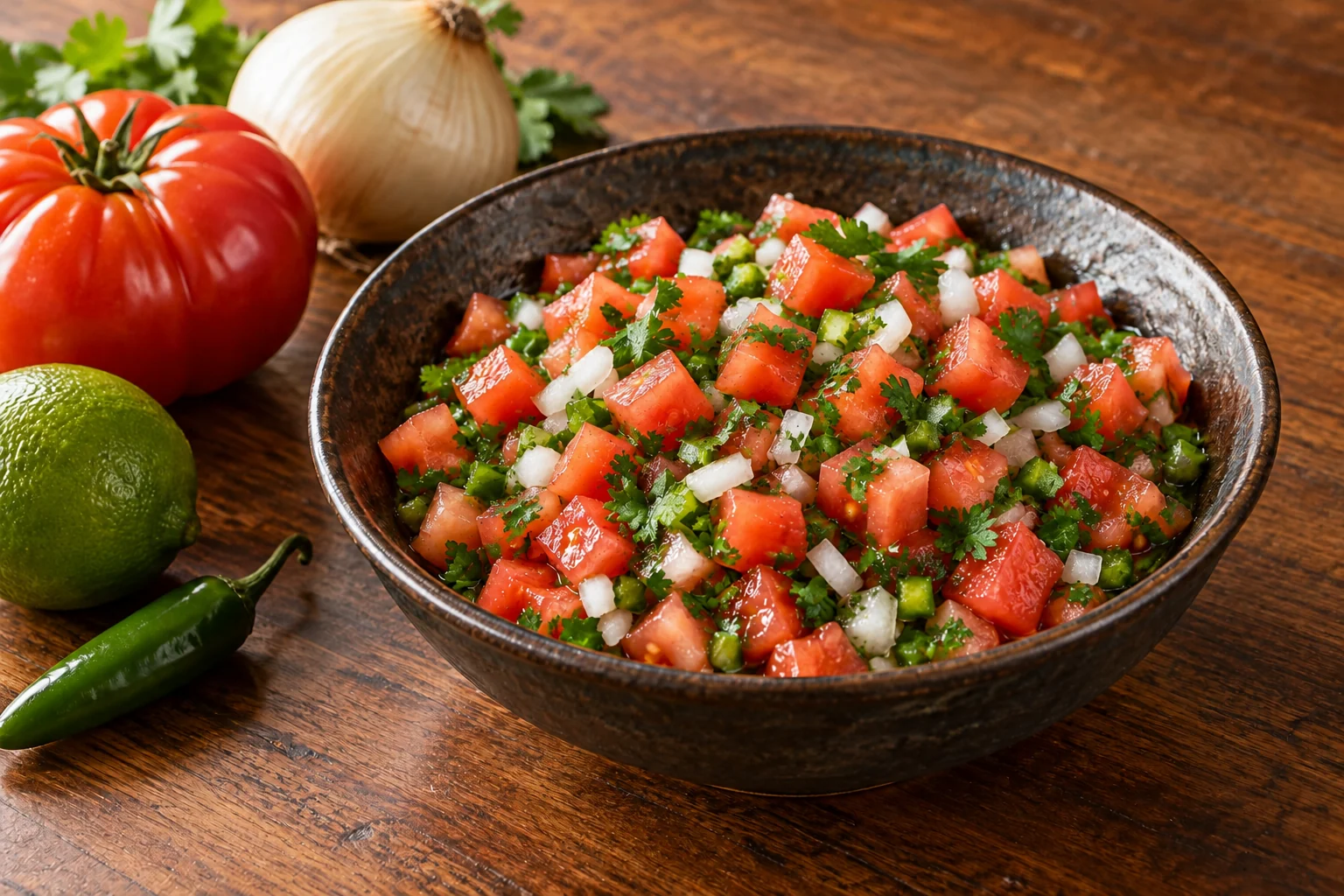
- Serve. Lift the carnitas from the pan and let excess fat drain briefly. Serve hot with warm corn or flour tortillas and salsa or hot sauce on the side.
If the pan is cooking too fast
During the covered stage, keep the heat low enough that the pork simmers gently rather than frying hard. During the uncovered finish, stir more frequently as the liquid disappears; the browned edges should not turn bitter or black. The timing is a guide, not a substitute for watching the pan.
Serve now or save for later
Serve in warm tortillas with salsa. Refrigerate leftovers promptly in shallow containers; use within 3 to 4 days or freeze. Reheat leftovers to 165°F (74°C). USDA leftover-safety guidance.
Understand it
Why is the milk added near the end?
The source recipe cooks the seasoned pork gently first, then adds a little milk during the uncovered finish. As the liquid reduces, the pork can brown at the edges without losing the tenderness developed during the covered stage. Watch the pan closely once it looks nearly dry.
At your table
Choose the tortilla
The source offers warm corn or flour tortillas. The illustration shows thin white-corn tortillas; choose either at the table. Pick a sauce from Restaurant-Style Salsas and serve it separately so each person can set the heat.
Source and method
Where this version comes from
Adapted from “Lower Valley Carnitas” in Cheryl Alters Jamison and Bill Jamison’s The Border Cookbook, page 228. The covered cooking stage makes the pork tender before the milk finish and browning. The book associates that milk technique with a lower Rio Grande Valley preparation.
- The Border Cookbook listing — book attribution.
- USDA FSIS — leftover storage and reheating guidance.
Adapted 8 October 2026. Tell us if something needs correcting.
Keep exploring
Pork shoulder needs time to become tender before its edges are browned. It is a different cut and method from the site’s quick-grilled beef.
Compare cuts and cooking methods · Choose a tortilla and sides