Food Stories · The Rio Grande Valley table
Beef-Cheek Barbacoa in the Rio Grande Valley
Overnight pit cooking, tender cachete, and warm tortillas: explore a documented Brownsville tradition and the founder’s distinct beef-cheek home recipe.
At The Border Table, this barbacoa begins with a named cut: beef cheek. It becomes tender enough to pull into fine fibers and small, irregular pieces, with a little of its own cooking liquid keeping the meat moist. The complete Beef-Cheek Barbacoa recipe gives the founder’s slow-cooker method. Its regional story leads to a different scale of cooking: whole heads in an overnight pit.
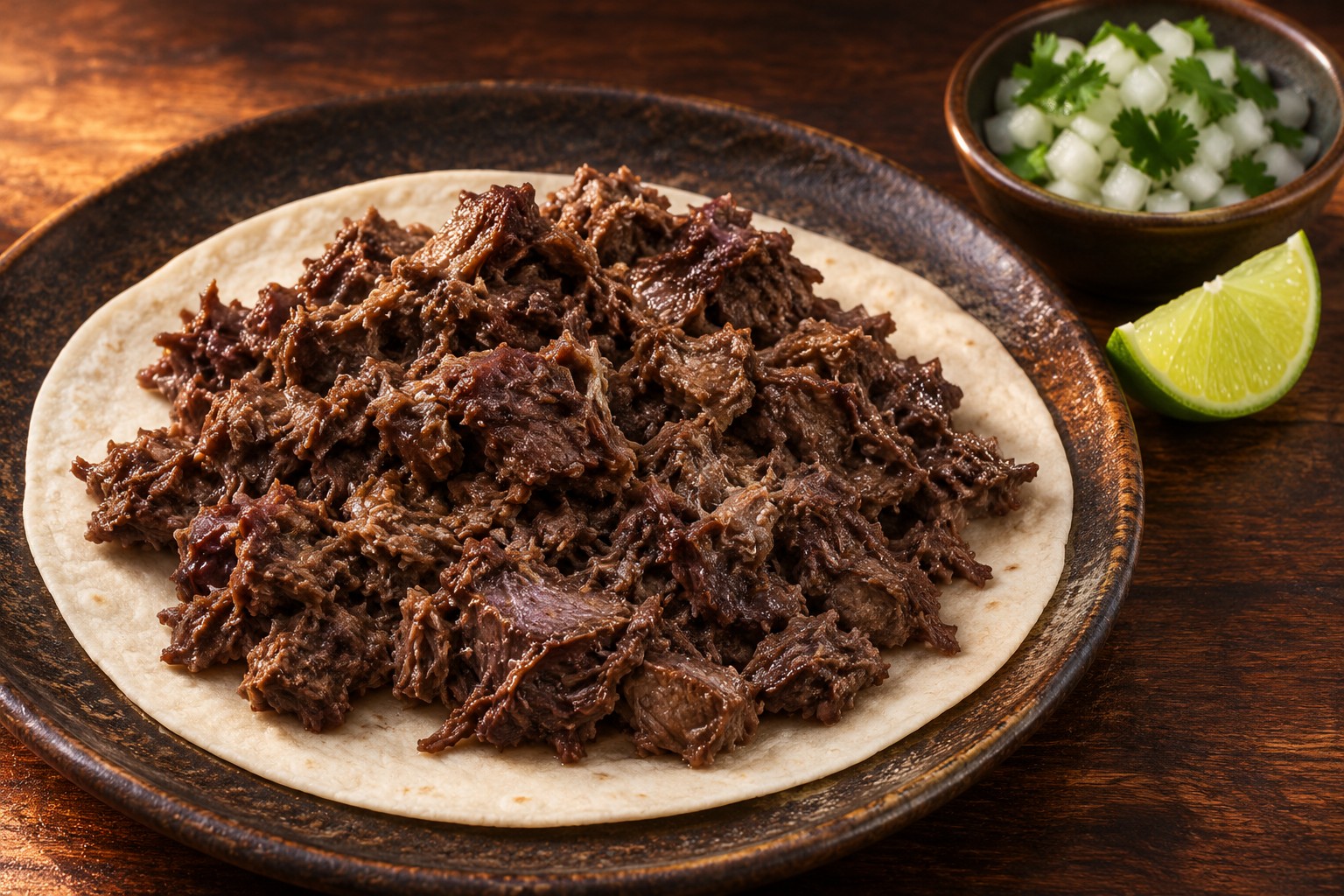
A favorite at the Valley table
The founder has identified Beef-Cheek Barbacoa and Carne Guisada as two of his favorites. In his account of Valley barbacoa, cheek meat cooked overnight in a covered pit is the reference point. His published home recipe starts with that specific cut and uses a slow cooker. The cheek’s moist, fine texture remains central to the dish he wants at his table.
The Rio Grande Valley atlas puts that memory beside the region’s ranching, farming, and cross-border connections. UTSA Special Collections’ regional cuisine overview describes continuing culinary ties between Texas and northern Mexico, including Tamaulipas. That wider relationship helps situate the meal without assigning one birthplace to every preparation called barbacoa.
What a Brownsville pit account records
In a June 2020 visit and interview at Vera’s Backyard Bar-B-Que, Shane McAuliffe followed Armando Vera’s whole-head process. The report describes a mesquite fire, cleaned cow heads wrapped in foil, and overnight cooking in the ground. In the kitchen afterward, Vera separated the cooked head into different meats for customers.
This is a record of a named cook and business in Brownsville. It makes the relationship between a covered pit, overnight work, and a morning meal concrete. The preparation involves the whole head; the cheek is one of the meats recovered from it.
Chet Garner’s August 2021 account offers a second firsthand visit. He described an underground pit and reported a cooking period of ten to twelve hours. His menu choices included cheek, tongue, and other head meats. These dated accounts document a local practice; the published home recipe has its own equipment and sequence.
Why asking for cachete matters
Cachete means cheek in this culinary setting. In McAuliffe’s interview, Vera explained cheek as the meat customers commonly receive when asking for barbacoa, while describing mixta as other meats remaining after named parts are separated. Garner’s visit likewise records cheek as a distinct choice.
That distinction is useful when you shop or read a menu. A whole-head preparation can yield several textures. A cheek-only recipe starts with one specific cut. Our beef-cheek guide and the recipe’s ingredient list help you keep that identity clear before you begin cooking.
A familiar word with different regional tables
The Diccionario del español de México describes barbacoa through a lamb-or-goat preparation cooked in a heated earth pit with maguey leaves. Hidalgo’s state cultural collection also names barbacoa de borrego among its foods. Those examples help explain why the word alone does not identify the Valley’s cheek preparation.
Chef and writer Adán Medrano’s own family account describes his father preparing an earth oven in San Antonio, with relatives helping and his mother contributing seasonings. He then explains an indoor-oven adaptation for his present kitchen, explicitly acknowledging its difference in smoke. His recollection shows both the family work behind the meal and a cook’s deliberate adjustment of equipment.
The cut, the place, and the cooking method therefore belong together in the description. On this site, Beef-Cheek Barbacoa identifies the founder’s cheek-only slow-cooker recipe. The Brownsville reports and Medrano’s family account remain their own preparations.
Keep the home method and the meat’s texture together
The founder’s recipe comes from his 2021 collection. It uses beef cheek, garlic, bay, onion, and salt, with no added water. The meat cooks in larger pieces and is pulled only after it becomes tender. Follow the recipe page for the amounts, cooker guidance, timing, and storage instructions.
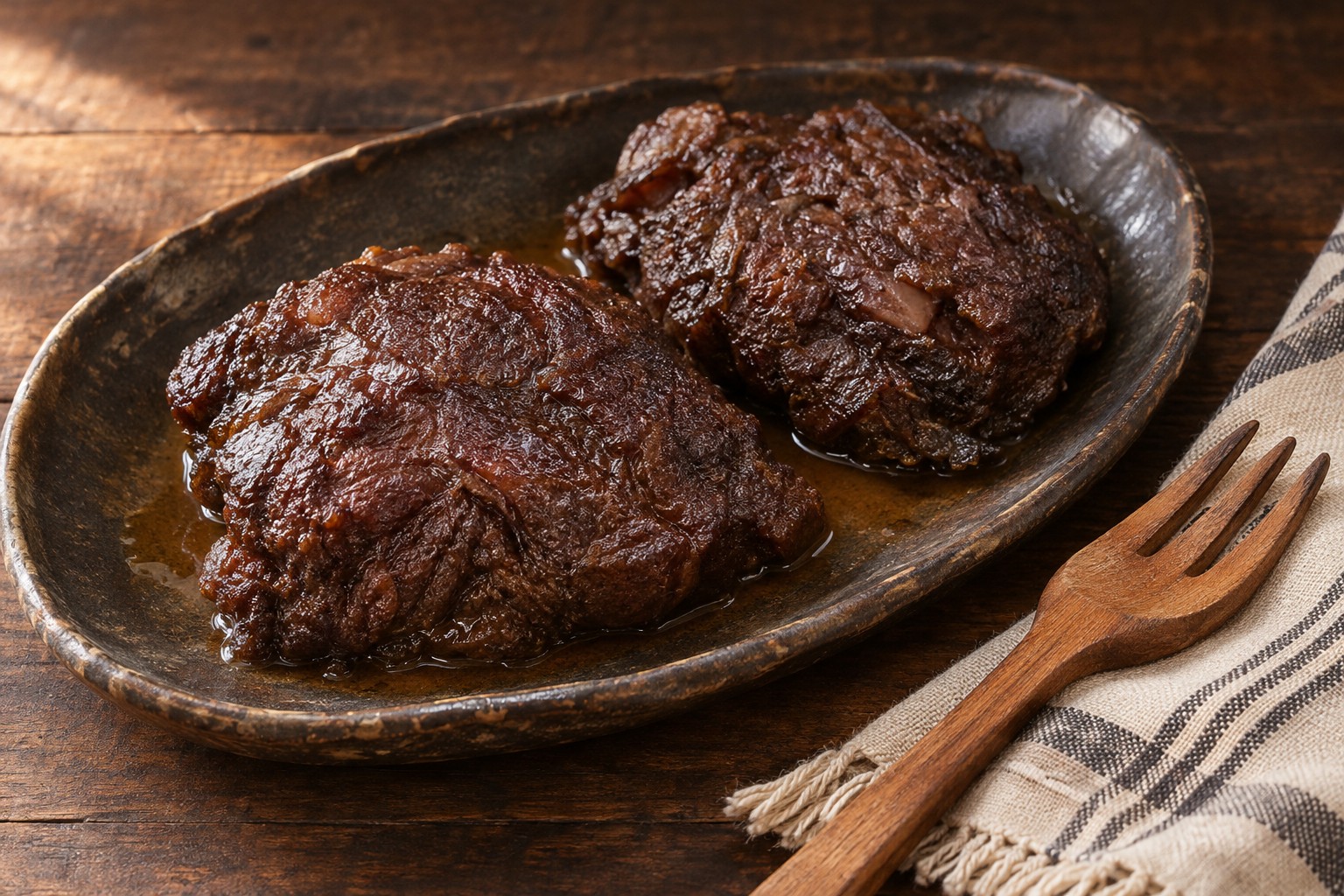
The before-shredding illustration shows the cooked cheek pieces at that intermediate stage. The finished taco illustration shows the intended pulled texture. Keeping some soft pieces among the fine fibers, then folding in a little cooking liquid as directed, preserves the character of this version.
For another preparation from the same founder’s table, read the Carne Guisada story. That recipe uses diced chuck in a flour-thickened gravy. Its cubes and sauce call for a different cooking sequence from the pulled cheek.
Let each person finish a taco
Set out warm tortillas, chopped white onion, cilantro, and the red or green salsa specified as table accompaniments on the recipe page. The Homemade Flour Tortillas recipe offers the site’s butter variation; the corn tortilla guide explains the other wrapper choice. Keep a warm stack covered while people serve themselves.
Salsa del Norte and Chipotle–Tomatillo Salsa each have their own complete method. Serving them separately lets everyone choose how much to add. Continue through Reynosa and Tamaulipas for another part of the border setting, or return to the Valley’s Brownsville section.
Read the accounts behind the story
- The founder’s account of Valley barbacoa and his published 2021 recipe — personal and cooking context.
- Shane McAuliffe, The Texas Bucket List, June 21, 2020 — Armando Vera’s whole-head pit process and separation of head meats.
- Chet Garner, “Head Honcho,” August 2021 — a firsthand Brownsville visit.
- Adán Medrano, “Barbacoa Al Horno” — an attributed family account and a clearly described home adaptation.
- El Colegio de México, barbacoa and Secretaría de Cultura de Hidalgo, Sabores de Hidalgo — examples of another regional use of the name.
- UTSA Special Collections, Tex-Mex: A Regional Cuisine — Texas–northern Mexico culinary connections.
The restaurant visits describe their dates of reporting. This story does not establish a sole surviving pit, a universal seasoning, or the first barbacoa cook.
Cook Beef-Cheek Barbacoa · Explore the Valley · More Food Stories · Suggest a correction