Culinary Atlas · Mexico’s northwest border
Tijuana and Baja California: A Border Table in Motion
Follow a border city through its older landscape, living languages, and changing kitchens. Birria provides a delicious way in; the people and places around it make the story larger.
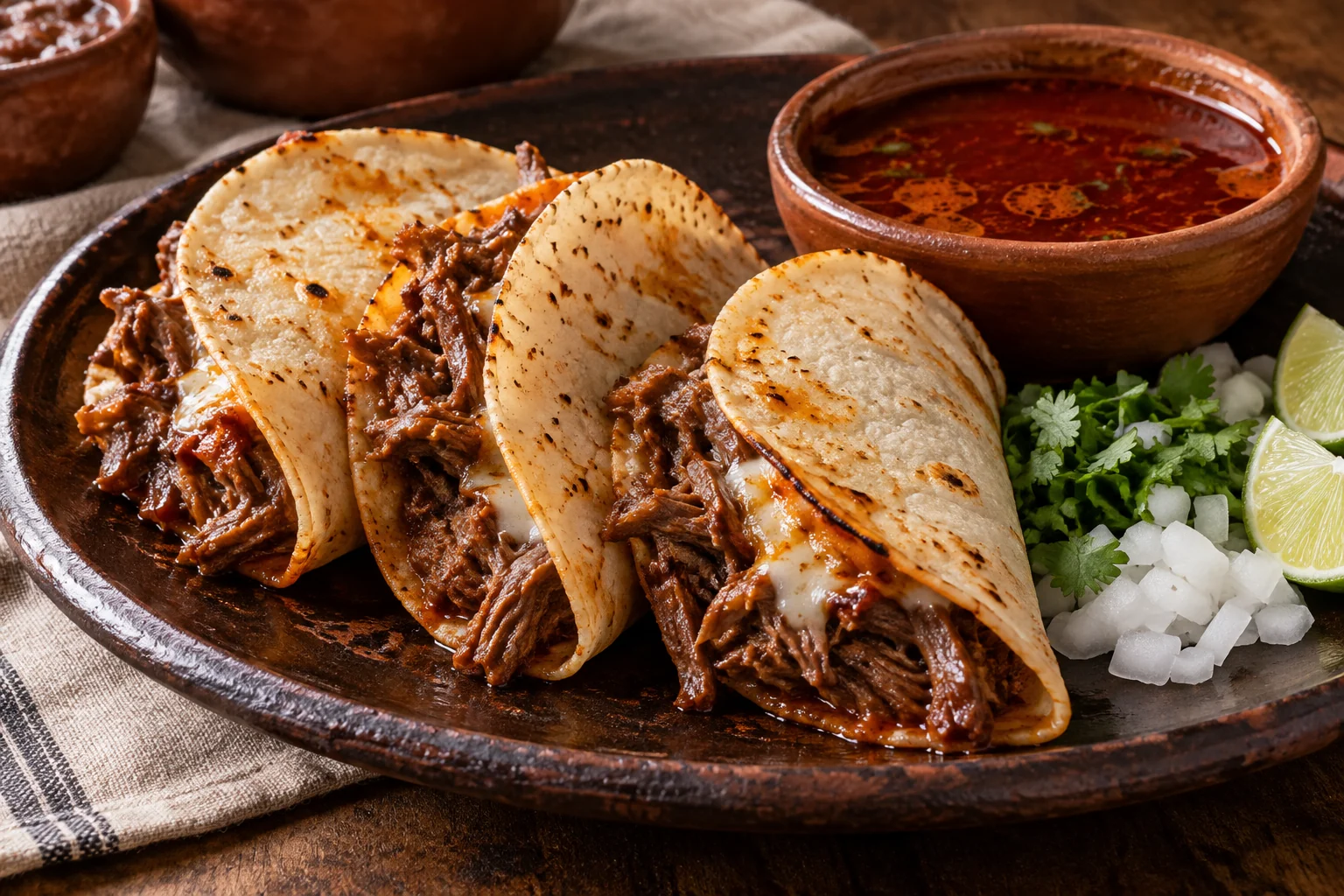
A bowl of beef birria and a crisp cheese-filled taco are connected meals, with different work behind them. Begin with our Birria and Quesabirria story, then use this guide to place Tijuana within Baja California. Continue to Jalisco for the regional birria tradition and Michoacán for another family and cultural connection.
The border changed the valley’s position
Tijuana sits at Mexico’s northwestern border with the United States, in the state of Baja California. The city and the state are different scales: a Tijuana taco cannot stand for every coastal, inland, Indigenous, or migrant kitchen in Baja California. This atlas follows one city closely while keeping that wider setting in view.
The Ayuntamiento’s Historia Mínima explains how the boundary drawn in 1848 placed the Tijuana valley immediately beside the international line. It dates the conventional founding celebration to July 11, 1889, when a legal agreement laid out the basis for urban development. The account also recognizes earlier rural and temporary settlements.
The same municipal history describes increasing migration from Mexico’s interior during the 1940s, alongside employment and cross-border opportunities. That chronology gives the city’s food stories a setting. The date commemorating an urban plan is not the beginning of people living, working, or eating in the landscape.
Living languages belong in the picture
In an October 2022 announcement, the Centro Cultural Tijuana introduced Kumiai language teacher Yolanda Meza Calles, born in Juntas de Nejí, Tecate. It described her work teaching within her community and at institutions including Cecut and San Diego State University. The announcement also recorded Tijuana’s May 2022 recognition as a multilingual city.
Meza Calles’s work brings a named person and ongoing teaching into a place too often introduced only through its border crossing. Language, community, and knowledge travel between generations and institutions. A culinary map becomes more useful when it leaves room for those lives as well as famous restaurant dishes.
This is a cultural connection, rather than an origin claim for quesabirria. The city’s Kumiai context and the later history of beef-birria businesses need their own evidence. Keeping both visible lets the atlas recognize an older landscape without assigning every modern taco to it.
Baja California has many kitchens
The state Culture Secretariat’s heritage account records the August 8, 2014 declaration recognizing La Cocina de Baja California. Its description emphasizes differences between municipalities, ingredients obtained from land and sea, Indigenous knowledge, and migration within Mexico and from abroad. It names Chinese, Japanese, Spanish, Italian, and Russian contributions within that changing landscape.
Read that recognition as an invitation to look more closely, rather than a single statewide menu. Ingredients, techniques, and the people preparing them help explain a meal. A coastal product and a border-city stew can belong to the same state while telling different stories about work, supply, and taste.
For this collection, birria is the route into Tijuana. It is one route among many. The heritage account’s wider view helps keep a popular taco in proportion: the dish opens a door to the region; it does not replace the region’s many kitchens.
People carry more than a recipe
A state Culture Secretariat report from October 2026 describes traditional cooks teaching gastronomy students at Conalep Tijuana II, in a gathering organized with El Colegio de la Frontera Norte. It names Antonia Torres of the Cucapá people, Beatriz Haros Farlow of the Kiliwa people, and Kumiai cooks Norma Meza and Rosaura Carrillo among the participants.
The report lists preparations including rabbit with sage, acorn coffee, toasted-corn water, biznaga-flower quesadillas, and handmade flour tortillas. It does not assign every dish to an individual cook. The details matter because they put people, ingredients, and teaching beside the broad idea of culinary heritage. Here, knowledge was shared by preparing food with students, rather than only describing a finished plate.
For a food reader, the useful questions are concrete. Who cooks this version? Where did the family learn it? What changed when it became a business or reached a different audience? Asking those questions can reveal more than attaching a single regional label to the finished plate.
One pot connects several places
The Tijuana chapter of our birria story follows food writer Bill Esparza’s attributed account of beef birria and the later taco trade. The family-kitchen chapter follows the Montano family’s Michoacán connection and its quesabirria business in Richmond, California. Read the named accounts together; they describe related paths, rather than one formula moving unchanged between cities.
Jalisco’s birria tradition gives the dish an important regional home. The Michoacán connection follows a particular family preparation. Tijuana belongs in the account of beef birria and changing taco service. Geography helps when it keeps those relationships visible instead of forcing them into a single straight line.
Bring the route back to your kitchen
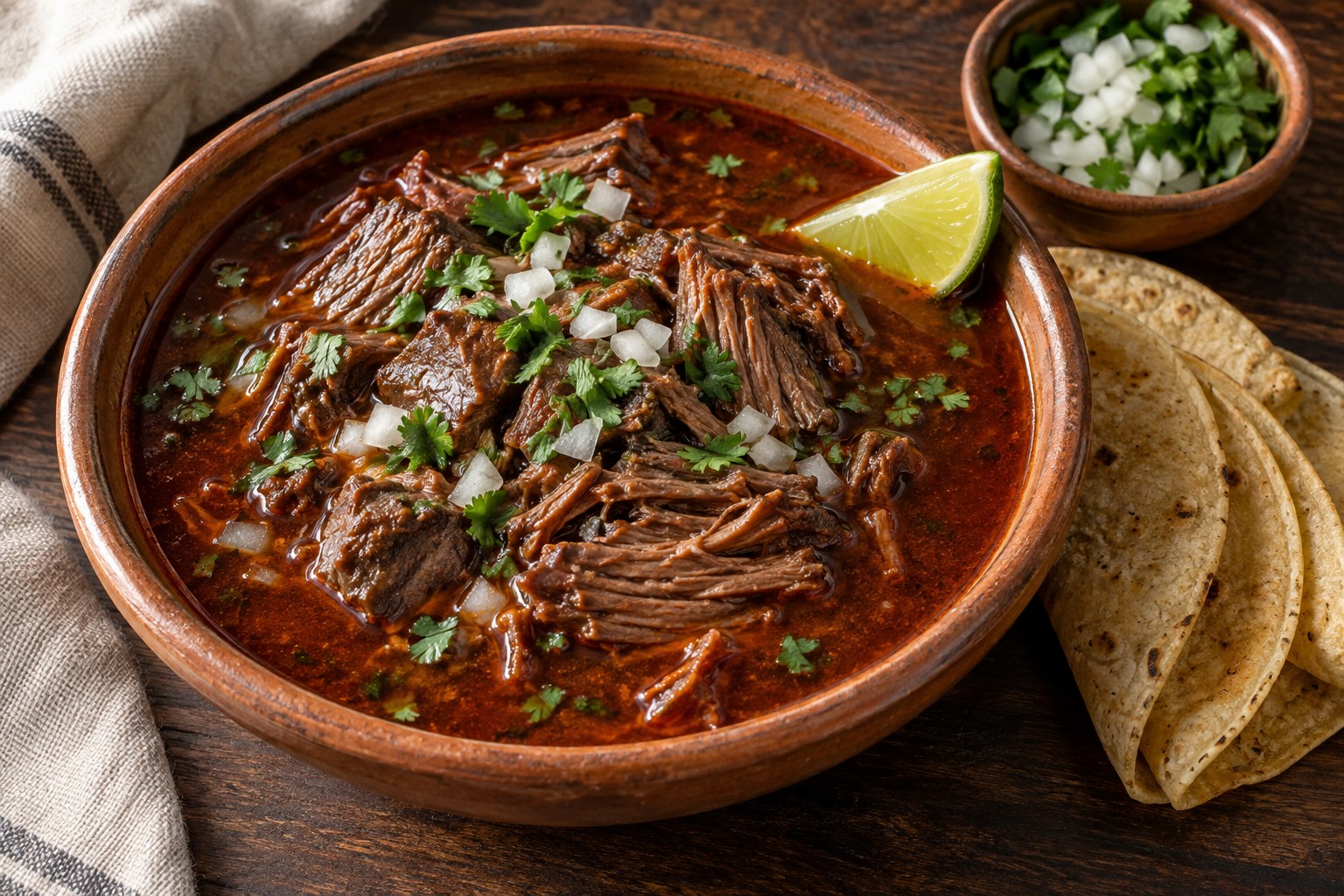
Birria de Res
Make the beef and red-chile consommé from the beginning. The complete recipe gives the quantities, adobo, covered braise, and serving instructions.
Cook it · Finish on the comalBirria Tacos and Quesabirria
Start with cooked birria and choose the plain taco or cheese-filled finish. Its timing covers this final stage, rather than the earlier braise.
At the ingredient shelf, compare the guajillo and ancho guides with the chiles named in the recipe. The corn tortilla guide helps you recognize the wrapper. Follow each complete recipe’s own amounts and method when you cook.
Then return to the full birria story for the cooks and their accounts, or continue through Jalisco and Michoacán. Each place adds a different part of the meal’s context.
Sources and further reading
- Ayuntamiento de Tijuana, Historia Mínima — the boundary, urban founding convention, and twentieth-century migration.
- Secretaría de Cultura / Cecut, October 25, 2022 — Yolanda Meza Calles and Kumiai language teaching.
- Secretaría de Cultura de Baja California, La Cocina de Baja California — the 2014 recognition and the state’s diverse food traditions.
- Secretaría de Cultura de Baja California, October 28, 2026 — the traditional cooks’ gathering at Conalep Tijuana II.
- Birria and Quesabirria story bibliography — the separate Jalisco, Tuxpan, Tijuana, and Montano-family accounts behind the food route.
Explore the Culinary Atlas · Browse Food Stories · Suggest a correction