Kitchen Essentials · Chiles
Guajillo chiles
A long red dried chile for sauces and broths. Learn how to recognize it, prepare its skin, and keep its role separate from the other chiles in a blend.
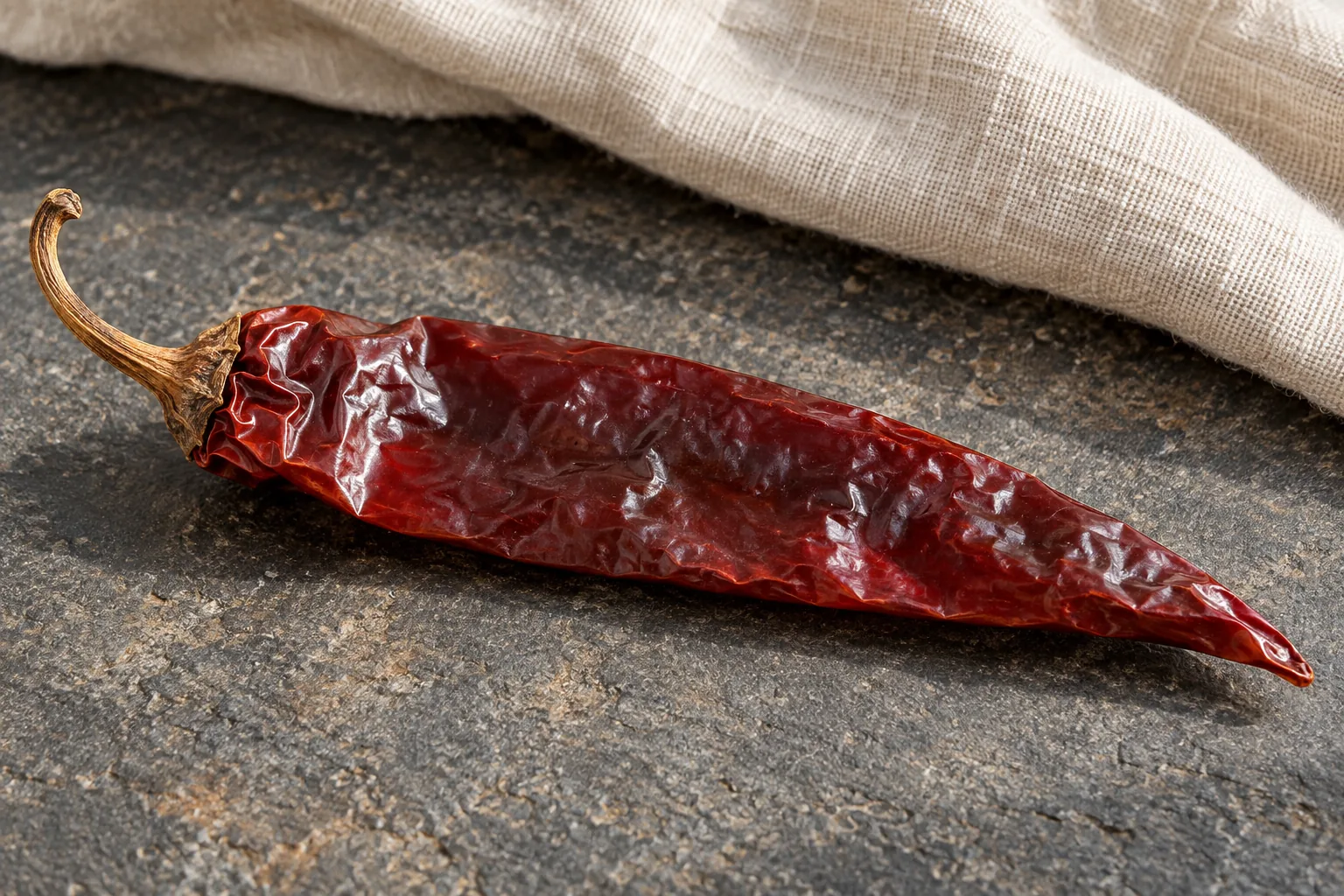
Recognize the name on the bag
Guajillo is the dried form of mirasol. The University of California’s fresh-to-dried chile guide distinguishes that pairing from poblano–ancho and jalapeño–chipotle. A fresh pepper, a whole dried pod, and a prepared chile sauce are different things to buy.
Compare the long, tapered red pod with the broad, deeply wrinkled ancho chile. Read the ingredient label as well as the shelf name: a recipe that asks for whole guajillos gives you preparation steps that a jarred sauce has already passed through.
Give the skin the attention it needs
In our Birria de Res, the chiles are stemmed and seeded, briefly toasted, softened in hot water, then blended with the sauce ingredients. The puree is strained before the beef braises. These are separate jobs: softening makes the pod easier to blend; straining removes the stubborn pieces that can remain in a smooth-looking puree.
Follow that recipe’s heat and timing rather than treating dried chiles like vegetables to char on a grill. Its cue is fragrant and pliable, with no blackening. A smooth broth depends on both the blend and the sieve.
Buy for the recipe
Choose whole, intact pods without visible mold or a musty smell. Check whether the recipe also names ancho or árbol; buying only guajillo will not give you the same blend.
Keep them dry
Keep dried pods sealed away from moisture, light, and stove heat. Discard moldy or musty chiles. Utah State Extension describes dried chiles used whole, crumbled, or powdered.
Handle with care
Avoid breathing chile dust, protect sensitive hands, and keep fingers away from eyes. Wash hands and utensils after handling chiles.
One chile, two cooking jobs
- Birria de Res uses guajillo with ancho in a broth that cooks with large pieces of chuck roast. Its optional árbol chiles are a separate heat choice.
- Chicken Enchiladas with Red Chile Sauce use a specific chile blend around an already-cooked chicken filling. That sauce and assembly follow their own method.
Keep the blend intact
Guajillo and ancho appear together in these recipes. Replacing one with the other changes the named blend; adding more árbol changes another part of it. Use the quantities and tasting cues on the recipe you choose rather than treating all dried red chiles as interchangeable.
Sources
The university sources above support chile naming, handling, and storage. The linked Border Table recipes provide the specific preparation sequences and quantities.