Copycat · Reynosa, Tamaulipas
Copycat Café Rey Tacos a la Plancha
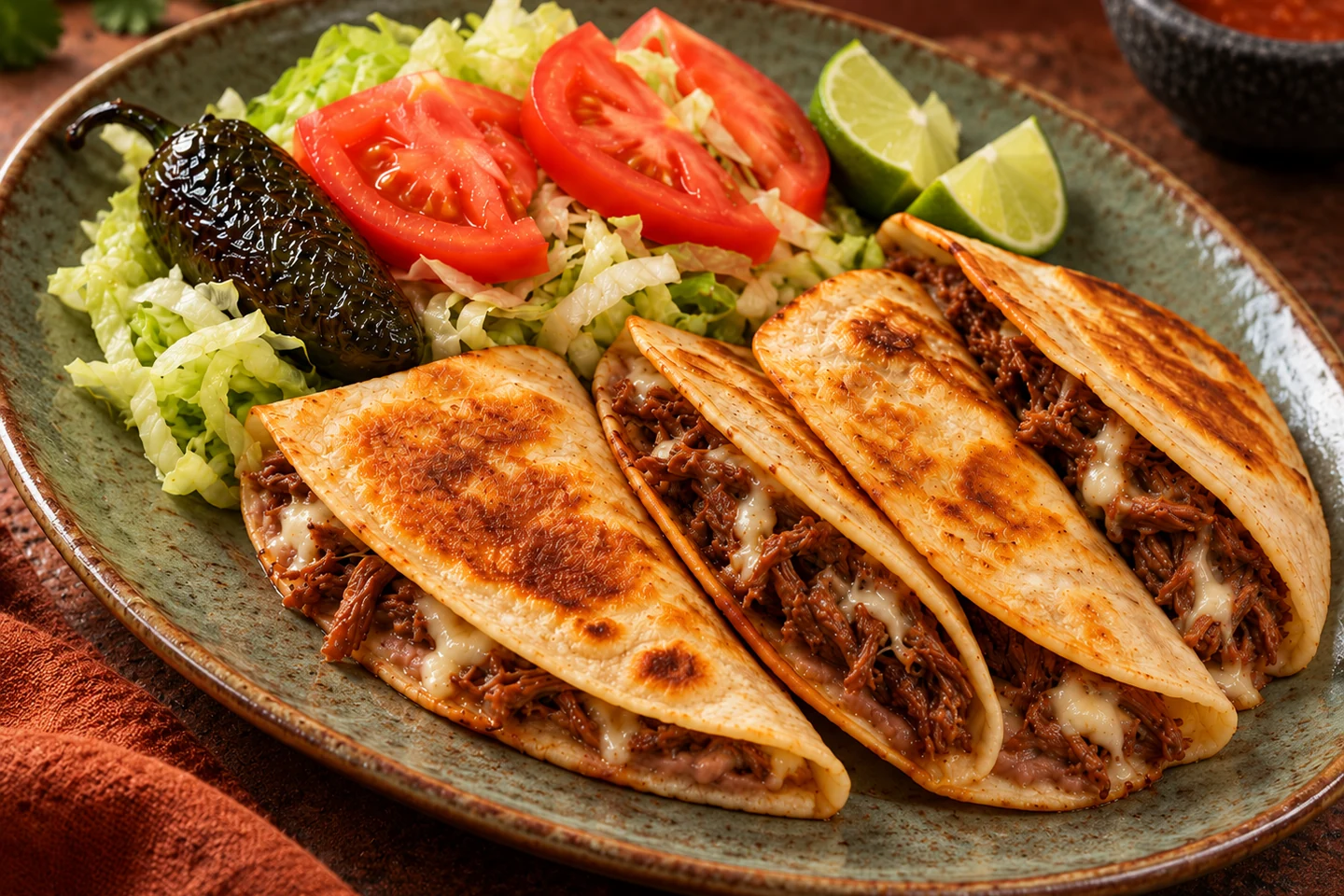
Recreated from memory and regional research: tender shredded beef with a few browned edges, thick frijoles chinitos-style pinto beans, melted cheese, and thin flour tortillas toasted on a hot plancha.
A taste remembered
Our founder remembers eating Café Rey’s Tacos a la Plancha while growing up around the Rio Grande Valley and Reynosa: warm flour tortillas, shredded beef, beans, melted cheese, and a cool lettuce-and-tomato salad alongside. The memory is of beef with some toasted edges, rather than uniformly soft shreds. We brown the cooked beef again to pursue that effect; this is our reconstruction, not a confirmed Café Rey kitchen technique.
Not an official recipe. This independent copycat reconstruction is inspired by Café Rey in Reynosa. The Border Table is not affiliated with, endorsed by, or sponsored by the restaurant.
How to make them
- Simmer the beef. Place the chuck, half onion, garlic, bay leaf, and 2 teaspoons salt in a heavy pot. Add water almost to the top of the meat. Bring to a simmer, partially cover, and cook gently for 2 1/2 to 3 hours, adding hot water if needed, until a fork separates the beef easily. Time is a guide; tenderness is the test.
- Rest and shred. Take the pot off the heat. Rest the beef in a little of its cooking liquid for 15 to 20 minutes, then pull it into irregular, bite-size shreds. Keep a few spoonfuls of liquid for moistening later. Discard the bay leaf.
- Brown the beef again. Heat a cast-iron skillet or griddle over medium-high heat. Add 1 tablespoon lard or oil. Spread the shreds in thin batches and leave each batch undisturbed for 90 seconds to 2 minutes. Turn once or twice so some edges brown while most of the beef stays tender. If it dries, add a spoonful of reserved liquid. Season lightly with pepper and more salt only if needed.
- Make thick refried beans. Heat 2 tablespoons lard or oil in a second skillet over medium heat. Add the cooked beans and mash until mostly smooth. Add bean liquid a spoonful at a time only if the beans are too stiff to mash. Cook, stirring and folding, for about 8 to 12 minutes, until a spoon dragged across the pan leaves a path that holds briefly. Taste for salt.
- Fill and fold. Lower the griddle to medium heat and wipe on a thin film of lard or oil. Warm a tortilla for 10 to 15 seconds to make it pliable. Spread about 3 tablespoons of beans on one half, then add about 1 ounce cheese and one-eighth of the browned beef. Fold gently. Repeat with the remaining tortillas; do not pack them like burritos.
- Toast on the plancha. Cook the folded tacos in batches, pressing lightly, about 60 to 90 seconds on the first side and 45 to 60 seconds on the second. Look for irregular toasted spots and melted cheese; the tortillas should remain flexible. Serve at once with cool lettuce, tomato, onion, lime, and roasted chile alongside.
What matters most
Brown only some of the shreds. A little griddle contact adds flavor without making all the beef dry. Keep the beans thick. They should spread, not run out of the taco. Choose thin tortillas. They should pick up toasted spots yet stay pliable. Our flour tortilla guide explains the texture to look for.
Make ahead and leftovers
The beef can be cooked and shredded ahead, then browned just before serving. Refrigerate cooked beef and beans in shallow containers within 2 hours. Use refrigerated leftovers within 3 to 4 days and reheat to 165°F. Keep the lettuce and tomato separate until serving. Assemble only the tacos you plan to eat immediately.
Useful swaps
Brisket can replace chuck if simmered until fork-tender. Monterey Jack melts well when asadero is unavailable. Canned refried beans can stand in after you cook them down until thick. Flour tortillas are central to this particular reconstruction; a corn-tortilla version would be a different variation.
Understand it
Two heats, two textures
Gentle simmering softens the chuck; a brief second contact with the hot griddle browns just the outside of some shreds. Thick beans hold the filling together, while the folded tortilla toasts and the cheese melts. The cool salad and lime cut through the richness.
Know it
A Reynosa favorite, approached honestly
Reynosa’s municipal commerce listing names Café Rey and Tacos a la Plancha; a public menu describes tacos with shredded beef, beans, cheese, and a lettuce-tomato-onion salad. Neither source discloses the restaurant’s recipe. The asadero, lard, and two-stage beef method here are editorial choices guided by memory and culinary reasoning, not verified claims about its kitchen.
Dish DNA
Beef: tender center, scattered browned edges. Pinto beans: rich, spreadable body. Asadero: gentle melt. Thin flour tortilla: flexible structure with toasted spots. Lettuce, tomato, onion, and lime: cool crunch, sharpness, and acidity.
This Research Edition has not been kitchen-tested in its exact published form. Treat the cooking times as guides and use the texture cues in the method.
Five choices that shape this reconstruction
1. A melting cheese. We use queso asadero because it melts gently into the beans and beef. The public menu says cheese, but does not identify the cheese in the standard taco; asadero is our choice, not a claim about Café Rey’s formula.
2. Lard, if it fits your table. It lends richness to the beans and griddle, but neutral oil is an intentional alternative. The restaurant’s cooking fat is not documented.
3. Thick beans. Cook the mash until a spoon leaves a brief trail. We use “frijoles chinitos-style” for this concentrated, spreadable texture, without claiming that Café Rey uses that name or method.
4. Two stages for the beef. First simmer it until tender; then give a few shreds direct griddle contact. The toasted-edge effect is a memory we are trying to recreate, not a disclosed restaurant technique.
5. Thin, pliable flour tortillas. They can take a few brown spots without becoming stiff. Avoid oversized burrito tortillas for this particular taco.
Serve it like the memory
Set the hot folded tacos beside cool shredded lettuce, tomato, white onion, lime, and an optional roasted chile. Let each person add the salad. Salsa can sit alongside, but taste the beef, bean, cheese, and tortilla together first. For the first batch, resist taco-seasoning packets, cumin-heavy rubs, tomato sauce, or an elaborate marinade; this reconstruction relies on the ingredients and the plancha rather than a strong seasoning blend.
Questions from the kitchen
Can I use brisket?
Yes. Simmer it until fork-tender, then brown a few edges after shredding.
What if I cannot find asadero?
Monterey Jack is an easy melting substitute. Oaxaca cheese can also work, though it has a different pull and flavor.
Can I start with canned refried beans?
Yes. Cook them in the skillet until thick enough to spread without running from the tortilla.
Can I make the beef ahead?
Yes. Chill promptly, then reheat and brown it just before assembling the tacos.
Can I use corn tortillas?
You can make a good taco with corn, but it would be a variation rather than the flour-tortilla dish this page reconstructs.
Why this dish belongs at The Border Table
A food memory does not need national fame to matter. This one anchors a specific Reynosa experience, while the documented menu keeps our reconstruction honest about what is known and what remains a kitchen guess. Cook it. Understand it. Know it.
Sources
What the evidence supports
- Municipality of Reynosa: Café Rey listing — confirms the restaurant and names Tacos a la Plancha.
- Café Rey menu listing on Rappi — describes the dish’s beef, cheese, beans, and salad; it does not provide a recipe.
- USDA FSIS: Leftovers and Food Safety — storage and reheating guidance.
Personal memory: The Border Table founder’s firsthand recollection, confirmed October 1, 2026.