Food Stories · Milk, baking & celebration tables
Tres Leches Cake: Milk, Memory, and Celebration
A sponge becomes a chilled, milk-soaked cake. Follow bakery memories, the history of preserved milk, and the choices behind the creamy slice you can make here.
Open the Tres Leches Cake recipe when you are ready to bake. It gives the sponge, the three-milk soak, and the whipped finish their own stages. Stay here to understand how that slice fits into a wider story of ingredients, bakers, and remembered celebrations.
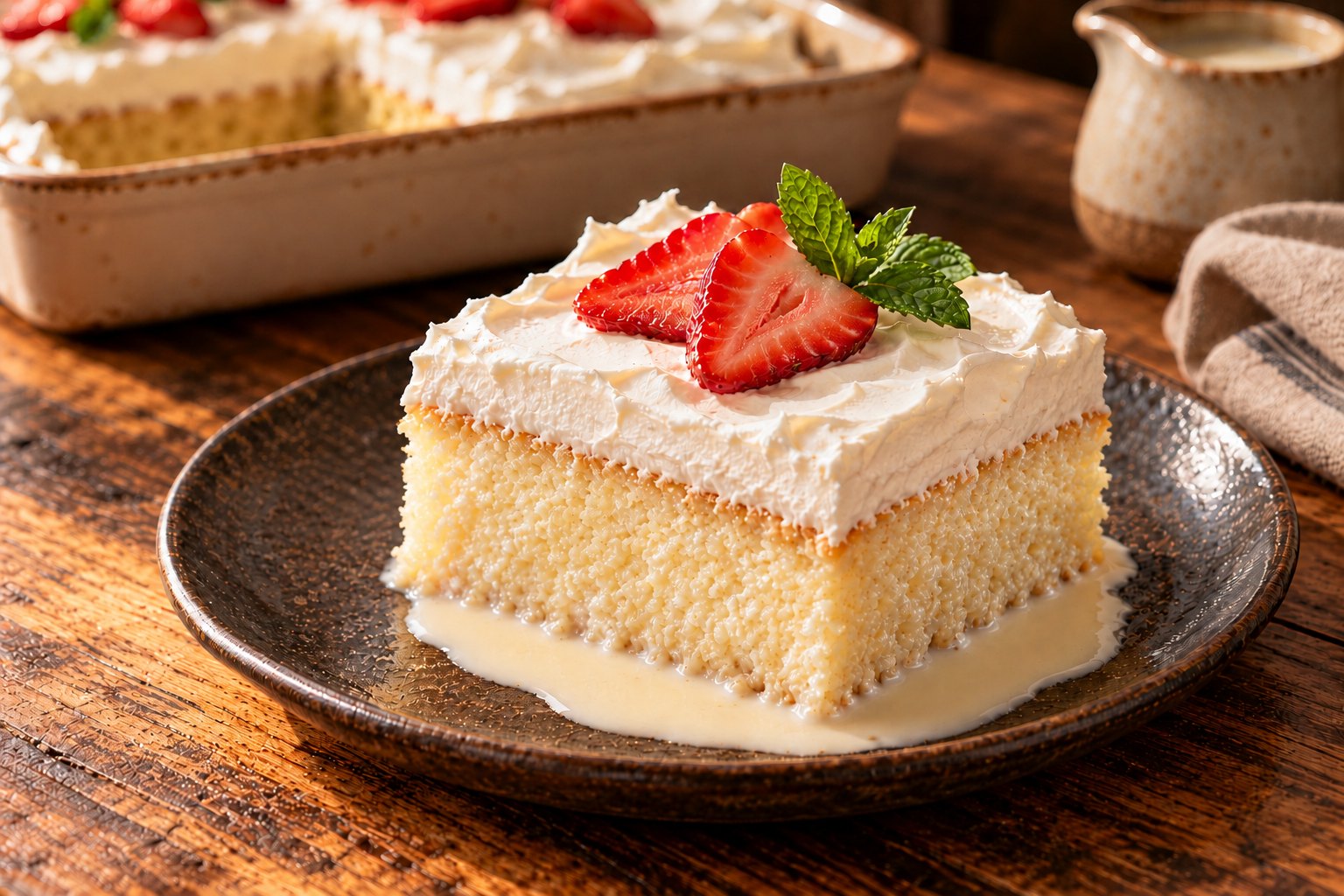
Three milks describe the soak
Larousse Cocina describes a baked cake cooled and soaked with condensed, evaporated, and whole milk, with cream replacing the last milk in some versions. The entry records several toppings, including meringue and whipped cream, and places the cake in Mexican bakeries and celebrations. That gives a useful description of the preparation and its place at the table.
Our cake uses sweetened condensed milk, evaporated milk, and heavy cream in its soak. Sweetened condensed milk supplies sweetness as well as milk solids; evaporated milk contributes concentrated dairy without the same added-sugar load. Cream is the third dairy ingredient in this version. The Preserved Milks guide helps you choose the two cans correctly before you open them.
The topping is a separate stage: cold cream is whipped and spread over the chilled cake. Counting that cream again does not create a fourth kind of milk in the soak. Read the ingredient groups in the complete recipe so that the soaking mixture and the whipped finish remain distinct.
A Mexico City bakery remembered by its customer
In her own Tres Leches Cake article, Pati Jinich remembers growing up in Mexico City and making Sunday drives with her family to La Gran Vía bakery for the cake. She presents her recipe as a way back to that memory. The account gives us a named place, a particular family habit, and a cook describing her own experience.
Jinich also explains her separated-egg sponge and a soak made with condensed, evaporated, and regular milk, while acknowledging cream as another choice. A remembered bakery cake and a home recipe are connected experiences, each with its own details. Her account supports that connection without naming the first person who ever made tres leches.
Preserved milk changed the dessert pantry
Historian Sandra Aguilar Rodríguez’s 2009 study of Mexican food and everyday life examines advertising, recipe books, and household recollections. Her account places condensed milk in desserts circulated through printed recipes in mid-century Mexico.
A modern milk-soaked cake belongs within that larger history, but the history of a product alone cannot establish the invention of one dessert. A can, a brand timeline, or a later recipe advertisement needs its own date and evidence before it can answer an origin question.
That origin remains a question worth treating carefully. Journalist Hans Lawrence Ramírez framed a January 2023 report in Nicaragua’s La Prensa around competing Mexican and Nicaraguan claims. The sources examined here establish preparations, memories, and commercial contexts, rather than a proven single birthplace.
A familiar cake can have different structures
King Arthur Baking’s Tres Leches Cake separates the eggs, cools the baked sponge, adds the milk mixture gradually, and refrigerates the cake before its whipped finish. Those stages offer a useful comparison for the version on The Border Table.
Another published preparation takes a different path. The James Beard Foundation’s recipe attributed to Luis Gonzales uses a butter-based cake, a meringue topping, and tequila-soaked strawberries. It demonstrates how much the cake and finish can vary under the same name. Our recipe keeps its own sponge, cream-rich soak, and optional fresh-fruit serving.
Choose one complete recipe when baking. The amount of liquid, the cake’s structure, its pan, and its resting time belong together. Combining the sponge from one preparation with an unmeasured soak from another changes the relationship that the cook has described.
The creamy slice on The Border Table
Our Tres Leches Cake begins with separately beaten whites and yolks. Flour and the remaining batter components are folded together, then the cake bakes before the soak is added. The lightness created during mixing has a job: it gives the milk mixture a structure to enter after baking.
The published method cools the sponge, makes small openings across its surface, and pours the soak in stages. It then gives the cake a long refrigerated rest. Whipped cream goes on near serving time, after the soaked crumb is cold. Follow the recipe’s pan depth, quantities, checks, and chilling instructions for this particular version.
A creamy slice can be served with a little milk soak alongside it. The recipe explains when to reserve extra soak separately and how to spoon a small amount beside a serving. That final spoonful brings the milk mixture to the plate as well as into the crumb.
Follow the ingredients into the kitchen
Use the Preserved Milks guide to distinguish the two canned products. The pantry’s granulated-sugar entry follows its roles in these desserts, and the vanilla entry connects the named flavoring with a documented Mexican ingredient tradition.
Mexico’s Servicio Nacional de Inspección y Certificación de Semillas describes Vanilla planifolia as native to southeastern Mexico and Central America and records longstanding Totonac cultivation in northern Veracruz and Puebla. That is the history of an ingredient; our cake specifies vanilla extract as its usable form.
The dessert equipment notes, sponge-and-soak explanation, and Kitchen Logic cues return to the work in the bowl and baking dish. For another use of the same preserved milks, read the Mexican Flan story and make the owner’s caramel custard.
A sweet course in two Texas restaurant settings
Mi Tierra’s published dinner menu marked 08/24 lists tres leches and vanilla flan. The San Antonio atlas places the restaurant within the city’s wider food landscape.
In Houston, Los Tios’ menu also lists both desserts. Follow the Houston atlas from the restaurant meal to the sweet course. These are documented serving connections, with each home recipe retaining its own source and identity.
Sources for the Tres Leches story
- Larousse Cocina, Pastel de tres leches — preparation, variations, and Mexican serving context.
- Pati Jinich, Tres Leches Cake — her Mexico City bakery memory and published method.
- Sandra Aguilar Rodríguez, “La mesa está servida” (2009), pp. 60–61 — research on milk products, print, and households.
- Hans Lawrence Ramírez, La Prensa, January 2023 — the report’s opening frames competing origin claims.
- King Arthur Baking, Tres Leches Cake — a published sponge-and-soak comparison.
- James Beard Foundation, Tres Leches Cake — Luis Gonzales’ variation.
- SNICS, Vainilla — botanical and cultivation context.
- Mi Tierra dinner menu and Los Tios menu — restaurant serving records, checked 9 November 2026.
- The Border Table’s complete recipe — this version’s development sources, quantities, and handling.
Historical records, a cook’s memory, and recipe comparisons answer different questions. Read Sources & Method, or send a correction.