Food Stories · Custard, caramel & a family table
Mexican Flan: Caramel, Custard, and Family Tables
Milk and eggs set gently above a layer of caramel. Follow the changing name, a modern canned-milk chapter, and the family memory behind the recipe you can cook here.
Start with the Mexican Flan recipe for the owner’s condensed-milk custard, baked in a water bath and turned out onto a rimmed plate. Its ingredients and method come from the owner’s 2021 archive. This story follows the wider contexts around that particular family preparation.
A word with a wider history than one recipe
The RAE–ASALE dictionary traces the Spanish word through French flan and an older Germanic word for a cake. A word’s route between languages is one part of the history; it does not identify the inventor of the caramel custard served on this page.
For the Mexican usage familiar at the table, the Diccionario del español de México describes a milk, egg, and sugar dessert set in a caramel-lined mold in a water bath. That definition gives the preparation a recognizable structure: custard, caramel, a mold, and moderated heat.
Larousse Cocina records a wider range of meanings, including pastry-based flans as well as molded custards. Its Mexican discussion includes evaporated and condensed milks, and variations flavored with ingredients such as citrus, coffee, vanilla, or cheese. The name opens a family of preparations; a complete recipe tells you which one to make.
Canned milk and a modern printed chapter
Sandra Aguilar Rodríguez’s 2009 study of Mexican food and everyday life examines processed foods and home kitchens. Its references identify Postres Nestlé No. 3, published in Mexico in 1960, documenting one period of commercial dessert-recipe promotion.
This is a useful dated record of commercial recipe promotion. It explains one setting in which preserved milk entered dessert making. The older history of custards and the development of a specific family formula remain separate questions.
The owner’s memory belongs to this table
The owner’s archived note remembers a grandmother crediting love for the flan’s texture, while the owner points to condensed milk. That recollection gives this recipe a personal place in the collection. It describes the remembered family dessert rather than claiming a first flan for Mexico or a single regional formula.
The complete recipe combines whole eggs, evaporated milk, sweetened condensed milk, fresh milk, vanilla, and its divided sugar measure. Some sugar forms the caramel; the remainder goes into the custard. The old card’s family association and its particular ingredients stay together.
A recipe archive can preserve that kind of everyday knowledge: which milk went in, how the sugar was divided, which pan held the custard, and how the finished dessert was served. Those details make a family version worth following even when its record does not name a historical inventor.
Different flans make different dairy choices
Pati Jinich’s Flan Napolitano provides a named contemporary comparison. Her preparation includes condensed and evaporated milks, eggs, vanilla, and cream cheese, and is baked in individual caramel-lined molds. The dairy and the serving size are choices within that recipe.
A further comparison comes from King Arthur Baking’s Vanilla Bean Flan, credited to Cocina Puerto Rico (2026). That recipe uses mascarpone and whole milk alongside preserved milks, mixes the eggs gently, and chills the flan before turning it out. It is a Puerto Rican cookbook example of a related custard, with its own formula.
Our owner’s flan keeps its existing dairy ingredients and whole-mold serving. Following one recipe’s quantities, mold, cooking checks, and cooling sequence is more useful than treating the versions as interchangeable ingredient lists. The comparison explains the range without asking you to combine them.
Caramel first, then a gently set custard
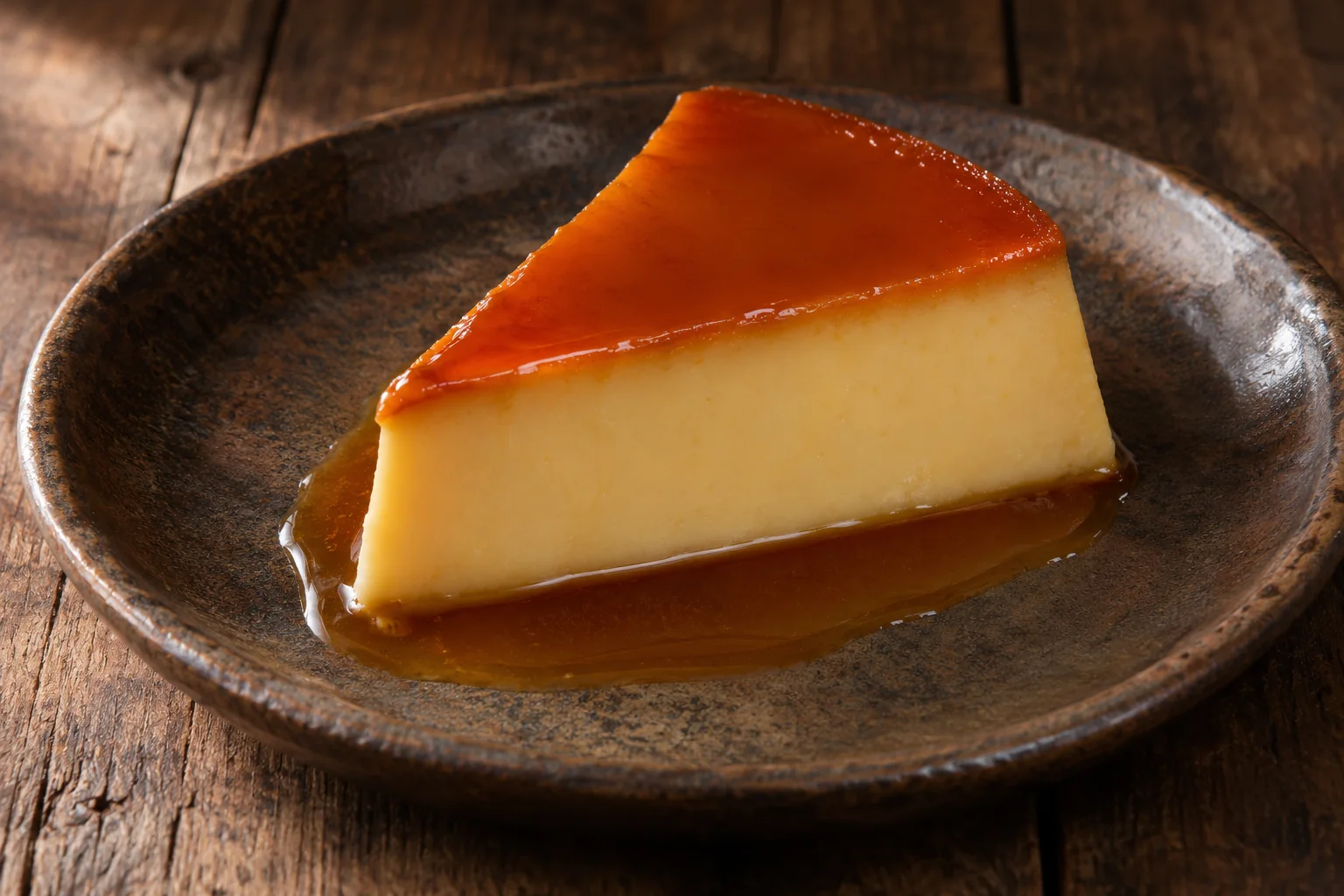
In our recipe, the caramel begins as sugar heated in a small skillet until amber and fluid. It is poured into the mold before the milk-and-egg mixture arrives. When the chilled flan is inverted, the caramel becomes the top and the sauce that gathers on the serving plate.
The custard needs a different kind of handling. The eggs are beaten lightly, the milks are incorporated, and the mixture goes into the prepared mold without excessive whipping. Compare that with the Tres Leches story, where beaten egg whites help build the cake’s airy structure. Air has a different job in the two desserts.
The larger pan of hot water surrounds the flan mold during baking. The owner’s method uses this water bath to moderate the oven’s heat, then cools and refrigerates the custard before unmolding. The equipment notes explain the two-vessel arrangement; Kitchen Logic brings the comparison back to the published cooking cues.
Use the recipe’s stated mold, oven setting, timing, and doneness checks. After chilling, a rimmed plate gives the caramel somewhere to collect. The quiet finish—a set custard with sauce—is the result that these stages are organized around.
Read the milk labels before mixing
Open the Preserved Milks guide for the difference between sweetened condensed milk and evaporated milk. The additional fresh milk is another ingredient in the owner’s recipe. Its listed measure belongs to that recipe; the canned products supply different things to the mixture.
Follow the sugar entry for the two roles of the divided sugar, and the vanilla entry for the flavoring named in the recipe. The dessert foundations compare a caramel-lined custard with a baked sponge that receives its milk afterward.
Preserved milk starts as a pantry product only when its label permits that storage. Once opened or used in a dessert, handling changes. The ingredient guide and the complete flan recipe keep the storage instructions close to the cooking.
Follow a dessert into the restaurant meal
The Mi Tierra dinner menu marked 08/24 lists vanilla flan and tres leches. In Houston, Los Tios’ menu lists Mexican flan and the milk-soaked cake. These are two documented Texas settings for the sweet course.
Explore San Antonio and Houston for the cities and restaurant histories around those menus. Return to the owner’s flan or Tres Leches Cake for your own table. The connection is one of serving and continued cooking, rather than a claim that either city invented the desserts.
Sources for the Mexican Flan story
- RAE–ASALE, Flan — the word’s etymology.
- El Colegio de México, Flan — Mexican usage and preparation.
- Larousse Cocina, Flan — meanings and preparation range.
- Sandra Aguilar Rodríguez, “La mesa está servida” (2009), pp. 60–61 and note 22 — historical research and the 1960 book reference.
- Pati Jinich, Flan Napolitano — a contemporary Mexican recipe comparison.
- King Arthur Baking, Vanilla Bean Flan — the credited Puerto Rican cookbook comparison.
- Mi Tierra dinner menu and Los Tios menu — serving records, checked 9 November 2026.
- The owner’s 2021 recipe, published as Mexican Flan — the family recollection, formula, and method used here.
Language, printed promotion, a published recipe, and a family memory carry different kinds of evidence. Read Sources & Method, or send a correction.